Henry W. Houston by Coe, Elias V.
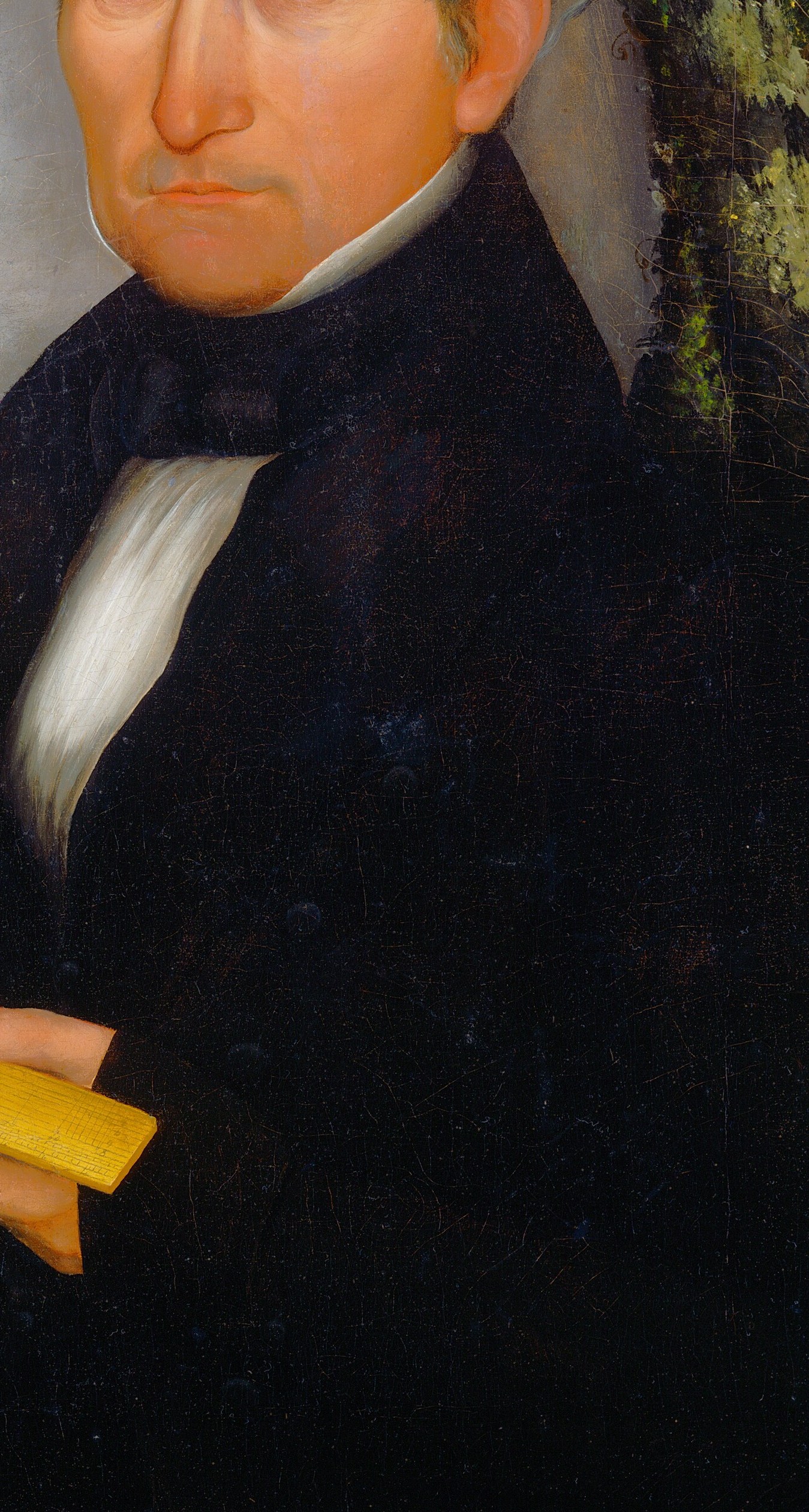
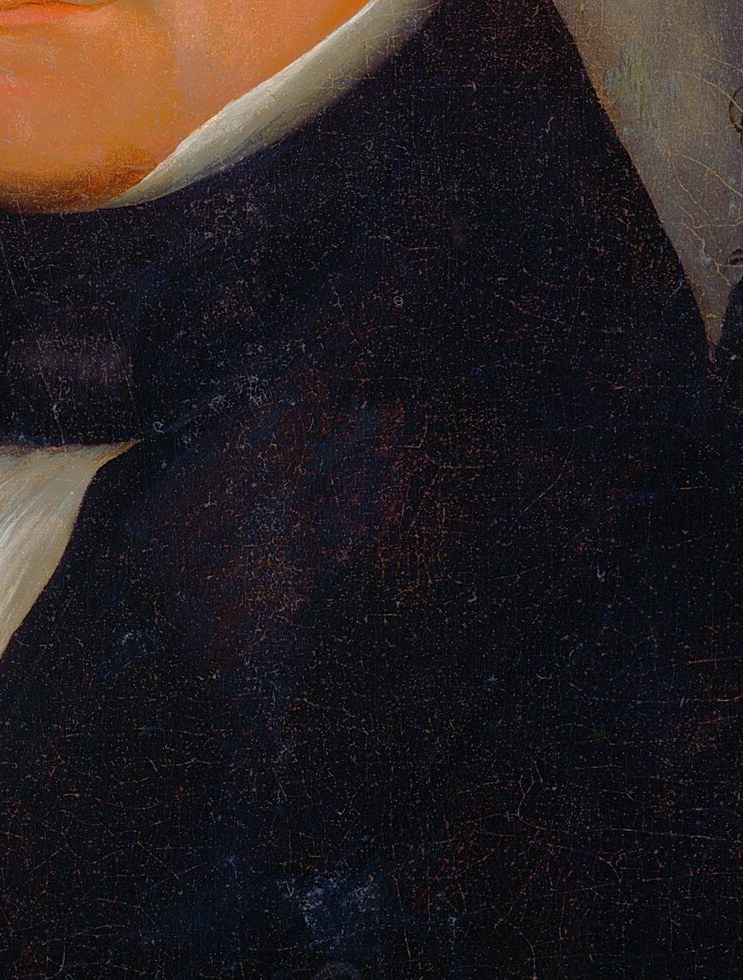
Elias V. Coe painted Henry W. Houston in 1837, and the portrait survives as something rarer than a likeness: it is a quiet professional credential rendered in oil. Houston chose to be remembered not by a grand library or a columned estate, but by a single golden surveying instrument on a wooden tripod. He paid more for the inclusion of that gleaming theodolite, relative to a working wage, than he paid for the coat on his back.
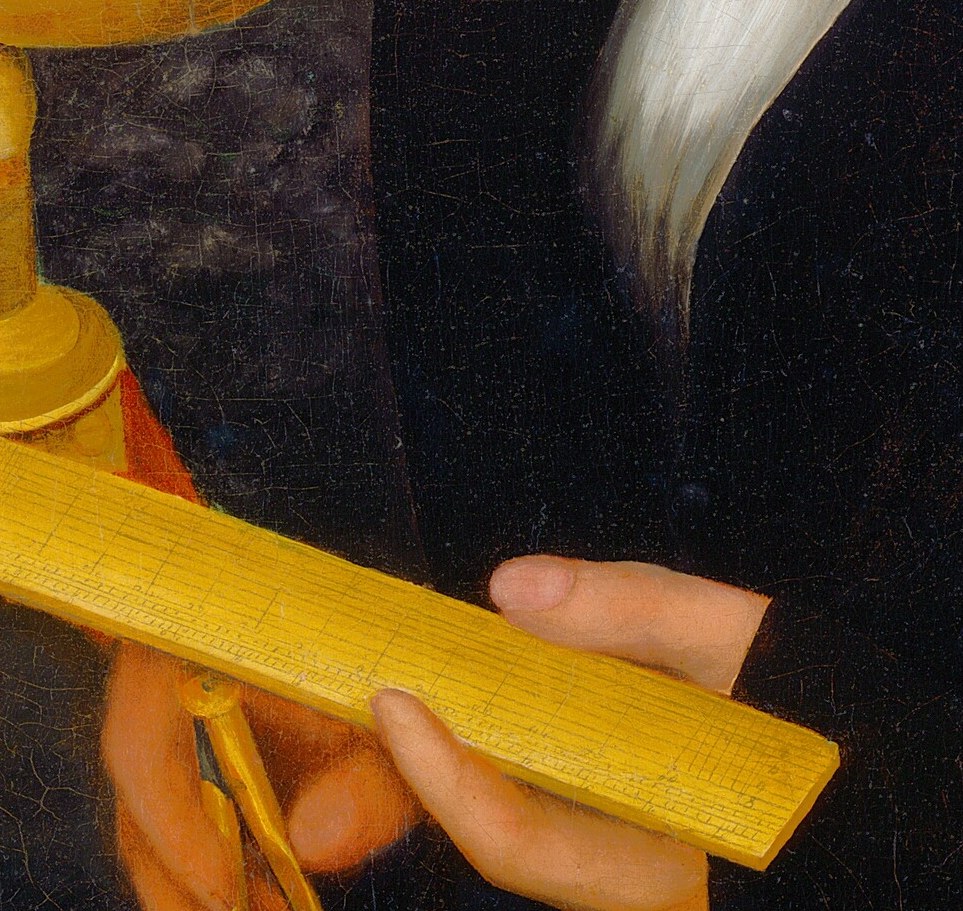
Look at the instrument itself. The eight-pointed compass rose dial catches the light at center canvas, and the painter gave it real attention: the engraving is legible, the brass has weight. Houston's right hand grips the tripod shaft with a field man's familiarity, while his left hand lingers near the instrument without tension. That pairing tells you everything. He is not borrowing a studio prop. He owns this tool, and he knows how to use it.
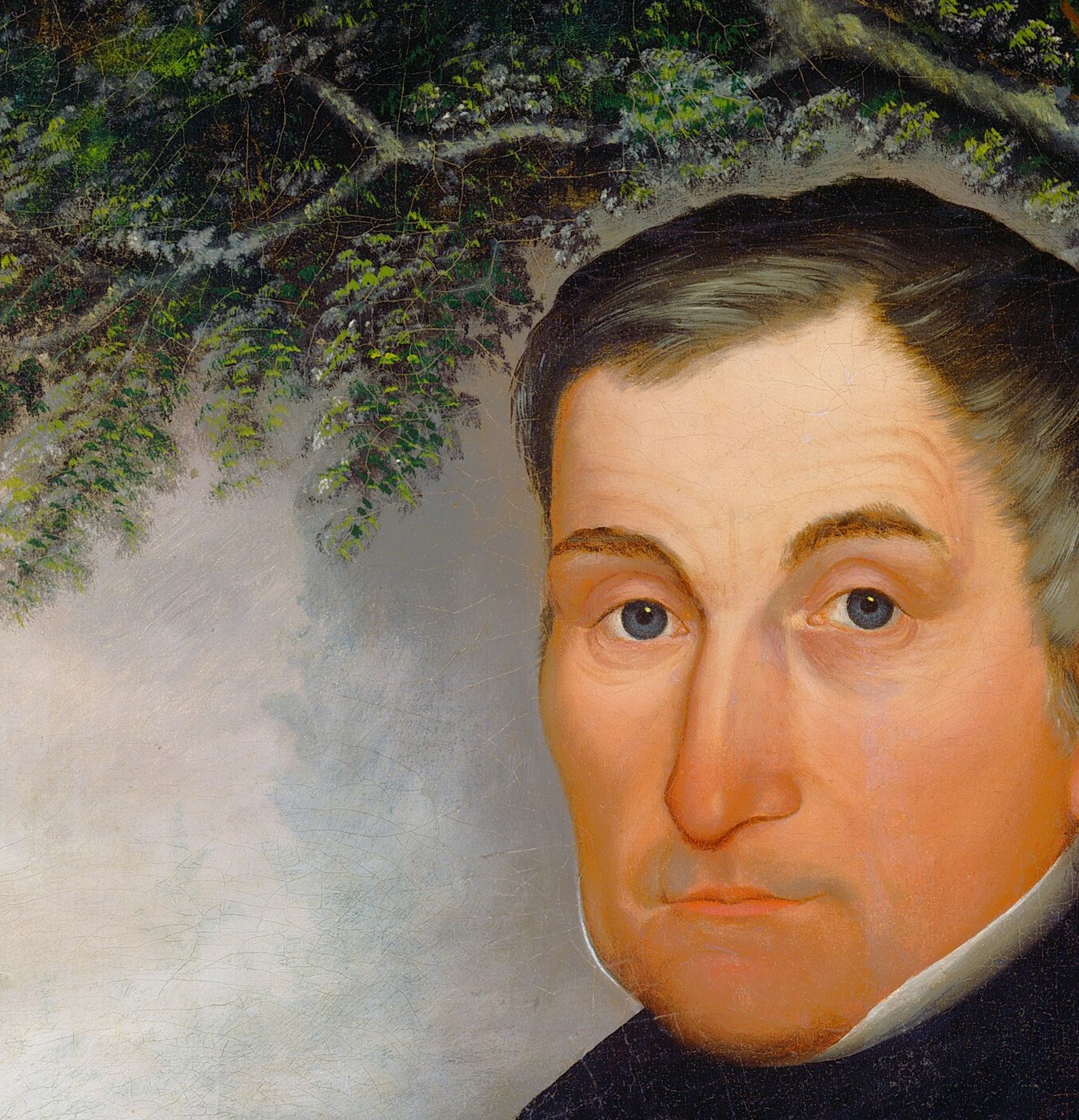
This was painted during the great land surveys of the 1830s, when the American interior was being gridded and sold at extraordinary speed. Surveyors and civil engineers were the agents of that expansion, and a portrait like this served as a calling card. It announced precision, trustworthiness, and a stake in the nation's future. The luminous sky behind Houston places him outdoors, not in a parlor. The tree at his right frames him within the very landscape his work would transform.
Elias V. Coe left little biographical trace beyond this canvas, and Henry W. Houston's full story remains largely unrecorded. But the painting itself is the biography: a man who wanted the world to know what his hands could do.
Details

Transcript
In 1837, being painted with your tools was a declaration. You were not born to leisure. You built something. This golden theodolite was the most expensive object in the room. A good surveyor's compass cost a month's wages. His right hand grips the tripod like a man who carries it through fields. His left hand rests easy. The work is dignified, not desperate. Manifest Destiny was being measured, one acre at a time. And Henry W. Houston was one of the men drawing the lines.