The Crucifixion by Signorelli, Luca
Luca Signorelli painted The Crucifixion around 1505, shortly after returning to his hometown of Cortona. He had just completed his monumental Last Judgment fresco cycle in Orvieto Cathedral, a work of thunderous scale and energy. This panel is different. It is small, intimate, and split down the middle like a wound.
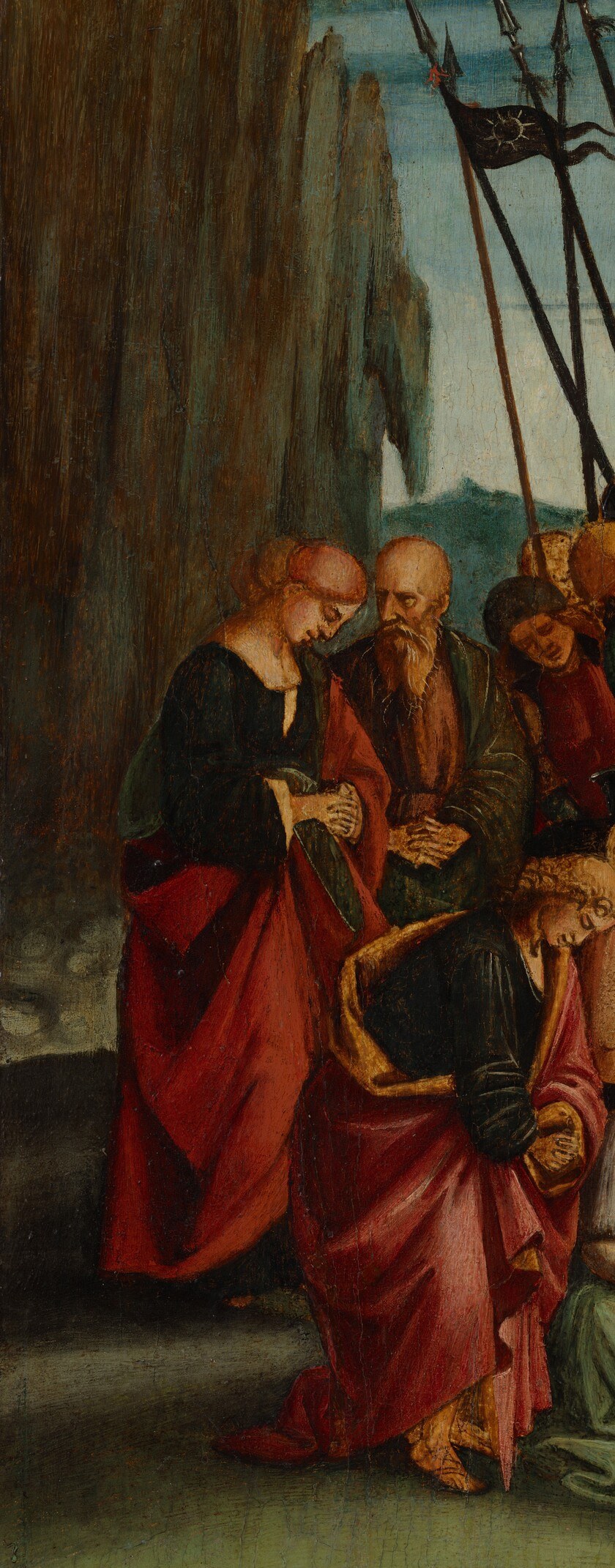
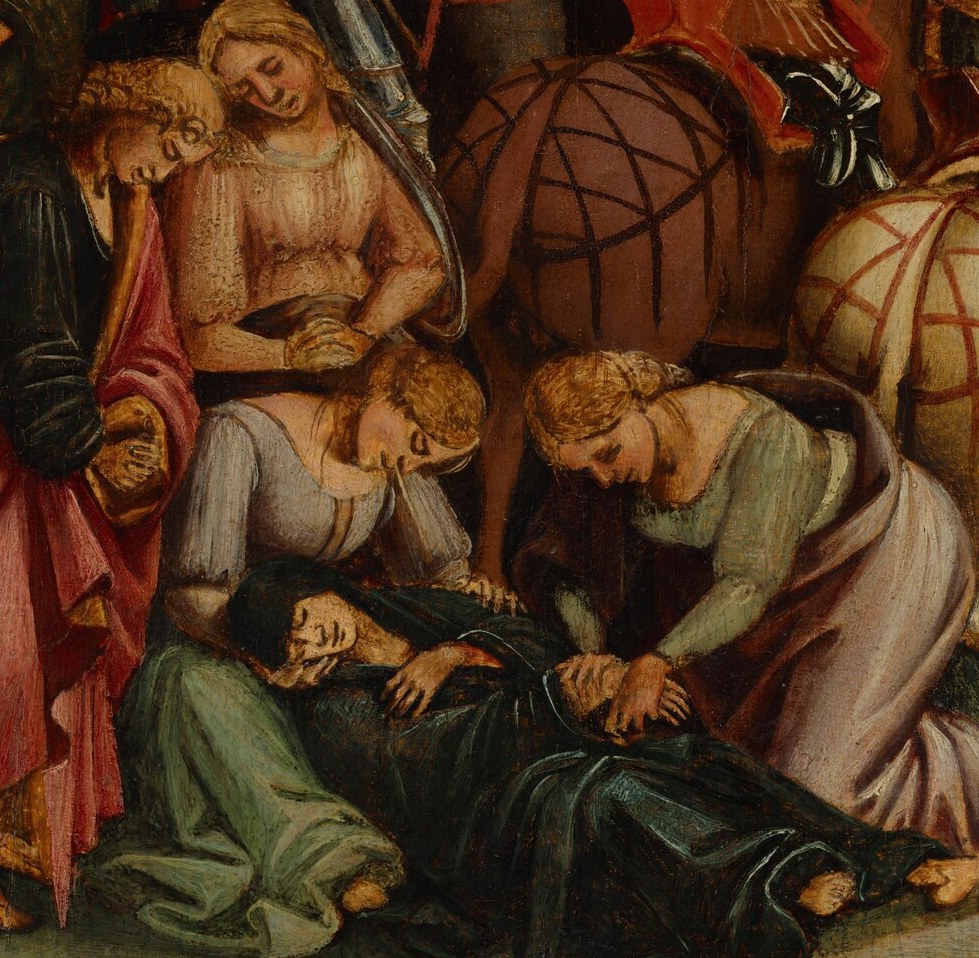
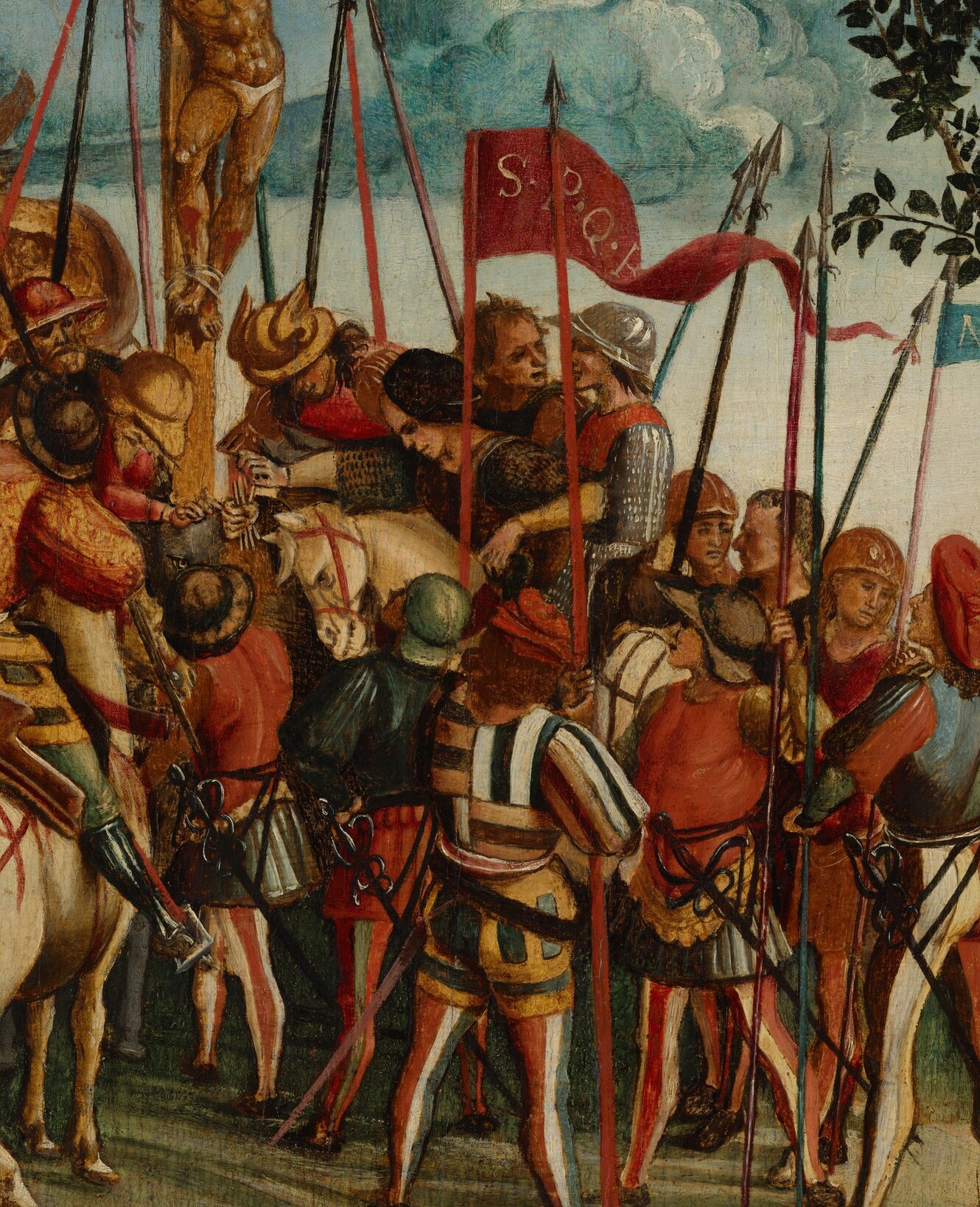
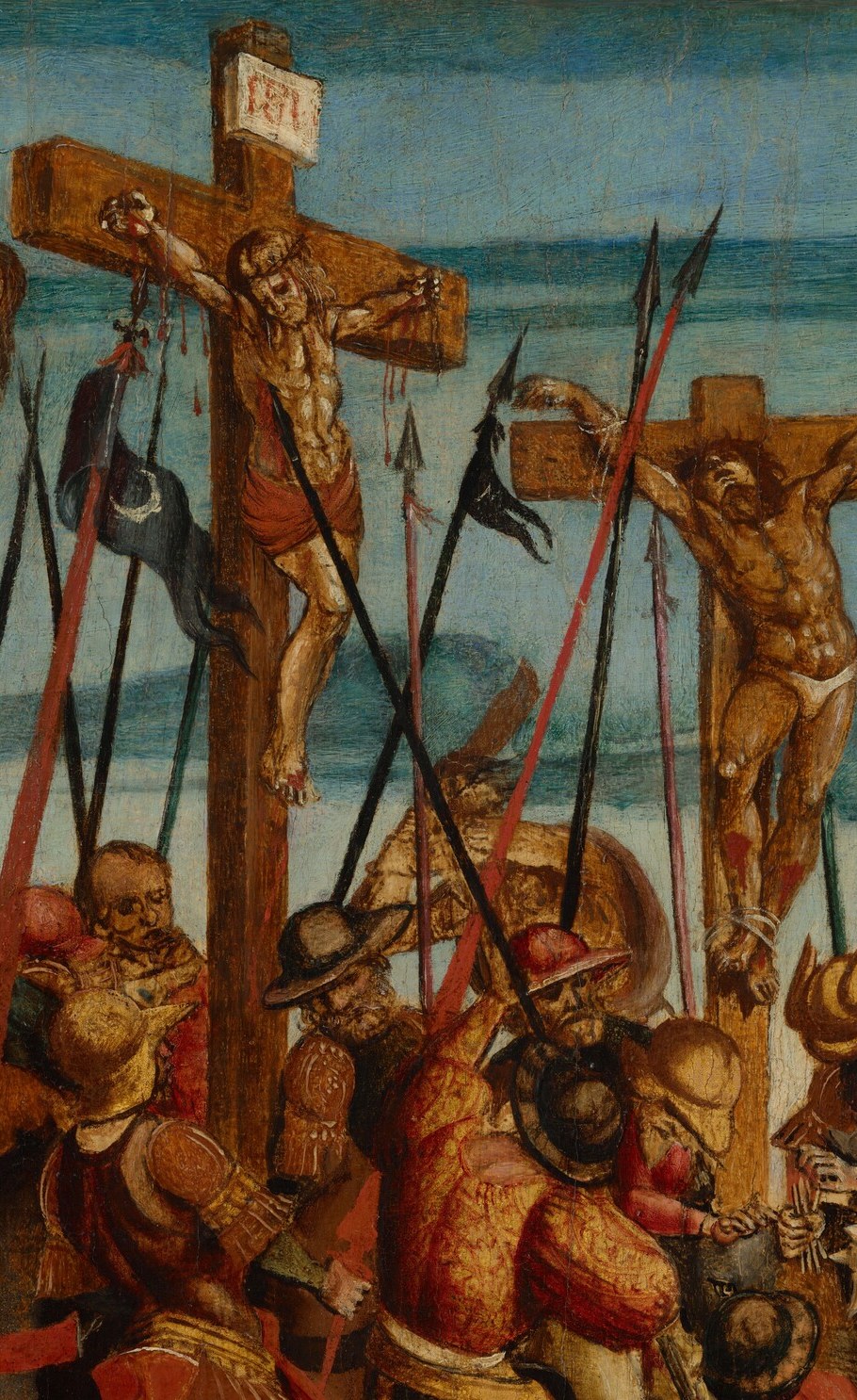
Look at the two halves. On the left, mourners in warm reds and oranges collapse into one another. A figure kneels at the foot of the cross in total desolation. On the right, armored soldiers cluster beneath tall red imperial banners, their spears a forest of verticals that echo the crosses above. Signorelli, famous for his muscular draftsmanship, gives the soldiers a kind of hardened physicality that makes the mourners' soft collapse feel even more vulnerable.
This was a man painting for his own city after years away in Florence, Siena, and Rome. The panel is tempera with oil glazes and gilding, the gold leaf behind Christ creating a quiet glow against the turbulent sky. It is a private altarpiece, meant for close looking.
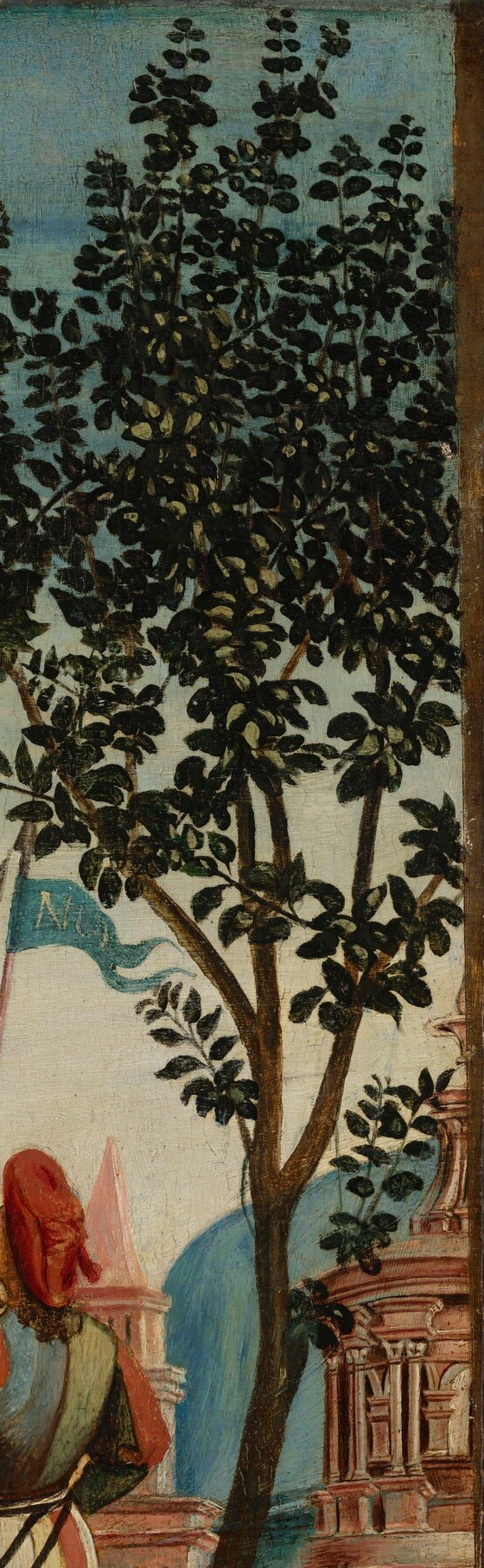
And at the far right margin, nearly off the canvas, a single living tree stands. It is easy to miss in the crowd, but it is there. Life beside death. A small thing, placed deliberately.
Details
Transcript
This painter divides the world with a single event. On one side, a dense knot of mourners. They collapse into each other. Grief has no armor. On the other side, soldiers with spears and red imperial banners. The painter had just finished his great Last Judgment fresco in Orvieto. He came home to Cortona and painted this. Smaller. Private. A quiet tree stands at the far right margin. Life beside death.