Harlequin by Cezanne, Paul

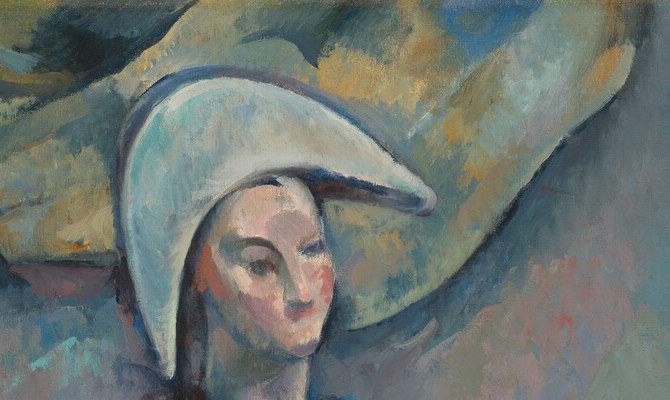
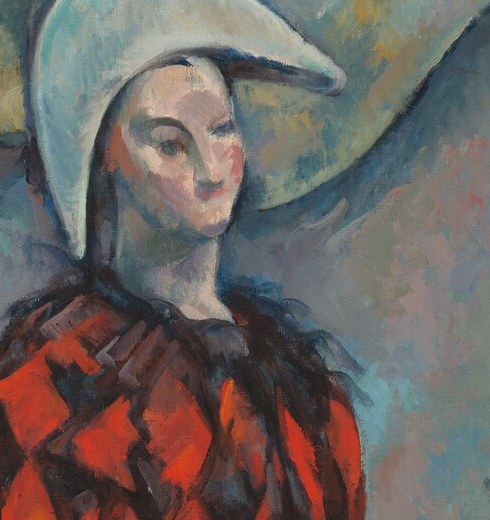
Cézanne painted his own son as the comic Harlequin, then erased his likeness with a flat, mask‑like face, an early step toward abstraction. The work, titled Harlequin (1888‑1890), hangs in the National Gallery of Art, Washington.

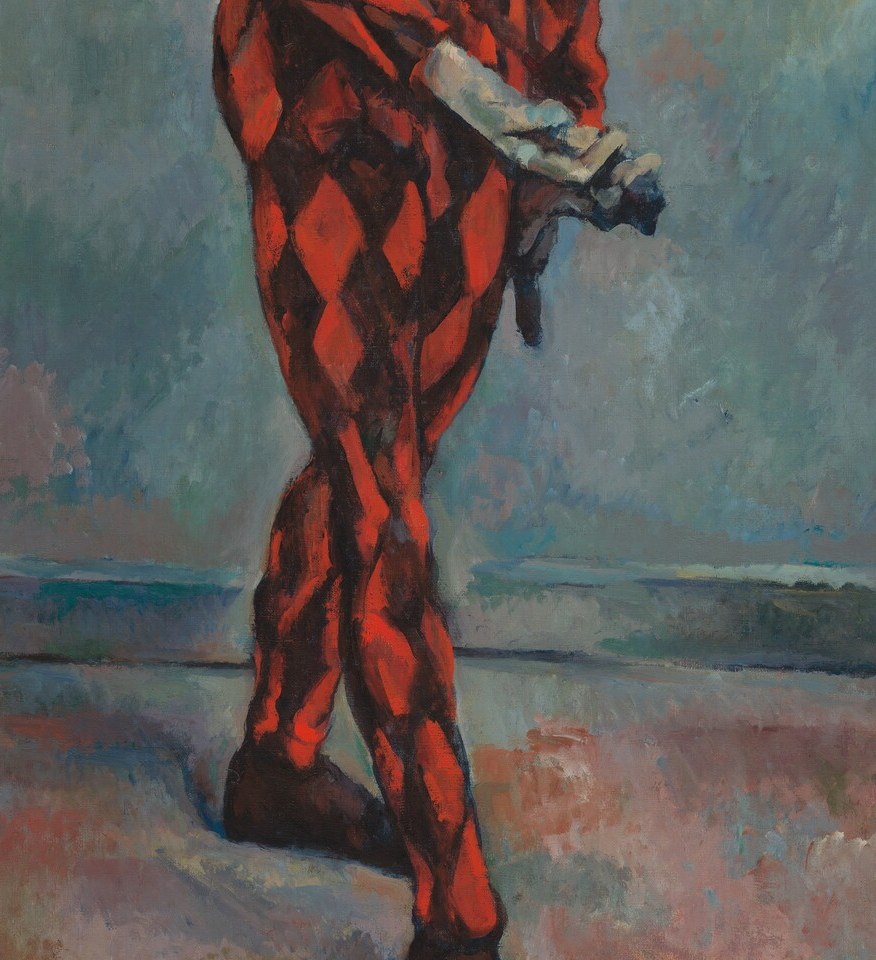
Notice how the diamond‑patterned tunic shimmers in layered reds and blues, each shape built from tiny, overlapping brushstrokes. The floor planks are rendered with thick impasto, giving the wood a tactile, three‑dimensional quality that seems to pop from the muted wall.

The canvas first appeared in Ambroise Vollard’s stockbook, passed to collector Auguste Pellerin, and was later acquired by Paul Mellon. Mellon donated it to the Gallery in 1985, and it inspired Juan Gris’s 1916 pencil copy.

Cézanne’s trick shows how paint can become surface and form at once. What other hidden faces might lie beneath familiar portraits?

#arthistory #Cezanne

Details
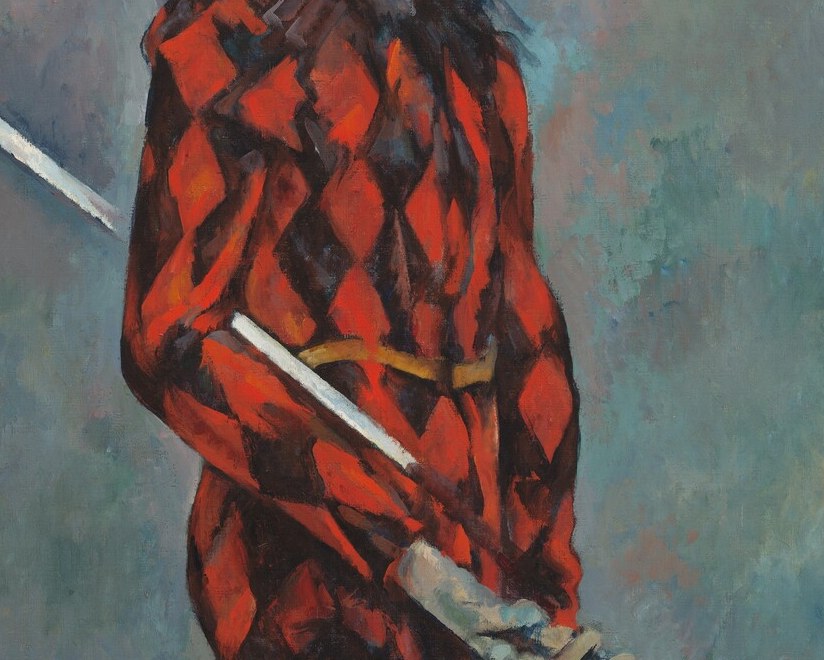
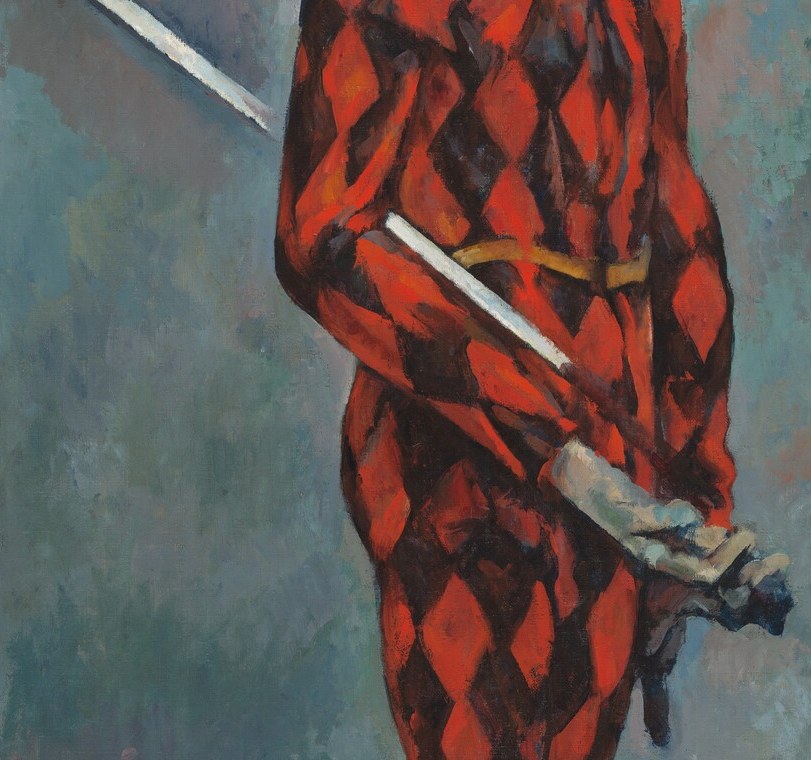
The geometric lozenge pattern is rendered with surprising painterly looseness , the 'pattern' is more constructed than copied, showing Cézanne building form through color patches rather than line.
The stark white hat is the highest-contrast element in the painting and immediately signals Commedia dell'arte identity; its flatness against the muted background echoes the mask-like treatment of the face below.
The pattern continues unbroken from tunic to legs, unifying the figure as a single decorative surface , a proto-modern flattening of the body into design.
Cézanne deliberately suppressed his son Paul's features into an expressionless, almost abstract plane , the absence of legible emotion is the psychological subject of the entire canvas.
A prop, not a weapon , it cuts a strong diagonal across the composition, giving the static pose unexpected dynamism and marking Harlequin's buffoon status rather than heroic identity.
Transcript

A flat mask covers the figure’s face. Cézanne painted his son, then erased his features. The diamond tunic glitters with layered reds and blues. Each diamond is built from tiny, overlapping strokes. Look at the floor planks, they feel almost three‑dimensional. Cézanne used thick impasto to make wood grain visible. The muted wall recedes, letting the costume dominate. The canvas traveled from Vollard’s stock to the National Gallery in 1985.