Doe and Two Fawns by Arthur Fitzwilliam Tait
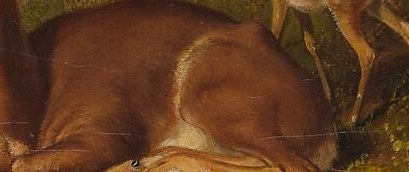
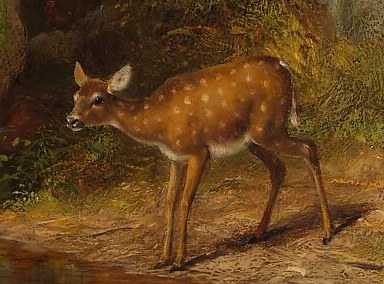
Arthur Fitzwilliam Tait, a British-American artist, was renowned for his detailed and lifelike wildlife paintings. In "Doe and Two Fawns," painted in 1882, he masterfully captures a tranquil moment in a sun-dappled meadow, showcasing his deep understanding of animal anatomy and behavior. The painting is rendered in oil on academy board and is part of the American Wing collection, reflecting Tait's focus on North American wildlife.
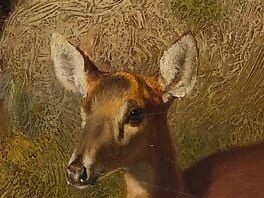
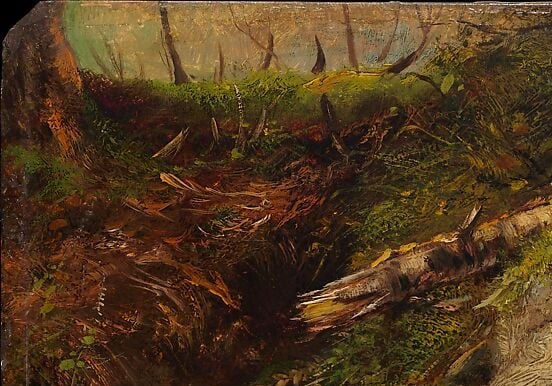
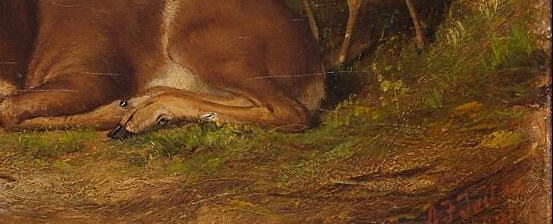
Look closely at the gentle expressions of the doe and her fawns, and the soft, almost hazy quality of the background forest. Tait's true genius, however, lies in his rendering of light, especially the dappled sunlight on the grass, which appears to shimmer with natural warmth and depth.
During his career, Tait often studied live animals, even keeping deer in his studio, to ensure the accuracy and vitality of his subjects. This dedication allowed him to imbue his paintings with a sense of authentic presence, transporting urban audiences to the heart of the wild. His work belongs to the American Impressionist movement, characterized by its focus on capturing fleeting moments of light and atmosphere.
This painting invites us to pause and appreciate the quiet beauty of nature, rendered with astonishing skill. What detail draws your eye the most?
Details
Transcript
This painter was famous for his wildlife scenes. He captures the quiet intimacy of a deer family. Notice the soft focus on the forest in the background. He worked from live models, sometimes keeping deer in his studio. But the real trick is the dappled light on the grass. How does he make it look so convincingly like sunlight?