Madonna and Child by Luca Signorelli
Luca Signorelli’s Madonna and Child, painted around 1505 and housed at The Metropolitan Museum of Art, is famous among specialists for its draftsmanship, but the painting hides a quieter marvel most visitors scroll past. Signorelli was one of the great anatomical minds of the early Renaissance, and here he compresses that skill into a small devotional panel.
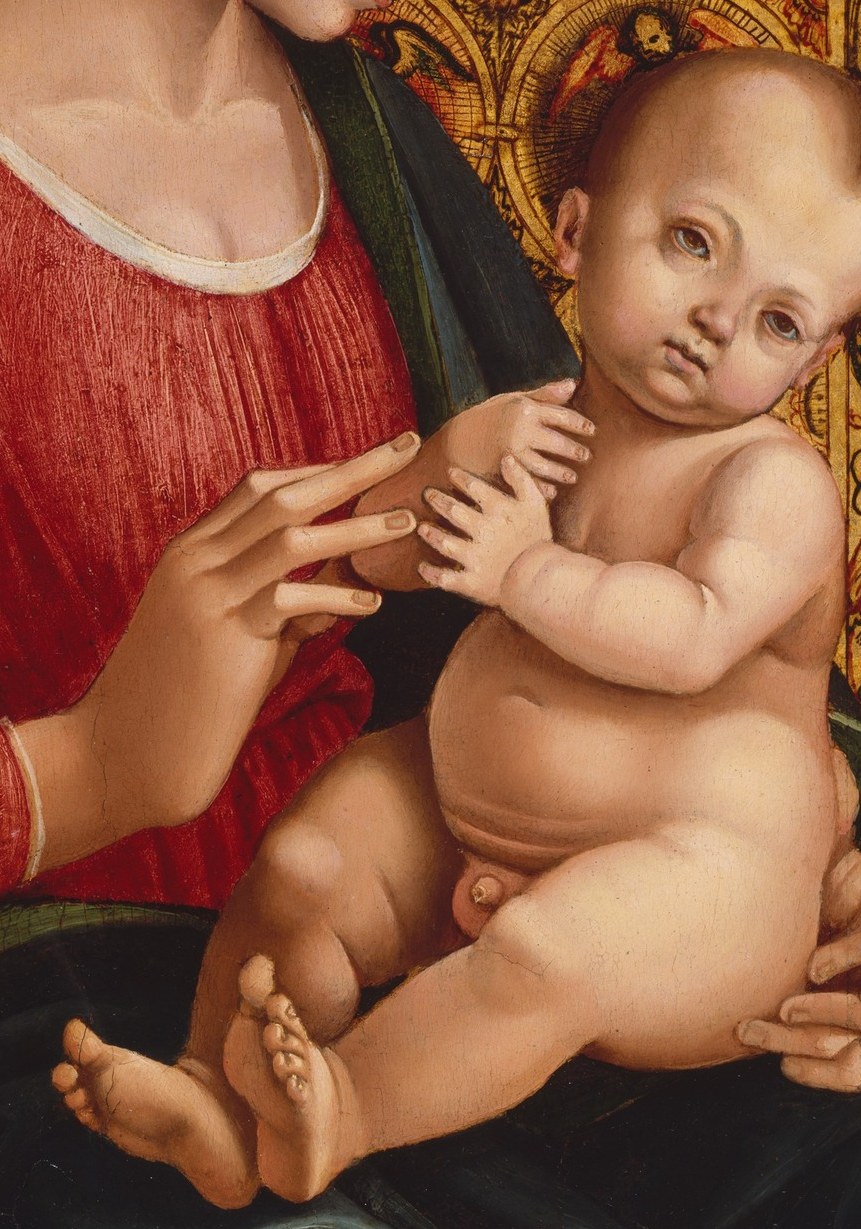
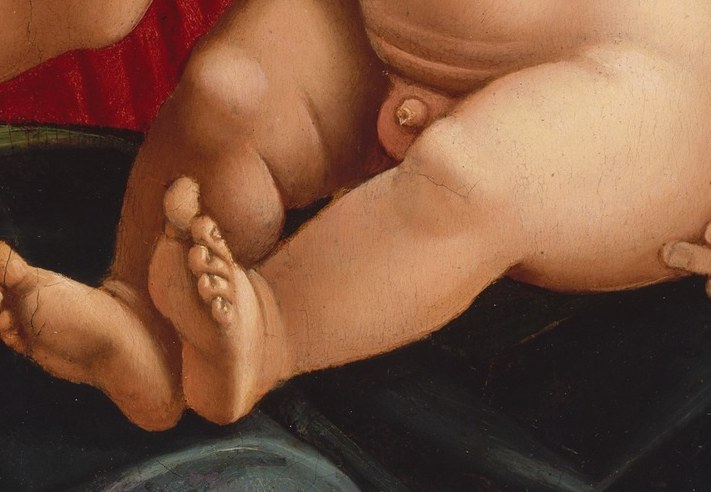
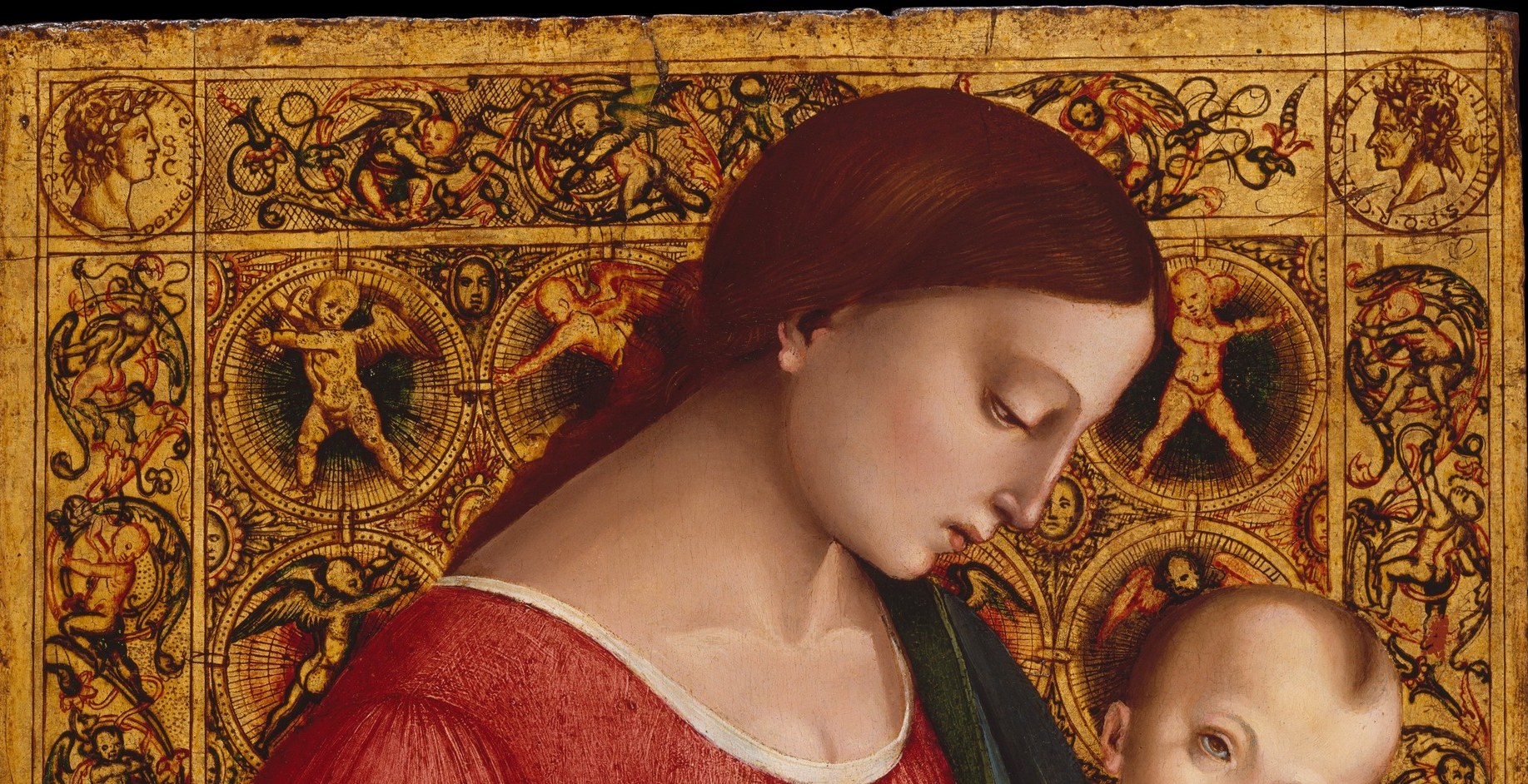
At first the composition reads as a standard sacred pairing. Mary wears the traditional red and dark green, her eyes lowered in meditation while the Christ Child meets the viewer’s gaze directly. Signorelli’s celebrated foreshortening is easiest to spot in the child’s rounded thighs and soft bare feet, modeled with a sculptural weight that makes the infant feel physically present on her lap.
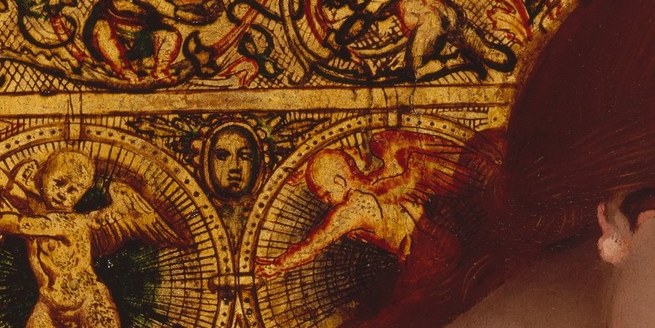
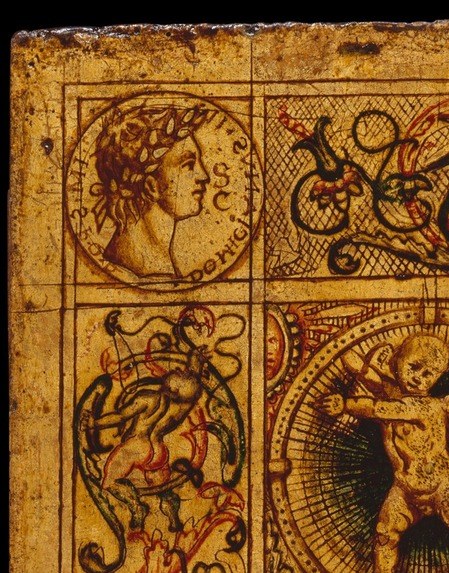
Then look into the gold. The background is not simply ornamental gilding. Embedded throughout the acanthus scrolls are small circular medallions containing tiny human faces, witnesses woven into the fabric of heaven itself. They reward close looking and turn a gilded wall into a populated heavenly court. Signorelli trained in Florence, probably under Piero della Francesca, and spent his later career based in Cortona. This panel belongs to his mature period, after the monumental Last Judgment frescos in Orvieto had already secured his reputation.
A painting this size was made for private devotion, probably for a domestic interior. The fact that Signorelli put hidden faces where most patrons would never notice them says something about how he worked: the detail was for him, not for show. Next time you see gold leaf in a Renaissance painting, lean in. There might be someone looking back.
Details
Transcript
They look like an ordinary Madonna and Child. She lowers her eyes. He looks straight out. Signorelli was famous for foreshortening. You can see it in the child's thighs and bare feet. But the real trick is behind them. The gold is not just pattern. Look closer. Small faces, hidden in the heavenly gold. A silent audience, pressed into the gilded field.