The African Sentinel by Elihu Vedder
Elihu Vedder's "The African Sentinel" (1865) is a quiet, radical painting. Made as the American Civil War drew to a close, it places a solitary Black figure, armed, upright, watchful, in a desolate landscape. The Metropolitan Museum of Art holds the work, which rewards anyone who pauses to really look.
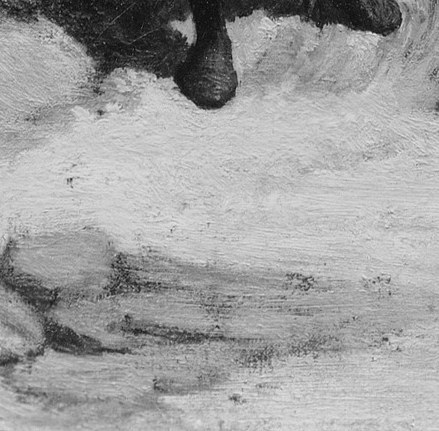
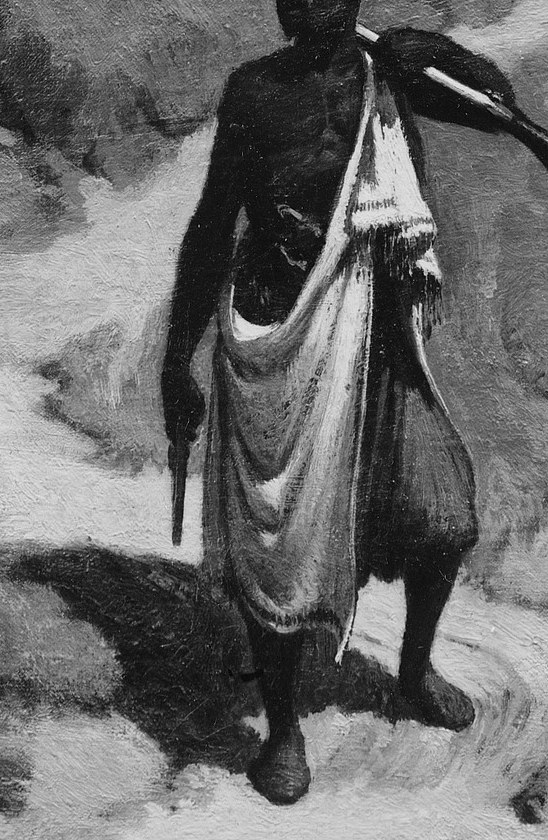
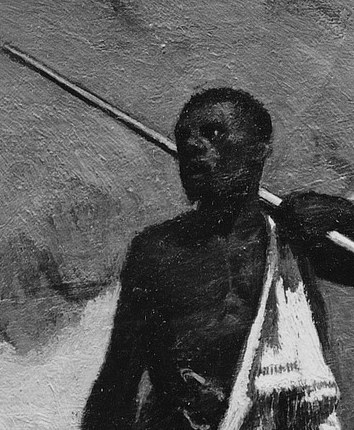
Start with the rifle. It extends past the figure's head, forming a vertical line that reads almost like a crown. Then look at the white drape: Vedder made it the brightest passage in the whole composition, pulling the sentinel forward from the dark rocks behind him. And note his bare feet, planted on rough stone, he holds a soldier's weapon but wears no uniform, a detail that complicates any easy narrative about military service.
Vedder was a New Yorker, a symbolist, and would later become famous for illustrating the Rubaiyat of Omar Khayyam. But in 1865, he gave us this sentinel, a figure of vigilance depicted with a dignity that was rare in American painting at that moment. The face is slightly turned, the grip on the rifle is steady, and the landscape itself feels like a fortress of solitude.
What does a painting say when it places a working rifle in the hands of a man whom the era refused to see as a guardian? The African Sentinel doesn't shout. It just stays on watch.
Details

Transcript
He stands alone, guarding the edge of nowhere. Elihu Vedder painted him in 1865, as the Civil War ended. The long rifle reaches above his head like a crown. In American art, an armed Black sentinel was almost unheard of. Bare feet on cold rock. He carries a soldier's weapon but no uniform. The white drape is the brightest thing in the picture. Vedder isolates him against the dark rocks, making the figure luminous. The whole scene says: here is a man who cannot be overlooked.