Portrait of a Surgeon by http://www.wikidata.org/.well-known/genid/60b8c5566975aa57c3d99adbda7fb9f1
This is the "Portrait of a Surgeon," painted in 1569 by an unknown Netherlandish master and now in the collection of The Metropolitan Museum of Art. It is not a humble likeness. It is a legal and social argument made in oil paint, from an era when a surgeon had to fight to be seen as more than a craftsman with a sharp blade.
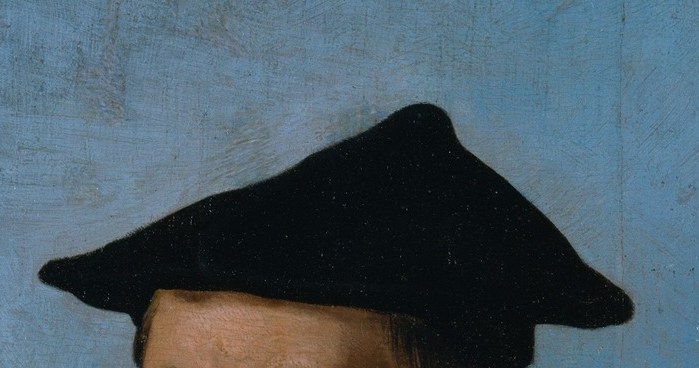
Look at the eyes. They lock onto yours with a direct, level gaze that would have been read immediately by a 16th-century viewer as a claim to authority. The flat black mortarboard on his head was not a generic hat; it was the regulated dress of university-trained physicians, a visual wall between the learned doctor and the barber-surgeon who pulled teeth in the market square.
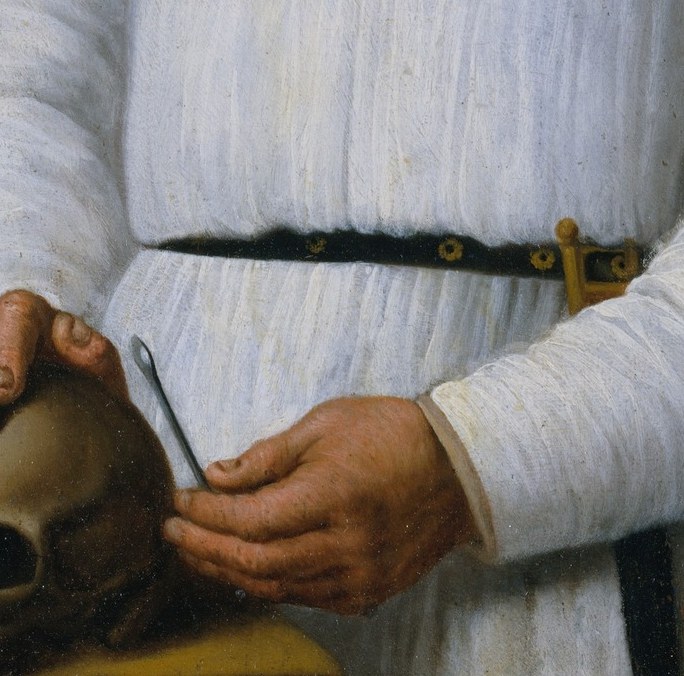
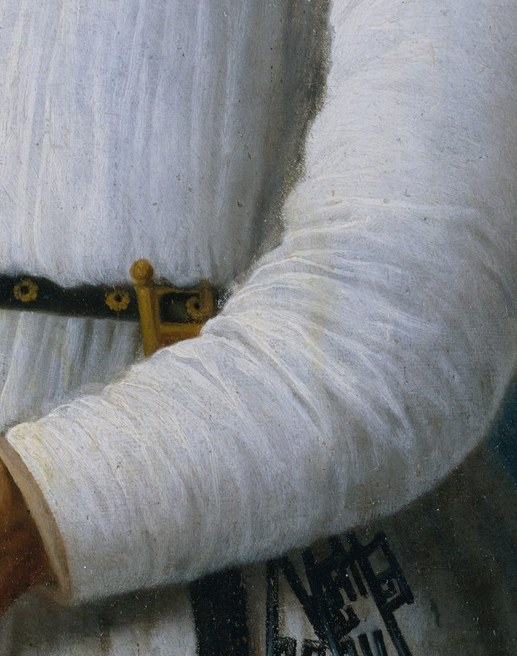
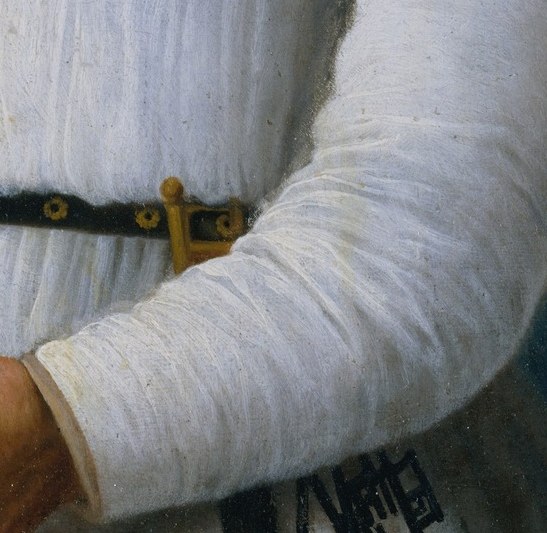
Now look at his hands. Cradled in his right palm is a human skull, the traditional memento mori, a reminder of mortality. But here it does double duty: possession of a skull announced that the sitter had performed human dissection, a practice that was both the highest proof of anatomical knowledge and a fiercely guarded privilege in the 1560s. In his left hand, he holds the specific metal tool of his specialty. The white surplice and black cape complete the picture of a man dressed in the costume of professional ritual, not daily labor.
The painting uses stark chiaroscuro to sculpt the face and hands out of a pale blue-grey atmosphere, a technique that gives the portrait a theatrical, almost confrontational intensity. We don't know this man's name, but his argument has survived: he was a learned healer, standing between the invisible world of disease and the visible world of the body.
Details
Transcript
He stares straight at you, level and unblinking. The black hat is not fashion. It is a diploma. Only university-trained physicians wore the mortarboard in 1569. He holds a human skull: the ultimate professional credential. To hold a skull meant you had dissected a human body. A rare, licensed privilege. His left hand grips a surgical tool beside the bone. Together, his hands hold death and the power to postpone it.