The Lamp Lighter by William P. Chappel
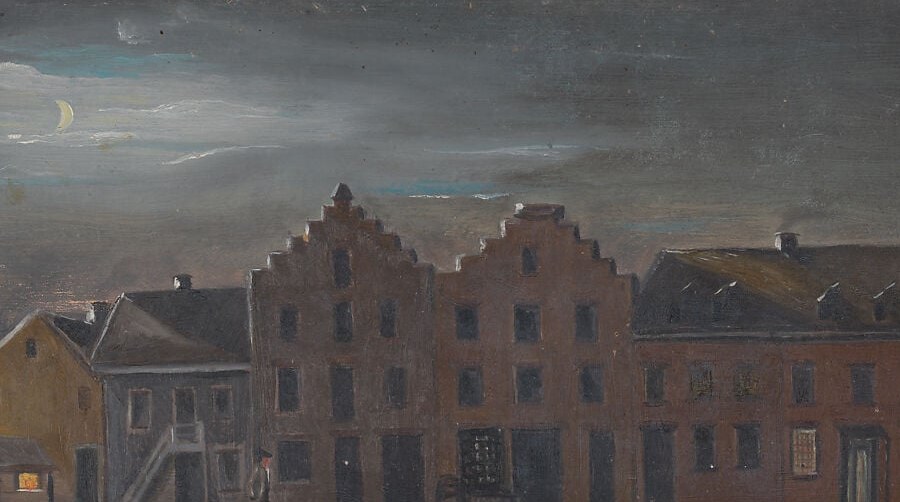
William P. Chappel's "The Lamp Lighter" (c. 1874) is a rare surviving image of a job that once kept entire cities from plunging into absolute darkness. Every evening in New York's gaslit era, men carried small flames up tall ladders, igniting streetlamps block by block. Chappel painted this anonymous figure on slate paper, an unusual choice that gives the wet cobblestones a slick, almost metallic sheen.
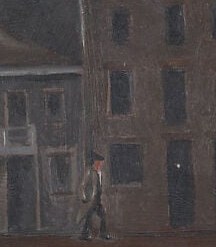
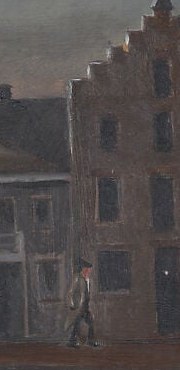
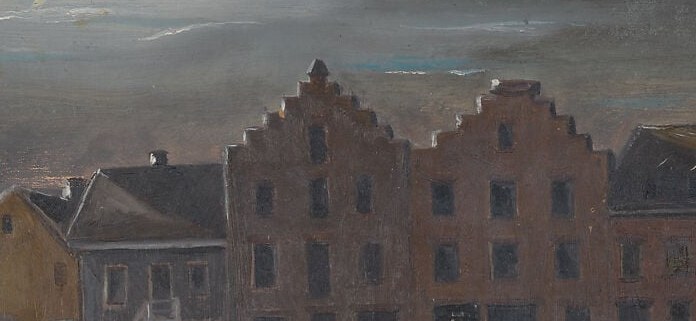
Look at the contrast between the lamp lighter's small, dark-coated silhouette and the warm, lit windows behind him. Private life inside those brick buildings has already begun. He is working so others can move safely through the night. The moon above him is the old light source; the gas lamp he lights is the new one.
Chappel painted this scene in the 1870s, the same decade Thomas Edison began work on a practical electric light. Within a generation, the entire profession of the lamp lighter would vanish from the streets of New York. Chappel himself died in 1880, the very year Edison's Menlo Park bulbs began to light up a few city blocks.
An entire nighttime city relied on this invisible work, and then, in a flicker, it was over.
Details
Transcript
New York, 1874. A street sinks into darkness. The only light is a crescent moon. One man climbs into the dark to change that. His job: ignite the gas streetlamps by hand. That warm glow in the windows? Already lit. History says this profession would disappear within a generation. Electricity erased his skills. And the painter's.