Virgin and Child by Lorenzo di Credi
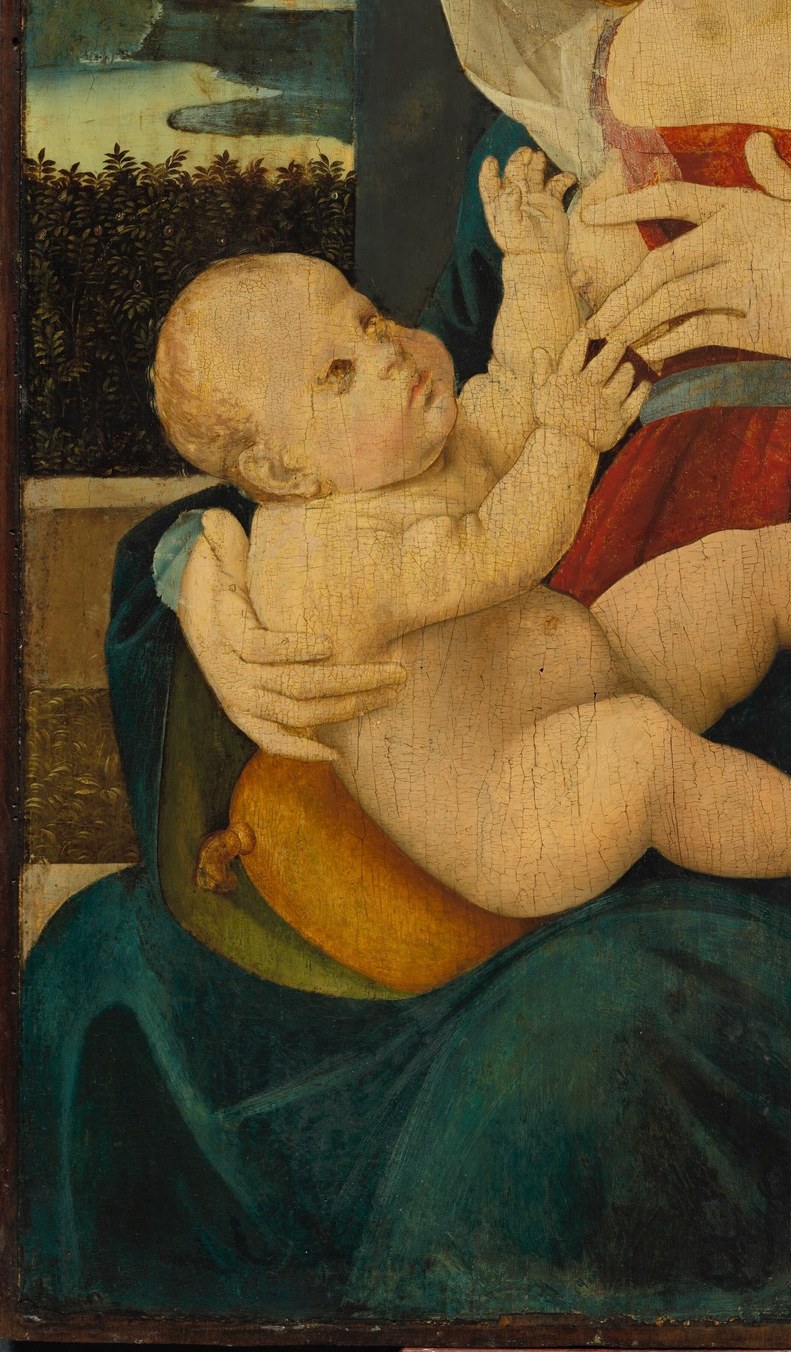
Lorenzo di Credi's "Virgin and Child" (c. 1475-1480) at the Metropolitan Museum of Art, New York, is a masterclass in subtle storytelling through paint. A student of Andrea del Verrocchio, who also trained the young Leonardo da Vinci, di Credi inherited a meticulous approach to art.
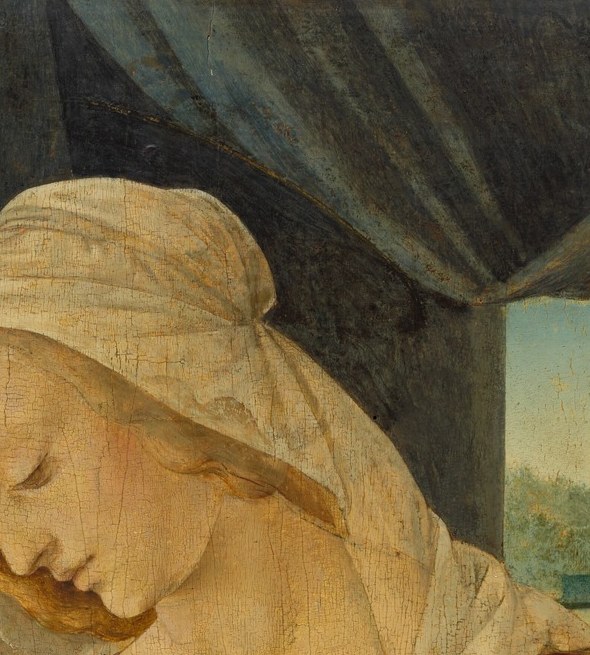
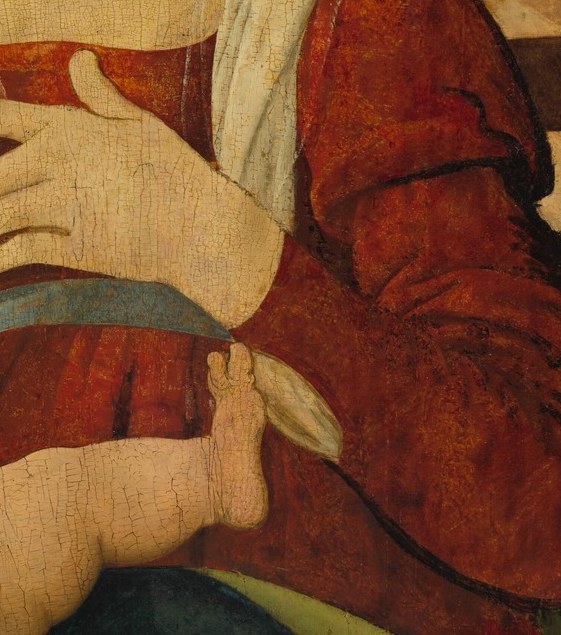
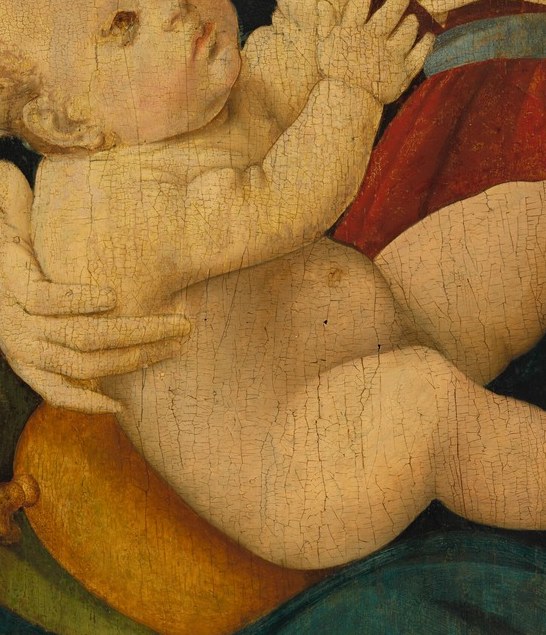
Notice the luminous quality of the Virgin Mary's skin, a hallmark of Verrocchio's workshop. While her face is serene, look closely at her fingers clutching the red cloth; this subtle tension hints at the foreknowledge of her child's future, a prefiguration of the Passion. The Christ Child's upward gaze also suggests an awareness beyond his infancy.
Di Credi's use of deep ultramarine for Mary's mantle was a display of wealth, as the pigment was more costly than gold itself. The careful details and quiet emotion showcase a devotional image that invites deep contemplation.
What other hidden meanings do you see in the painting?
Details

Transcript
This painter was a student of Leonardo da Vinci's teacher. He learned how to make skin look luminous, almost porcelain. Mary's serene face hides a subtle tension. Her fingers clutch this small red cloth, not just hold it. This red bundle likely prefigures the Passion shroud. The Christ Child looks up, already aware of his destiny. The deep blue mantle was more expensive than gold.