The Expedition Leaving Fort Frontenac on Lake Ontario. November 18, 1678 by Catlin, George
George Catlin's 'The Expedition Leaving Fort Frontenac on Lake Ontario' (1848) at the Smithsonian American Art Museum, meticulously reconstructs a historical moment from 1678. It depicts a departure from a French outpost on Lake Ontario, highlighting early North American exploration and colonial activity.
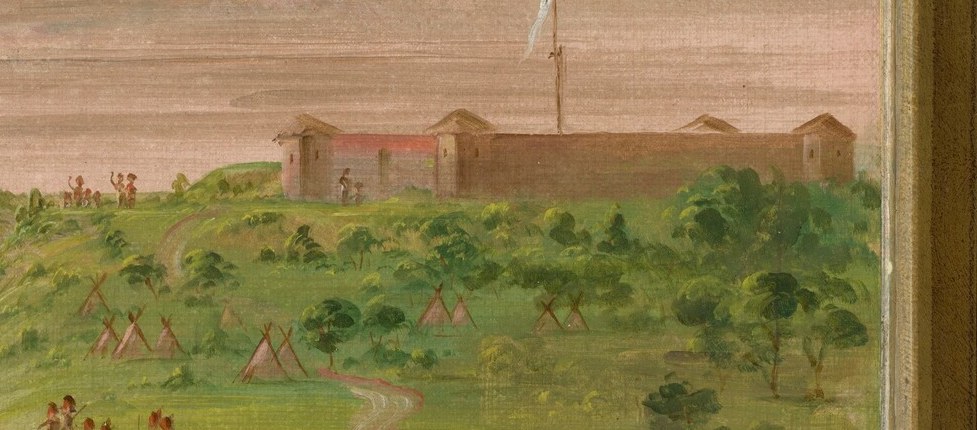
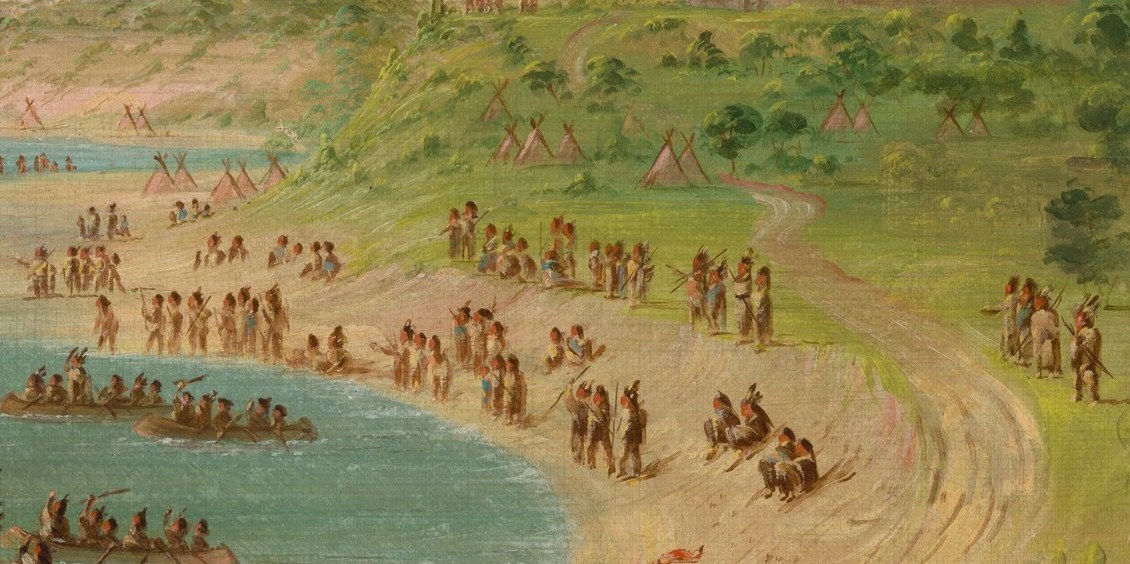
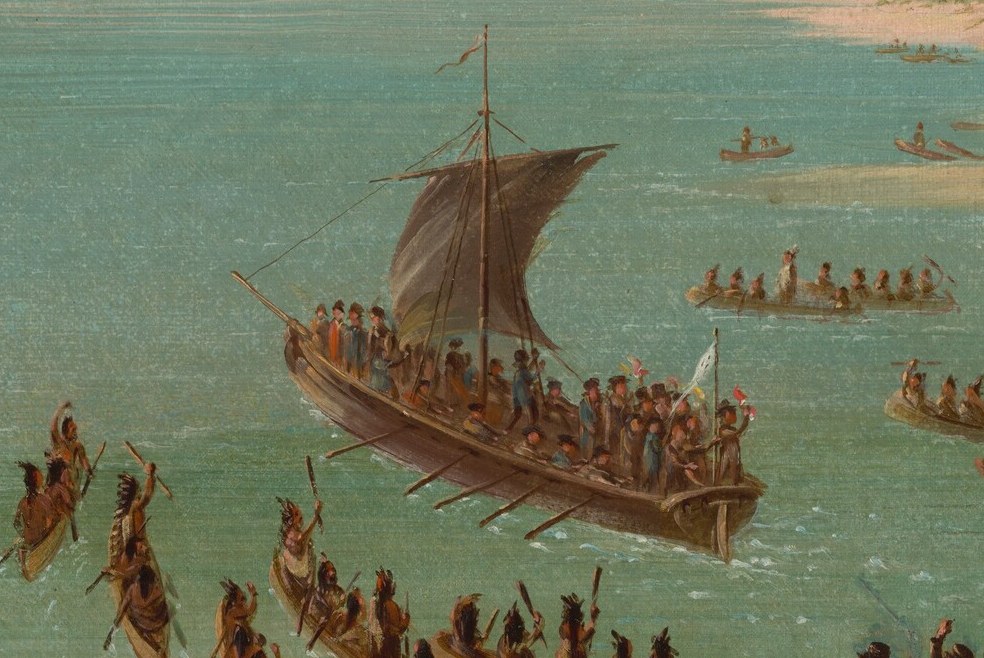
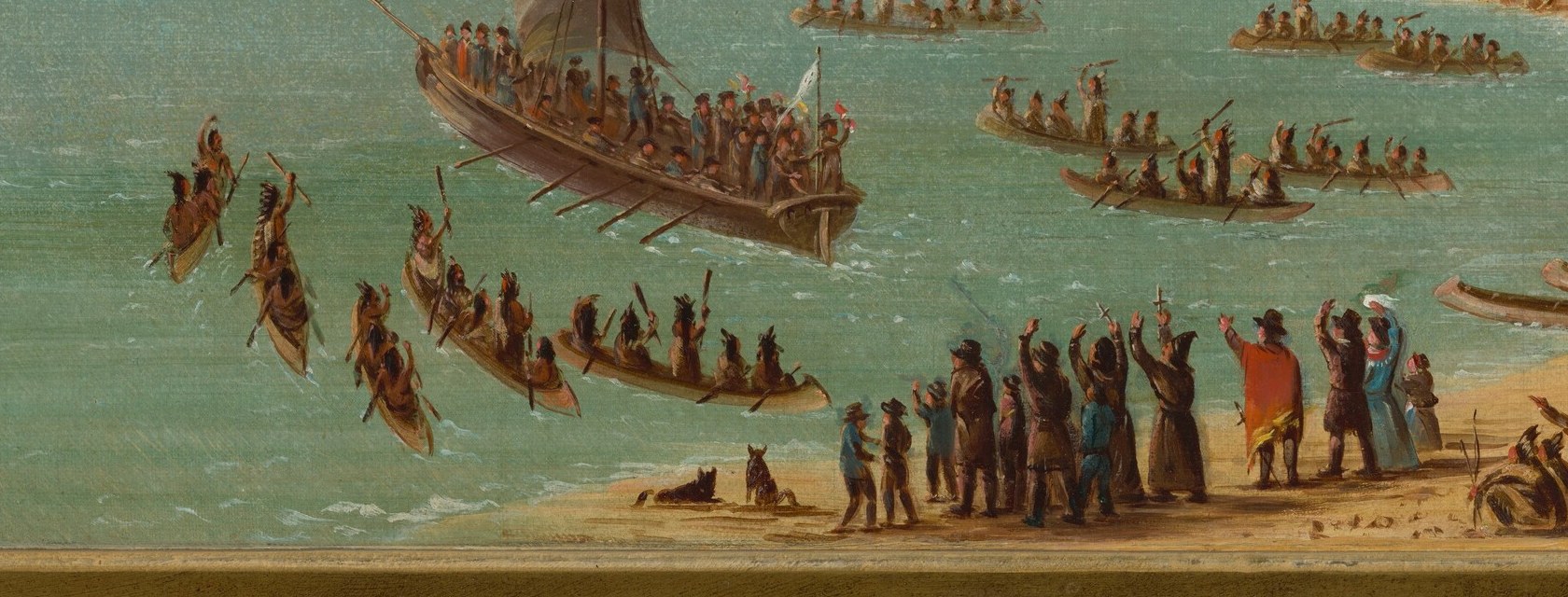
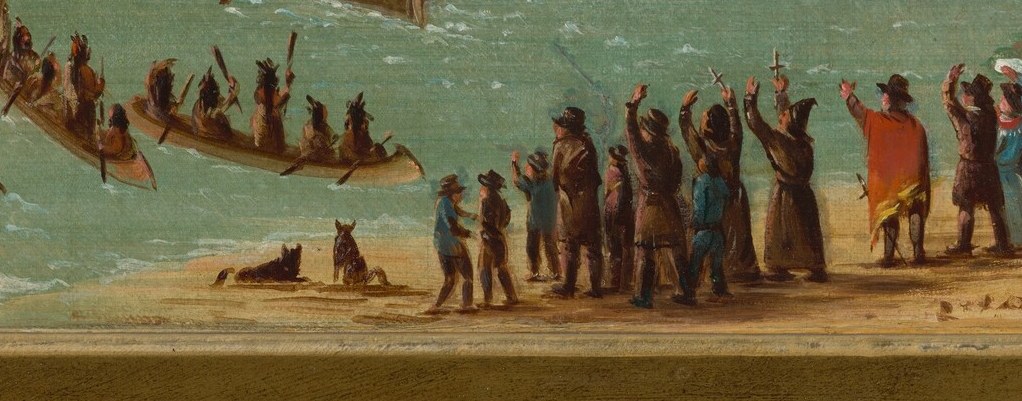
Look closely at the various elements: the fortified building, the indigenous tents and tipis, and the diverse watercraft, from the large sailing ship to the smaller canoes. These details illustrate the complex interactions and presence of different cultures in the frontier landscape.
Catlin, an American lawyer-turned-painter, is best known for his extensive documentation of Native American life in the American West during the 1830s. However, this painting showcases his earlier interest in historical landscapes and the development of the continent, using techniques like glazing to achieve depth and luminosity.
This work offers a glimpse into a specific moment in frontier history, carefully recreated by an artist dedicated to documenting American life. What does this blend of structures and vessels tell us about the era?
Details
Transcript
This painter recreated a specific event, in 1678, on Lake Ontario. Fort Frontenac, a French outpost, marked a colonial presence. But indigenous dwellings, tents and tipis, dotted the hillsides. A large ship departs, likely carrying French explorers or traders. Numerous canoes, likely indigenous, also navigate the water. This artist, known for his American West paintings, documented frontier life. He used thin layers of paint to build luminous details and depth.