New York at Night by Louis Eilshemius
Louis Eilshemius painted New York at Night in 1910, and for decades almost nobody cared. Today it hangs in The Metropolitan Museum of Art, a strange, moody nocturne of a city learning to stay up past dark.
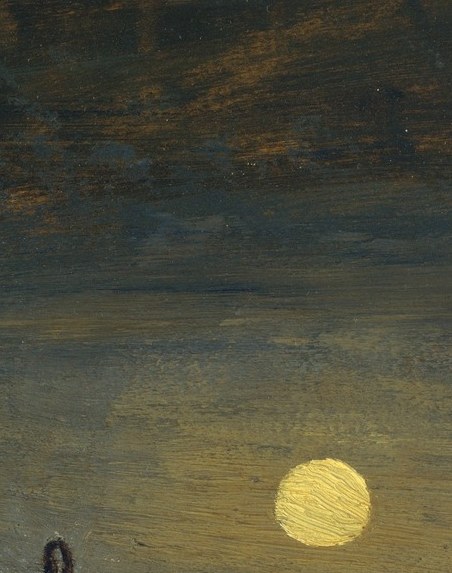
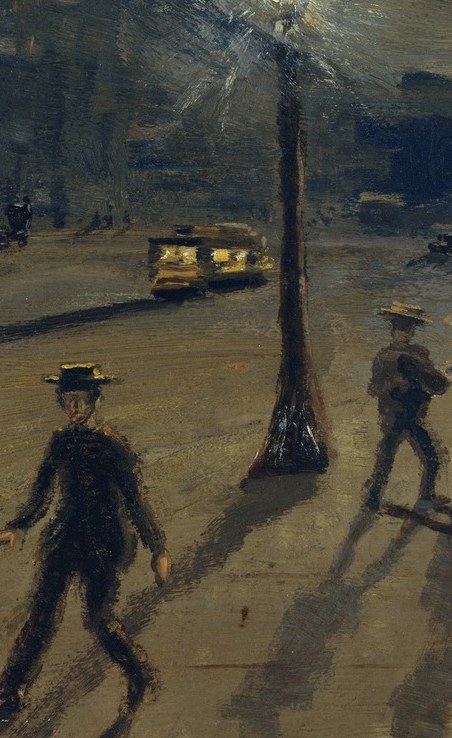
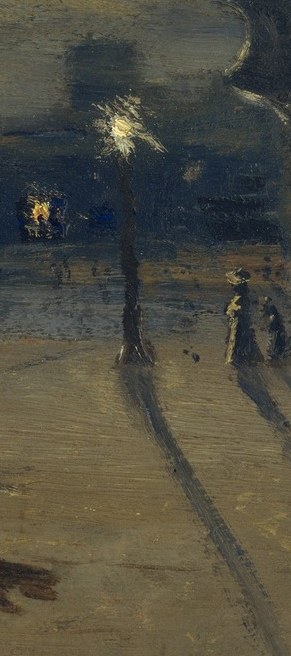
Your eye goes straight to the moon, Eilshemius lined up the wet street perspective to pull you there. Then you notice the lone man in the foreground, his shadow stretched impossibly long. A couple huddles further back, sharing the street but lost in their own world.
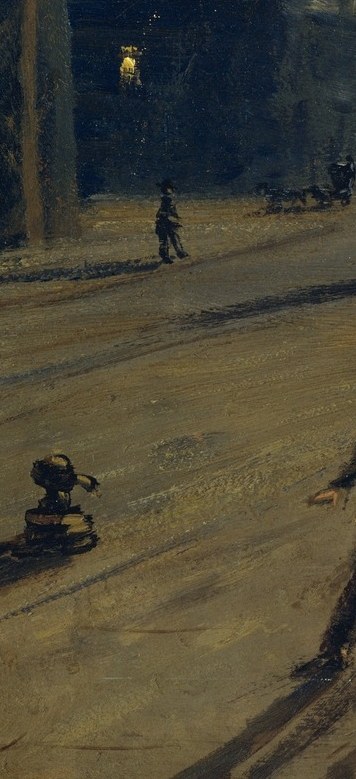
But the real find is nearly off the canvas: a single figure on the far right sidewalk, tucked behind a pale vehicle. He mirrors the foreground walker but stands totally apart, a bookend of urban solitude you could scroll past a dozen times.
Eilshemius was an odd case. A wealthy eccentric who painted, composed music, and self-published novels, he was largely ignored until 1917, when Marcel Duchamp discovered him and presented a solo show. The acclaim was brief and bittersweet; a car accident in 1932 ended his career. He died broke in 1941. How does the mood change when you notice all four figures instead of three?
Details
Transcript
New York, 1910. The city is learning to stay up all night. Eilshemius built the whole scene around a low, theatrical moon. The wet street pulls your eye straight to it. A man strides home alone. Long, exaggerated shadows. Further back, two people walk together. A couple, maybe. But there is one more person in this painting. Look past the cart. A solitary figure on the far right sidewalk. Totally disconnected. The painter only had one major champion: Marcel Duchamp found him in 1917.