Stilleben mit Römer by Willem Claesz Heda
Willem Claesz Heda, a master of rendering textures, created this Still Life with Rummer in 1631. This oil painting, part of the Gemäldegalerie Berlin's collection, showcases his exceptional ability to capture the appearance of various surfaces.
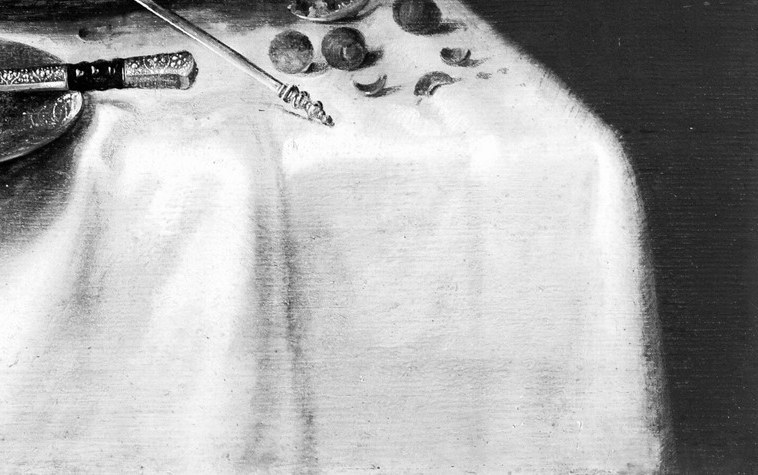
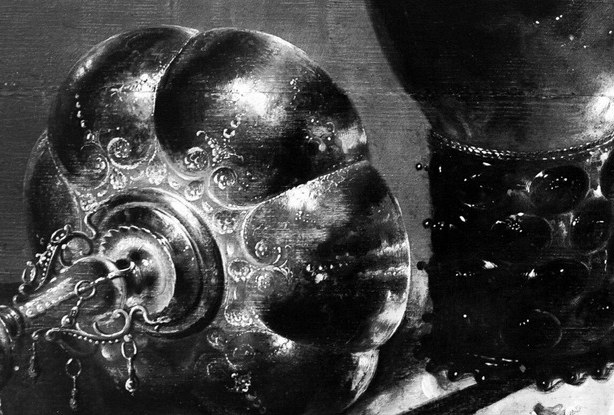
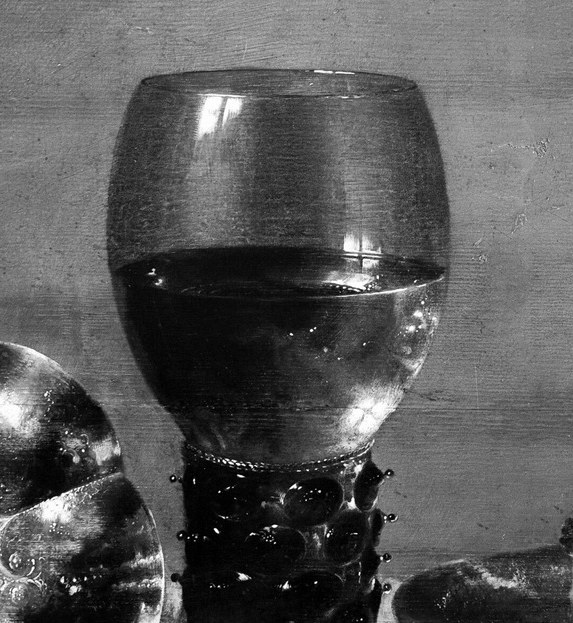
Notice the intricate folds and shadows of the white tablecloth, giving it a tangible presence. Then, observe the brilliant reflections on the ornate silver rummer, and how light interacts with the transparent wine glass, revealing the liquid within. These details are a testament to Heda's skill.
Heda, a Haarlem-based painter, specialized exclusively in still life works and is credited with pioneering the 'late breakfast' genre. His meticulous brushwork and restrained palette allowed him to create a three-dimensional realism that elevates everyday objects into a contemplative visual experience.
It makes you wonder, which texture do you find most convincing?
Details
Transcript
This painter was a master of surfaces. He was known for still life paintings like this one. Look at the folds and shadows in the tablecloth. Then see the shine on the ornate silver rummer. And the way light passes through the wine glass. It’s all just paint, made to look real.