Saint Dominic by Carlo Crivelli
Carlo Crivelli's "Saint Dominic," painted in 1472, showcases the artist's remarkably individual style, developed far from the mainstream Renaissance art centers. This tempera painting, now at The Metropolitan Museum of Art, is a testament to Crivelli's meticulous detail and vibrant surfaces.
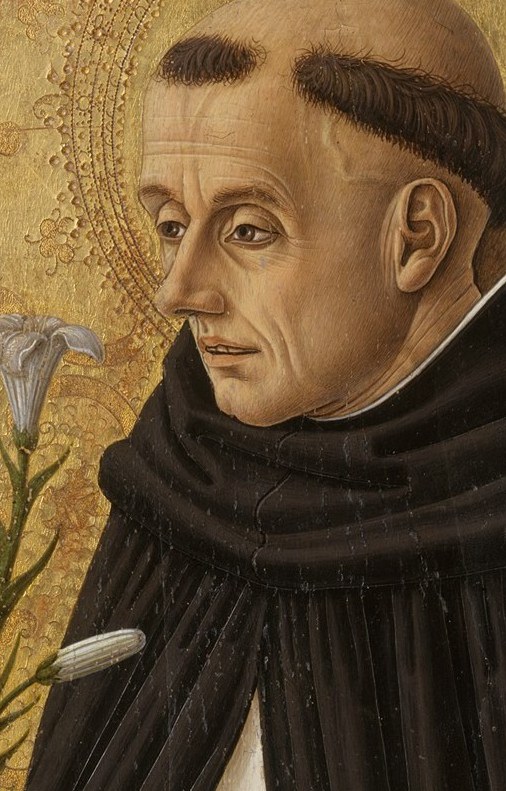
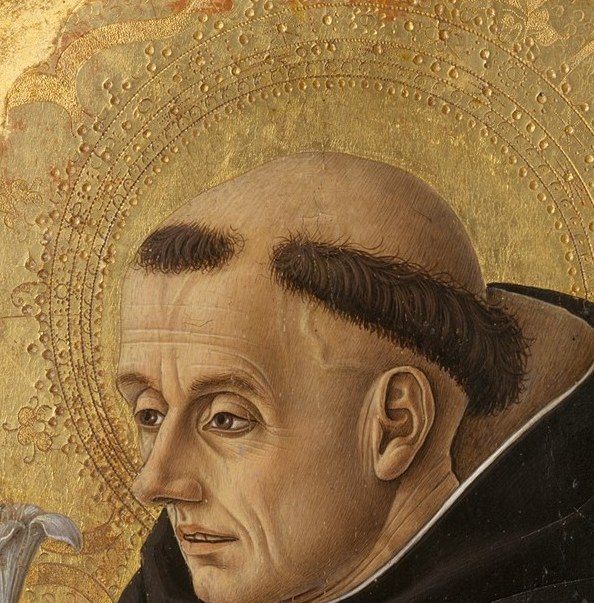
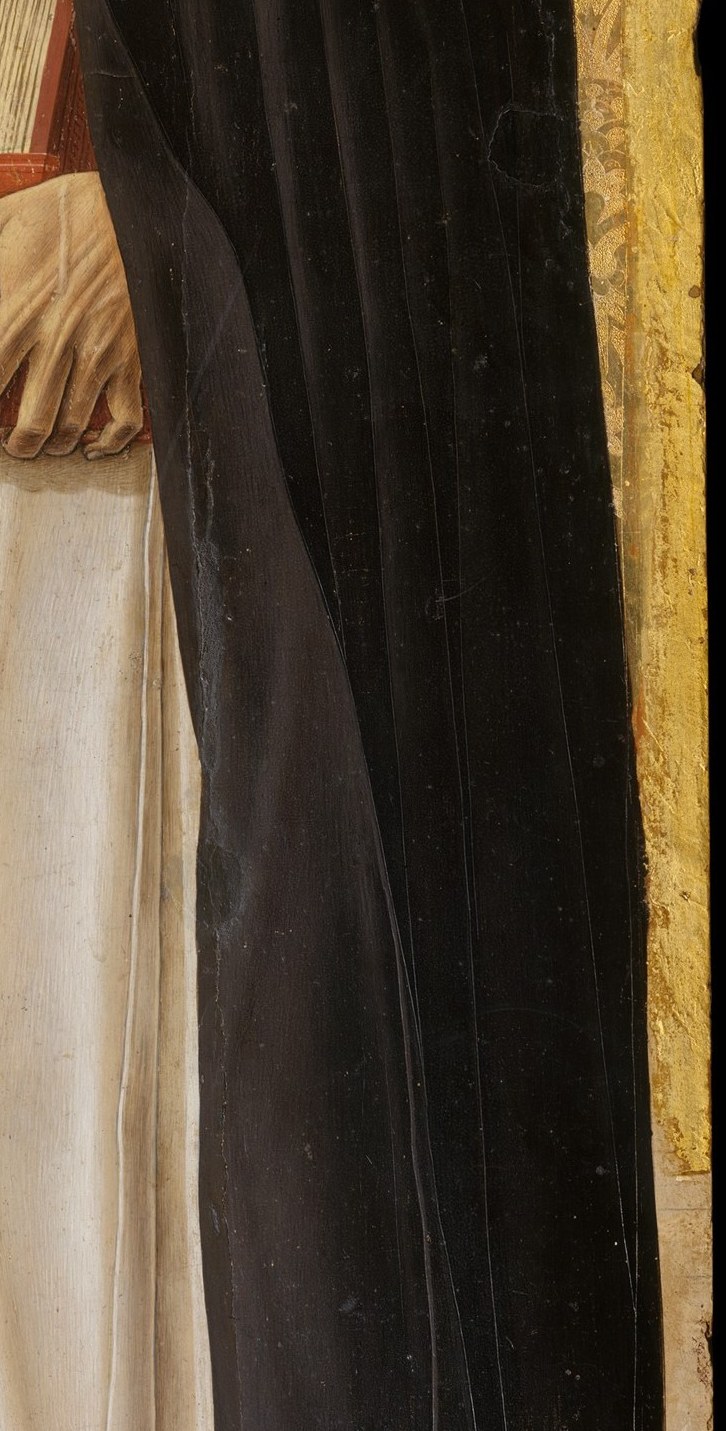
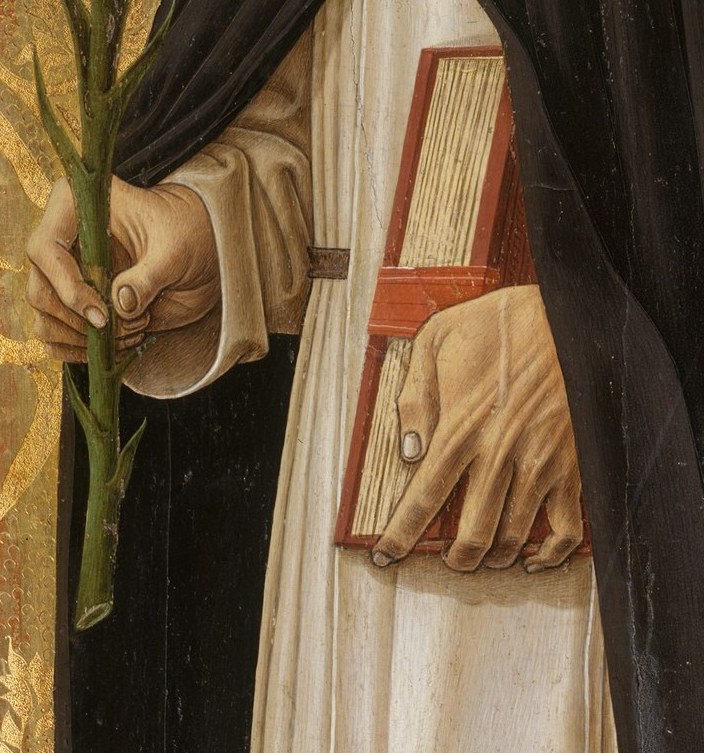
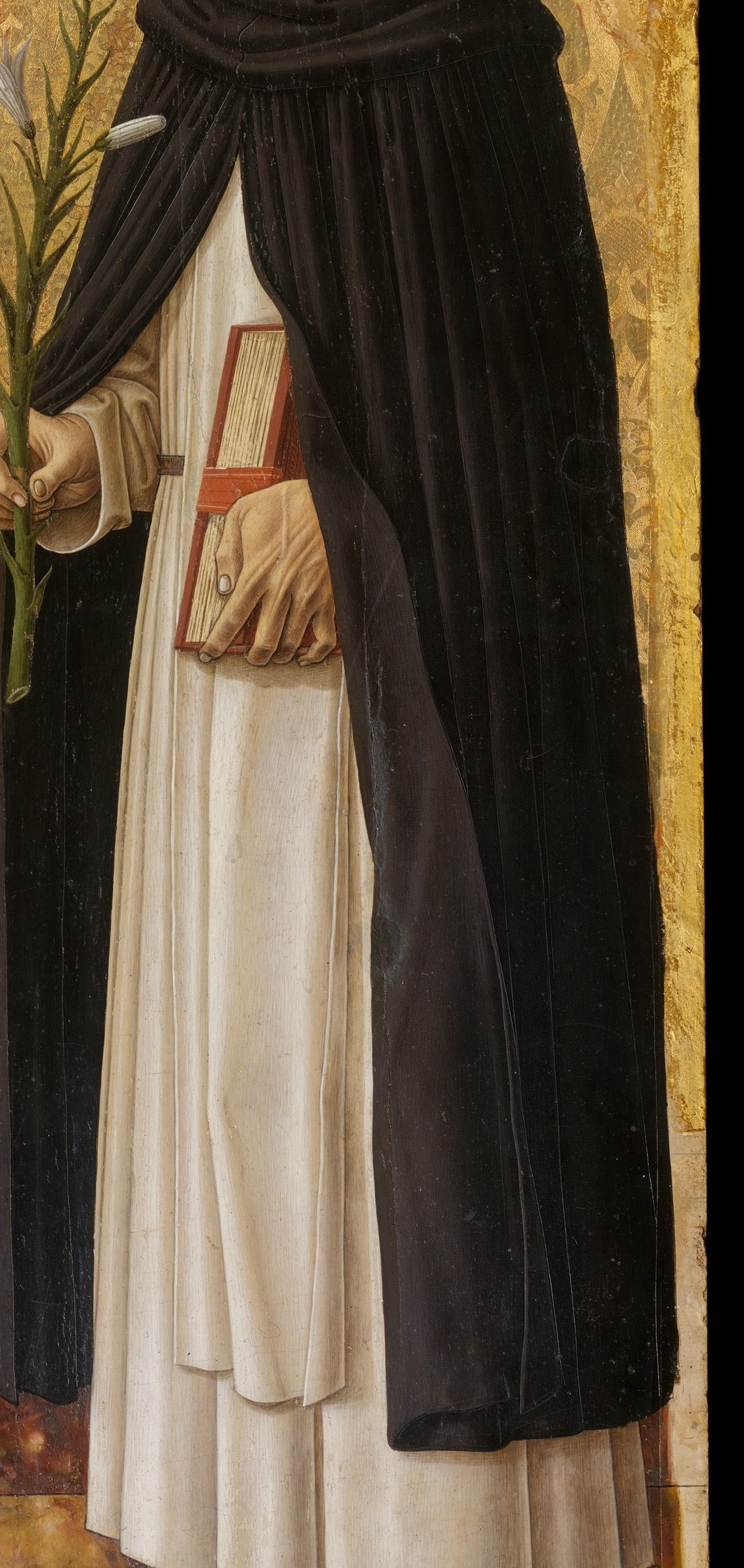
Look closely at the saint's habit, the delicate lines of the halo, and the expressive hands holding the lily and book. Crivelli's precision in depicting texture and light brings a palpable realism to this sacred subject.
Crivelli trained in the Veneto region, influenced by artists like the Vivarini, but later forged his own path in the March of Ancona. This allowed him to maintain a distinctive Late Gothic decorative sensibility, contrasting with his Venetian contemporaries and creating a truly unique artistic voice. His work is a fascinating blend of Renaissance innovations and traditional decorative elements.
What details in this painting capture your attention the most?
Details
Transcript
This painting is by Carlo Crivelli, from 1472. He worked far from the major art centers, in Italy's Marches region. This allowed him to develop a strikingly individual style. He renders every detail with intense precision. See the delicate gold lines, typical of his work. Notice the deep, sculptural folds of his monk's habit. It’s a master class in tempera, a challenging medium. Crivelli's unique vision shines through in every detail.