Imaginary Landscape by Gaspard Dughet
This is Gaspard Dughet's Imaginary Landscape, painted in 1655 and now at The Metropolitan Museum of Art. It depicts no real place. Dughet assembled it from memory and study, building an idealized world where the real subject is light and depth itself.
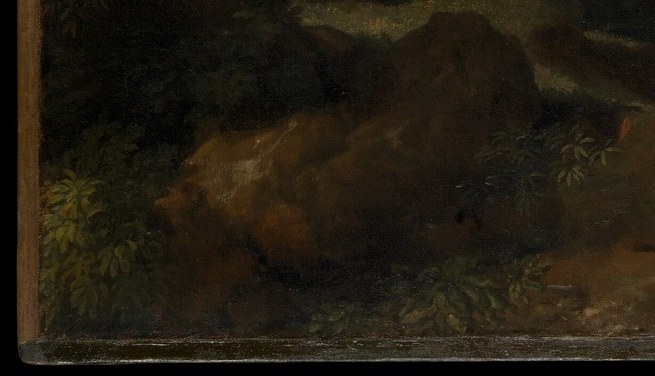
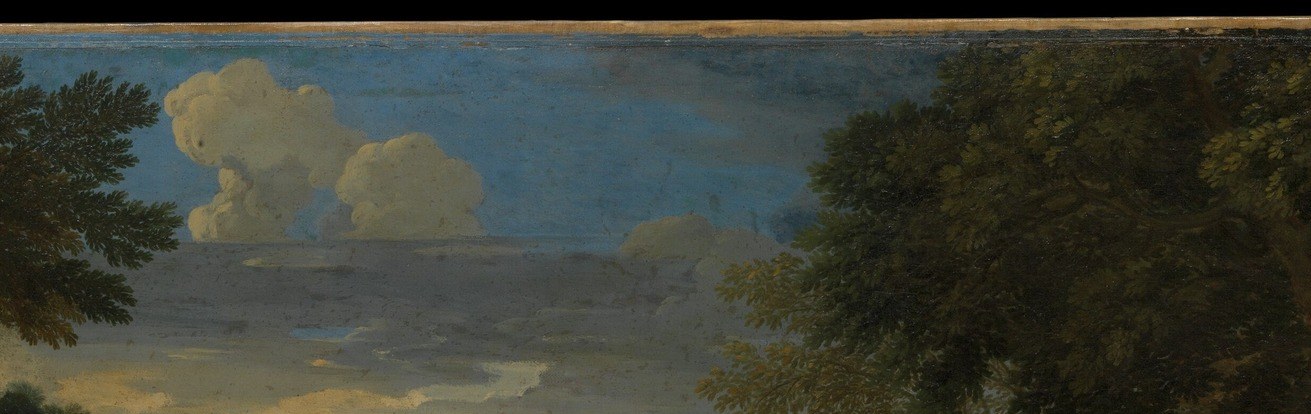
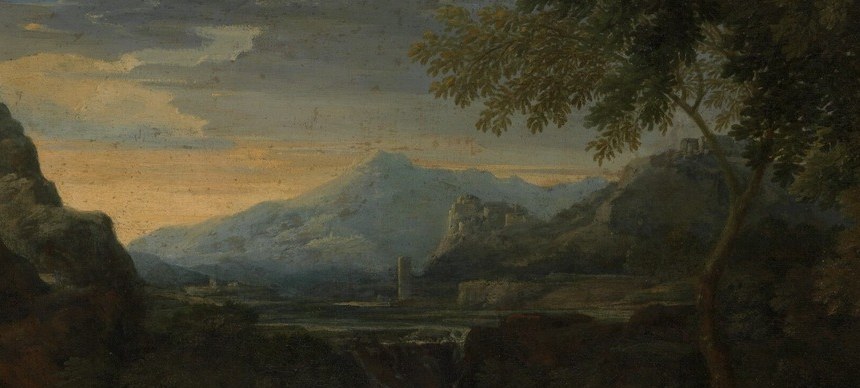
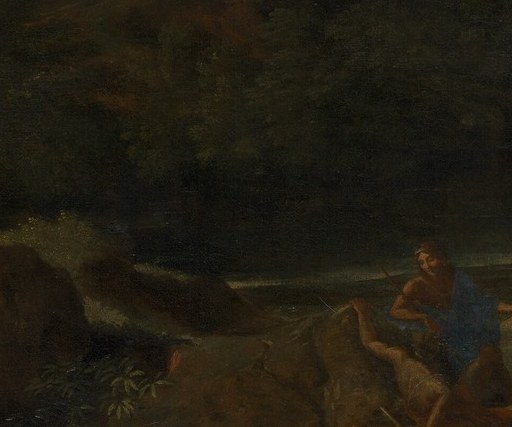
Look at the bottom left corner. It is nearly black, a pool of deep shadow. Then look to the horizon. The mountains are a pale, luminous blue. The entire middle of the painting is a gradual, near-imperceptible melt from dark brown-green into cool blue-grey. This gradation is called aerial perspective, and it took 17th-century landscape painters decades to master convincingly in oil.
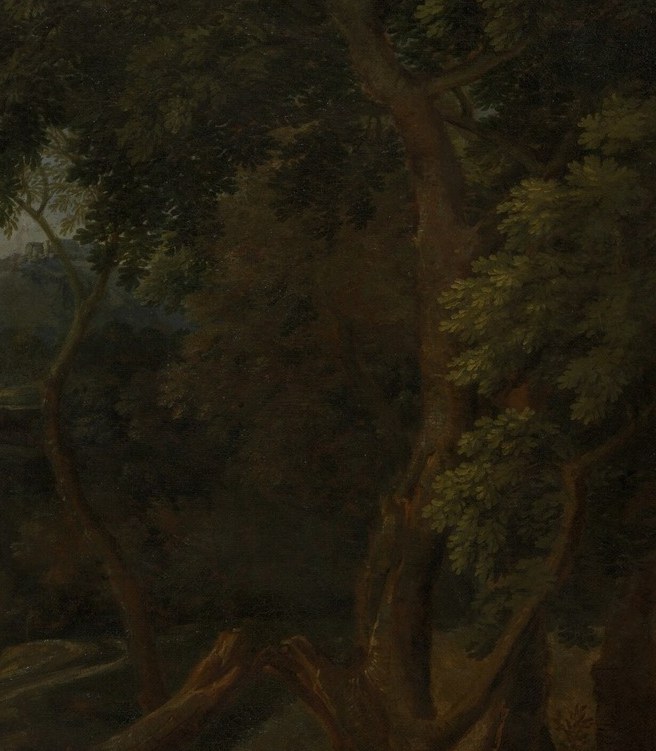
Dughet was French, born in Rome, and the brother-in-law of Nicolas Poussin. He was so successful that he rarely painted anything but landscapes, and his patrons collected them for the calm, expansive feeling they created. He built his compositions using a formula: dark, framing trees on the edges, a shadowed foreground, and a bright, impossibly distant center.
The tiny architecture on the mountain slope is easy to miss. It suggests a human presence absorbed by the scale of the natural world, a quiet philosophical undercurrent in the imaginary landscape genre. The solitary figure in blue, arms crossed, simply watches. He is us.
Details
Transcript
The bottom of this painting is almost black. But look up. The sky glows white. The trick is the space between them. Painters call this aerial perspective. The further things are, the bluer and softer they become. Here, a dark cliff frames the bright gorge. A lone figure watches. His scale makes the valley vast. Gaspard Dughet painted this in 1655. No real place, just pure illusion.