The Last Valley - Paradise Rocks by La Farge, John
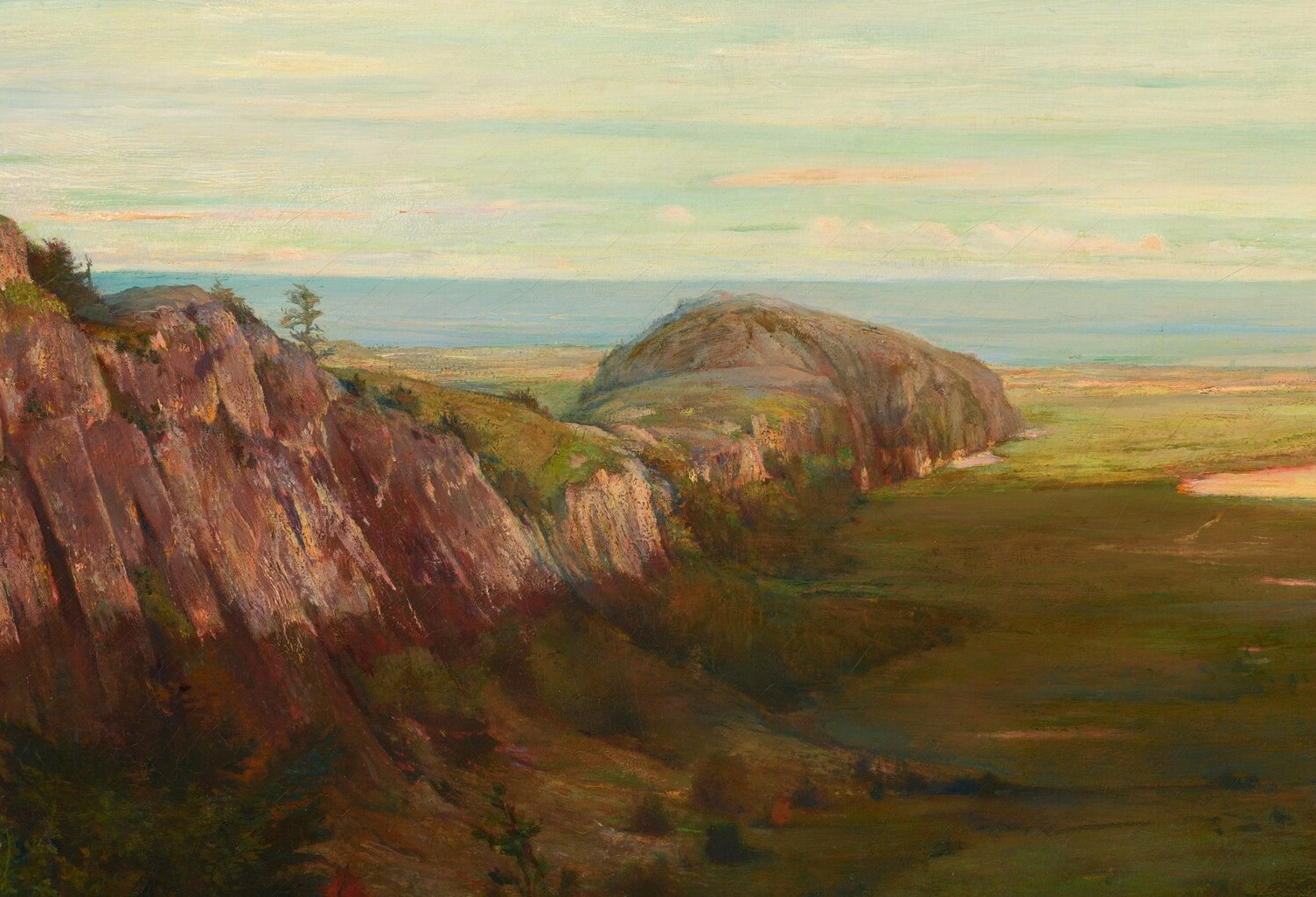
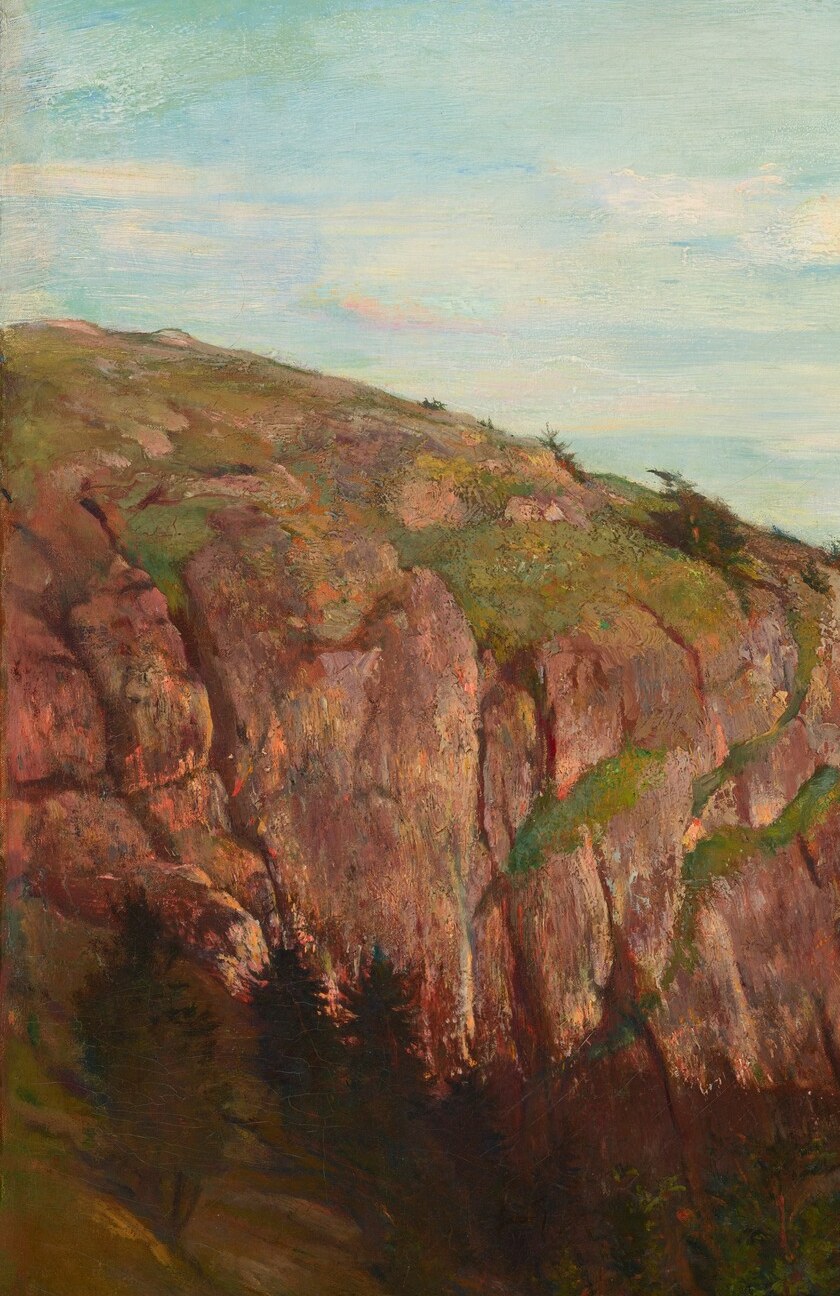
John La Farge often hid small, meaningful details within his grand landscapes, inviting viewers to slow down and discover them. In his 1868 oil on canvas, *The Last Valley - Paradise Rocks*, currently held in a private collection, a quiet moment of discovery awaits.
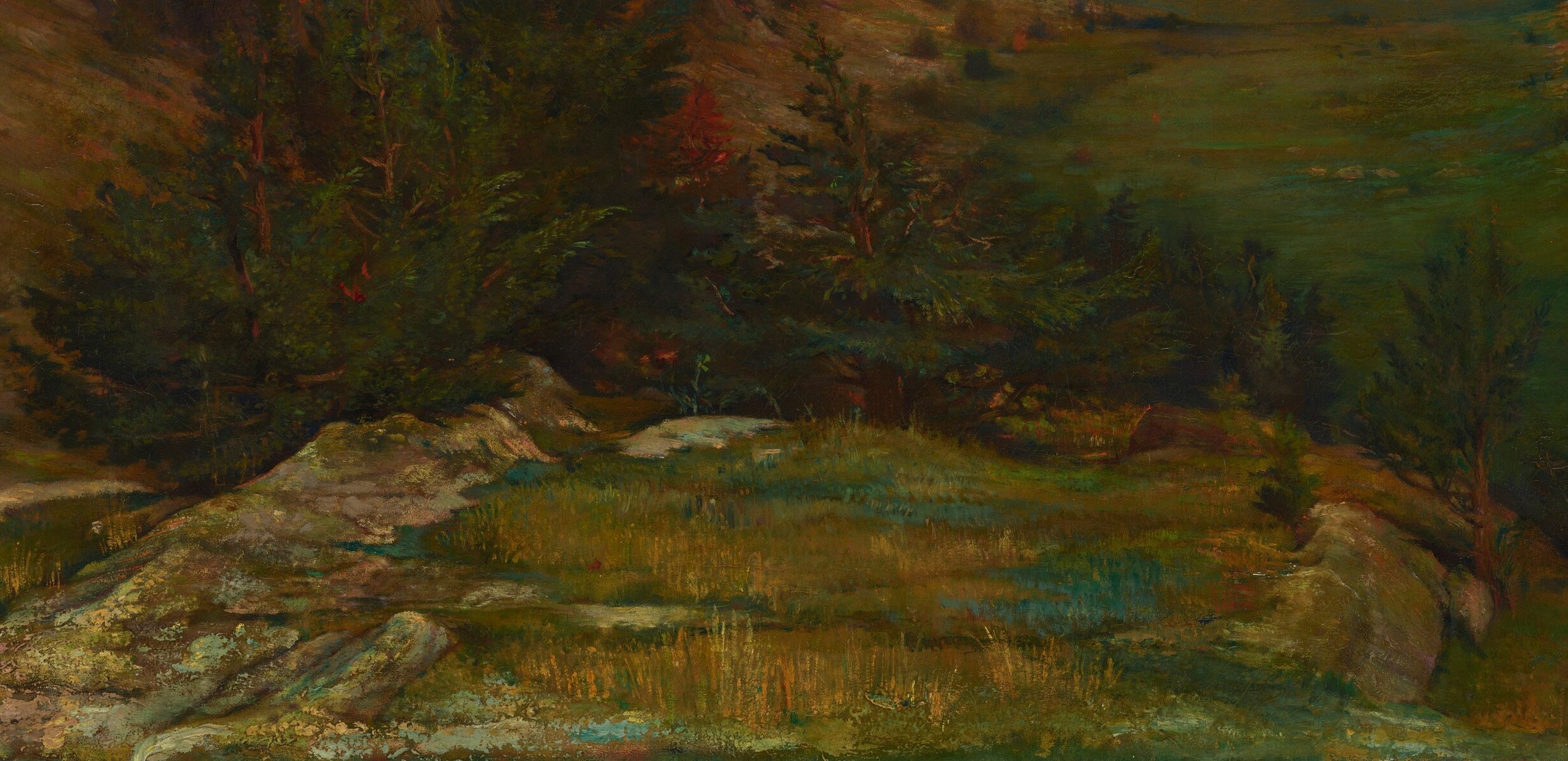
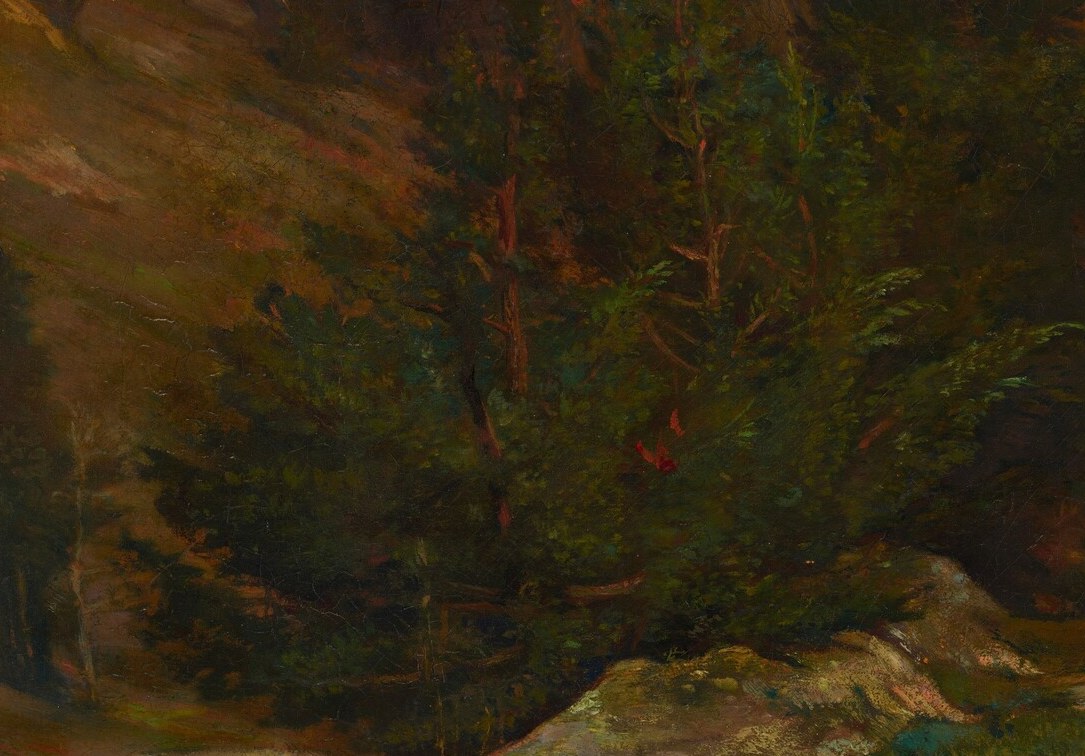
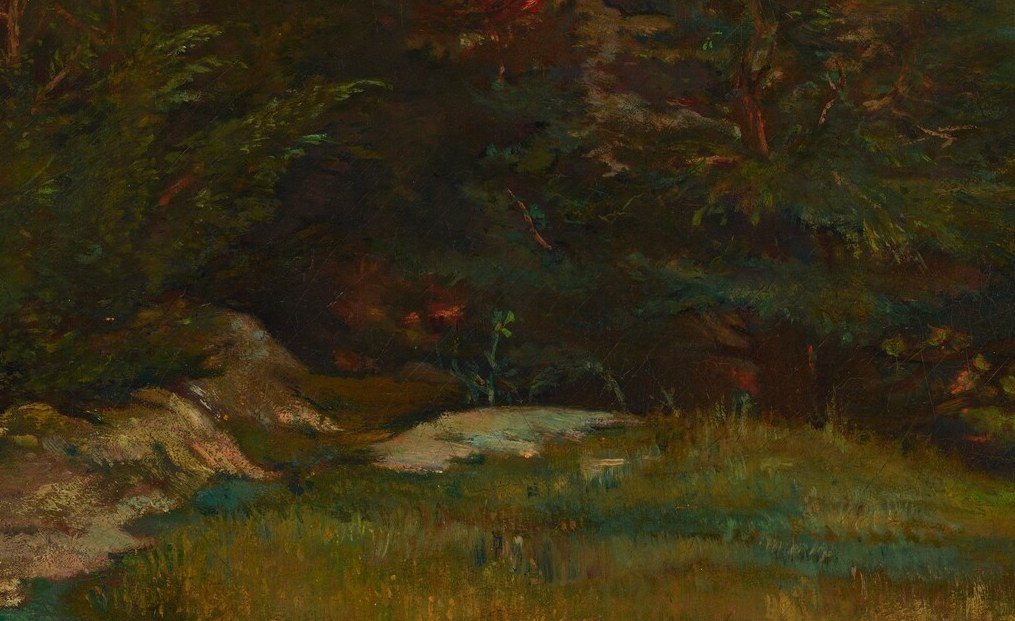
While the eye is immediately drawn to the distant, sun-drenched valley framed by imposing cliffs, take a moment to explore the shadowed foreground. Just beneath the glowing left cliff face, nestled among the dark vegetation, you'll find a tiny, reflective pool of water. This subtle gleam acts as a visual anchor, placing the viewer within the painting's atmospheric depth.
La Farge, an American artist (1835-1910), was known for his meticulous glazing technique, applying multiple thin layers of oil paint to achieve rich, luminous colors and an ethereal glow. This method creates the distinctive interplay of light and shadow, giving the rugged rocks a dreamlike quality.
What other hidden details do you think he might have included?
Details
Transcript
This painter often hid small details in plain sight. He wants you to look closely at this light-filled valley. But notice how dark the foreground shadow is. Look carefully, just under the left cliff. There, a small pool of water reflects the bright sky. It's a secret anchor, placing you right in the scene. He used thin glazes to build these luminous colors.