Buddha's Flowers: Lotus, Tokyo by Wores, Theodore
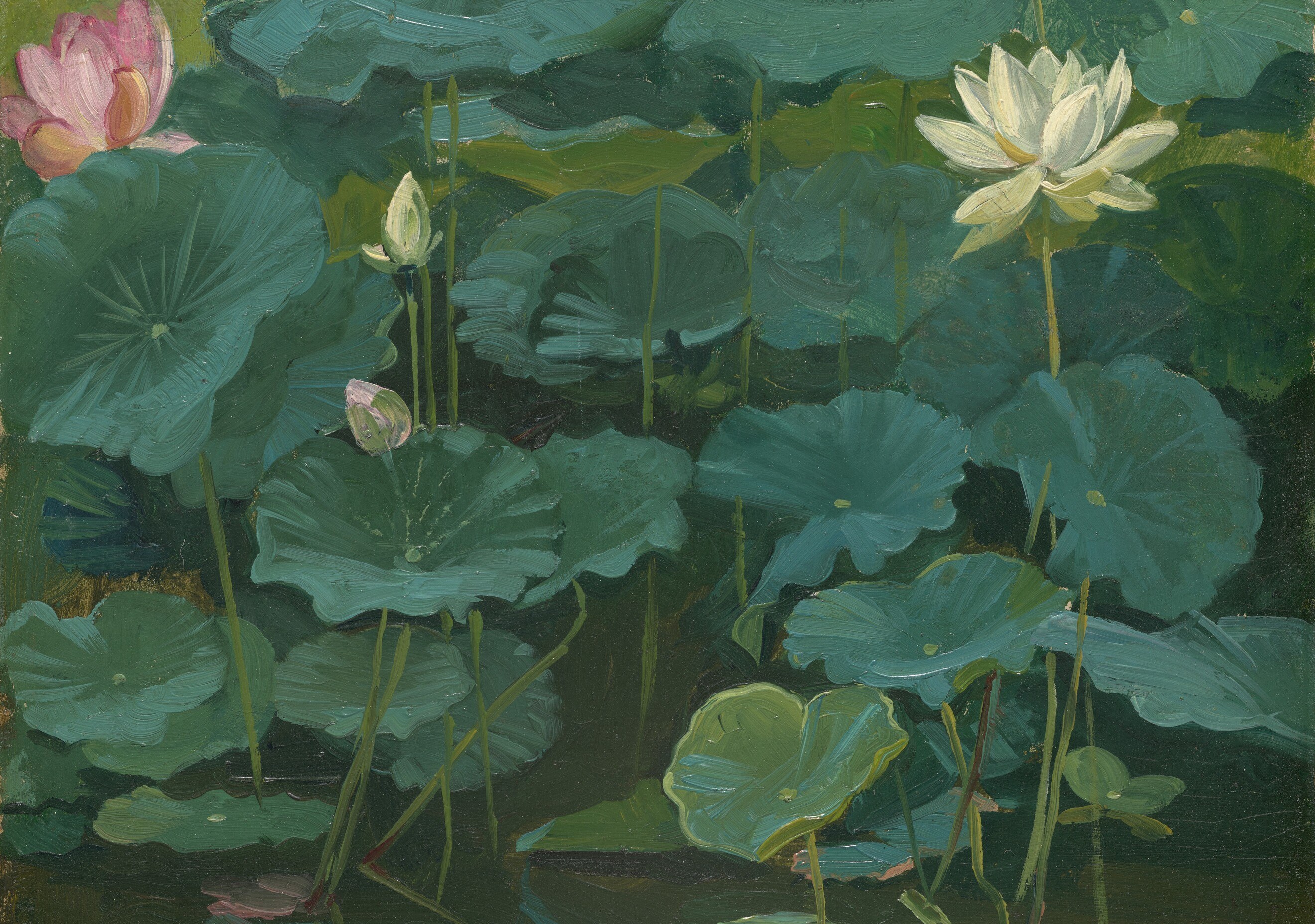
In 1894, American painter Theodore Wores created *Buddha's Flowers: Lotus, Tokyo*, an oil on board painting that beautifully marries Eastern motifs with Western post-impressionist style. This piece, now in a private collection, emerged from Wores' extensive travels, including a significant period in Japan.
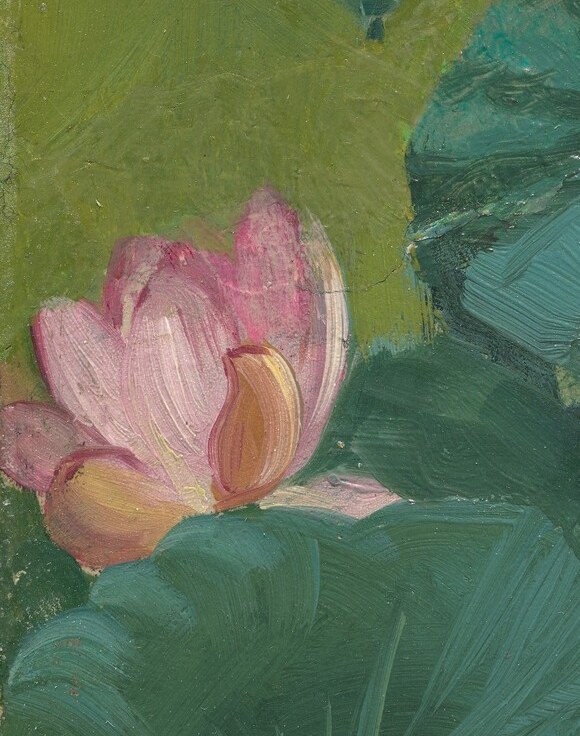
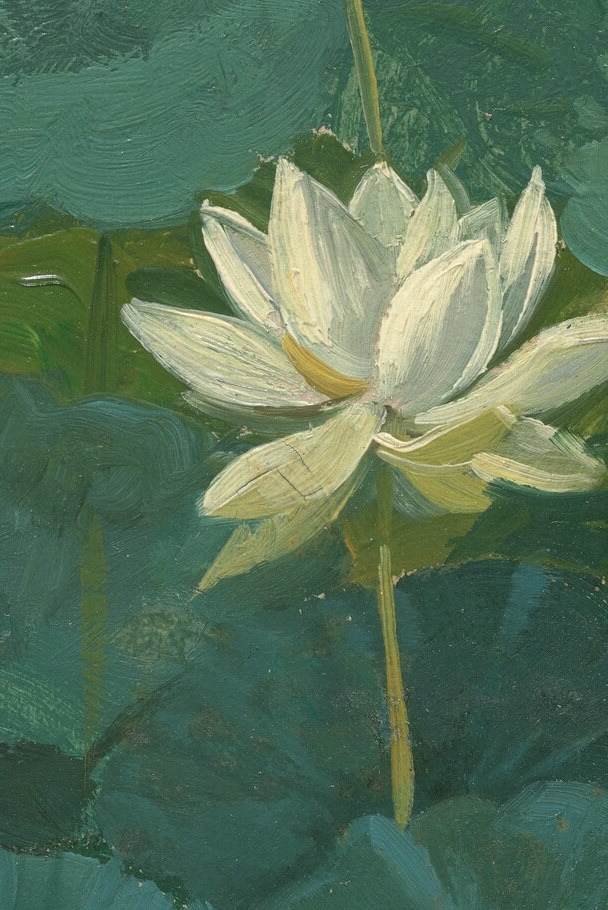
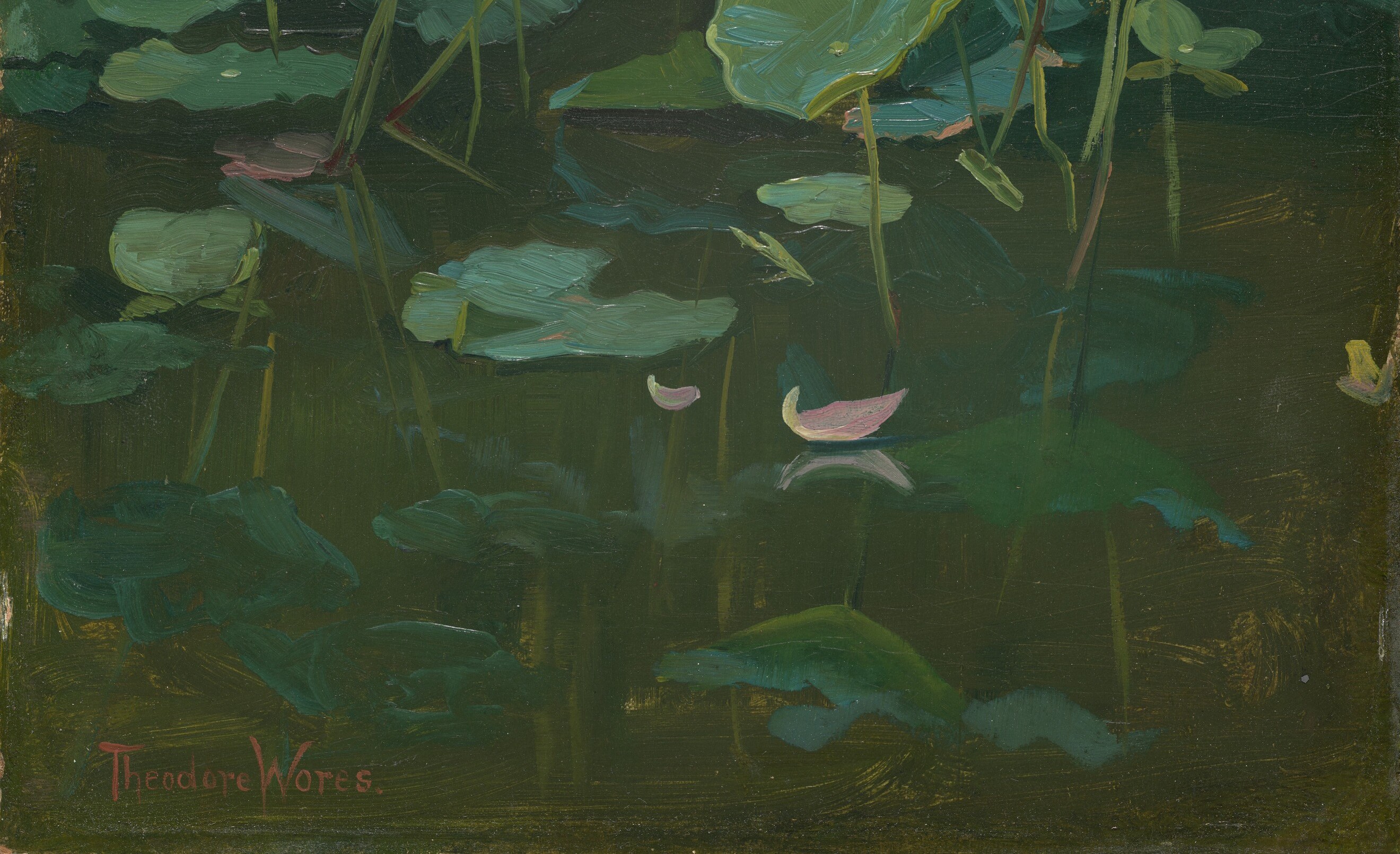
Observe the serene cluster of pink and white lotus flowers, rising from the tranquil water amidst dark green lily pads. The subtle reflections on the water's surface add depth, blurring the lines between the physical and the ephemeral. It’s a quiet study in contemplation and natural beauty.
Wores was part of a movement where Western artists, influenced by Japonisme, began incorporating Japanese elements into their art. This painting is a testament to his keen observation and his ability to integrate cultural aesthetics into a cohesive and evocative artwork. It invites us to pause and reflect on the beauty found in stillness.
What do you find most captivating about this blend of cultural influences?
Details
Transcript
In 1894, an American painter in Tokyo captured this tranquil scene. The lotus flower is sacred in Buddhist traditions. Its delicate petals rise from the water, symbolizing purity. These broad lily pads anchor the flowers to the pond's surface. Look closely at the water's dark, reflective surface. It mirrors the flowers, blurring reality with illusion. This work merged Japanese motifs with a Western style.