Landscape in Auvergne by Harpignies, Henri-Joseph
Henri-Joseph Harpignies painted this view of the Auvergne in 1870, seven years after his name became shorthand for the collapse of taste. Landscape in Auvergne now hangs quietly in a public collection, but its author spent a decade as an outcast from the Paris Salon after the scandal of 1863.
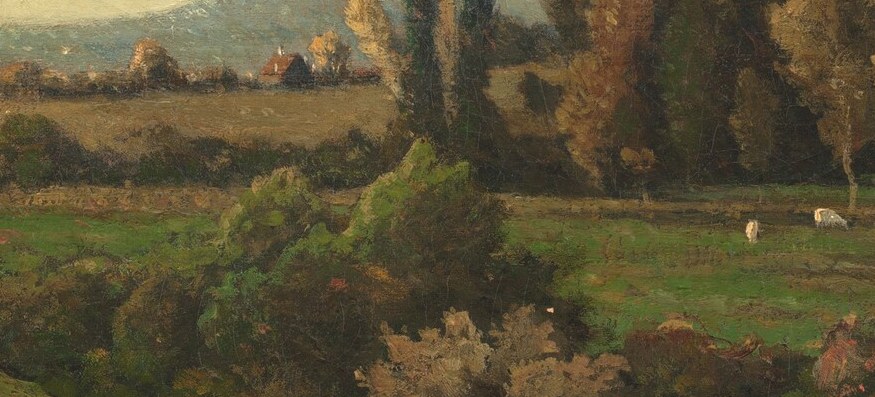
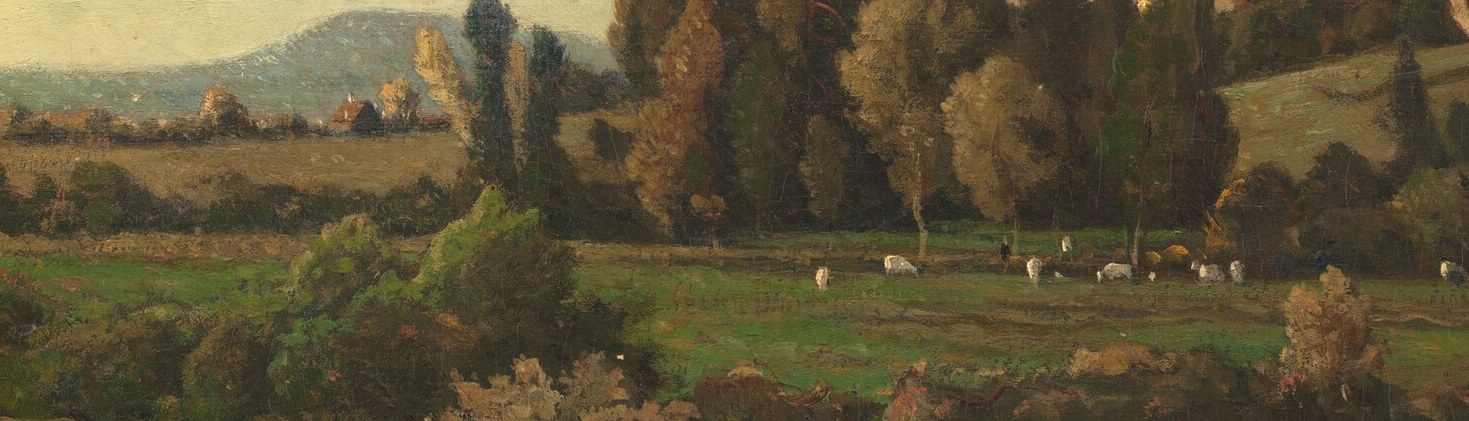
The viewer’s eye likely goes first to the warm sky and the bright water-reflection beneath it, then to the village rooftops on the hill. But it is the foreground field and fenceline that ground the scene in working agricultural reality. Harpignies painted this open terrain from plein-air observation, handling the fading ridge of the left hills with the atmospheric haze that defined his mature technique.
The scandal began at the Salon des Refusés, the exhibition of works rejected by the official academy. Harpignies was one of its most visible figures, attacked for brushwork critics called crude and for a frankness of light they found primitive. The irony, of course, is that he was a lifelong painter of quiet rivers and farm roads who simply refused to stop painting the world as his eye actually saw it.
He outlived the scandal by more than thirty years, dying in 1916 at age ninety-seven. By then, the style he helped pioneer had been absorbed into what we now call French landscape painting. This canvas, painted far from the Salon battles, asks for no argument. It simply shows what he saw.
Details
Transcript
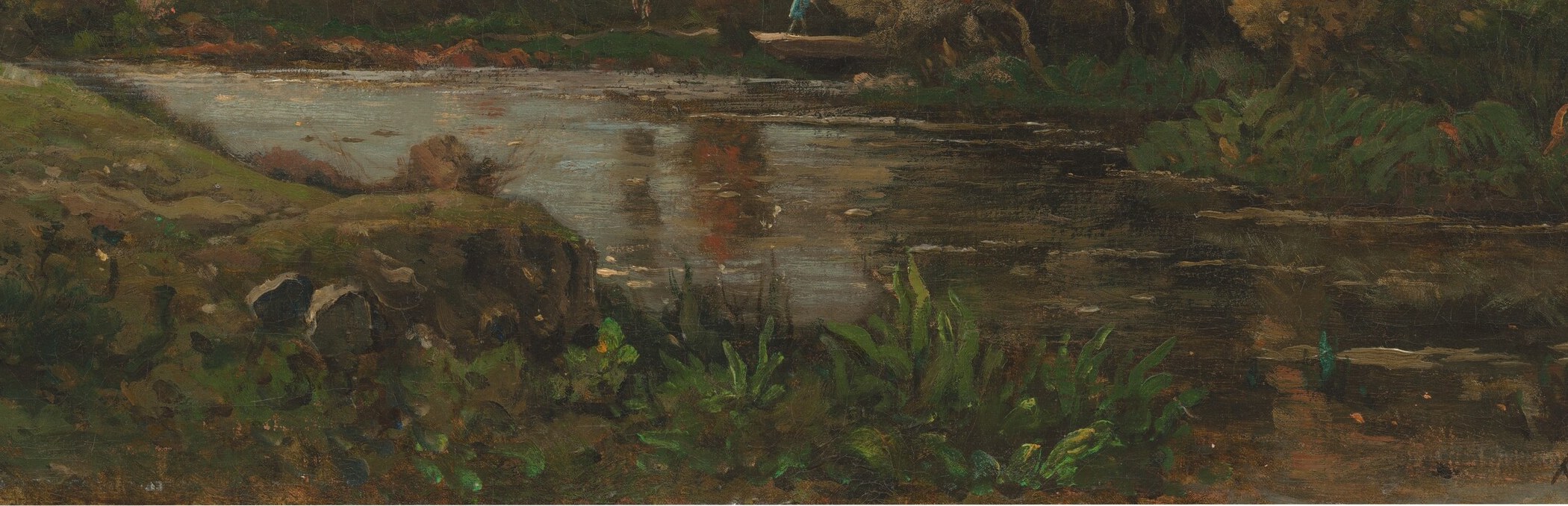
It reads as pure calm. A quiet French river at dusk. A lone boat. A village on a hill. Nothing here to disturb the peace. But when this painter showed new work in 1863, Paris erupted. Critics called it savage, unfinished, an insult to art itself. The Salon refused him. He became the face of the great scandal of his time. He was banned from the official exhibition for a decade. And yet he kept painting calm water exactly like this until he was ninety-seven.