Virgin and Child with the Young Saint John the Baptist and Angels by François Boucher
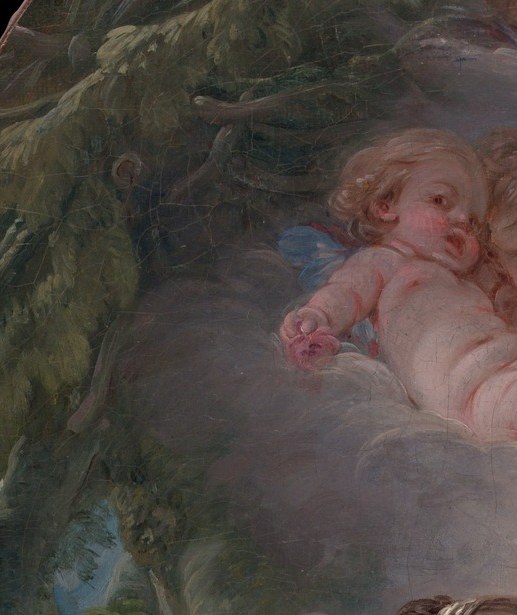
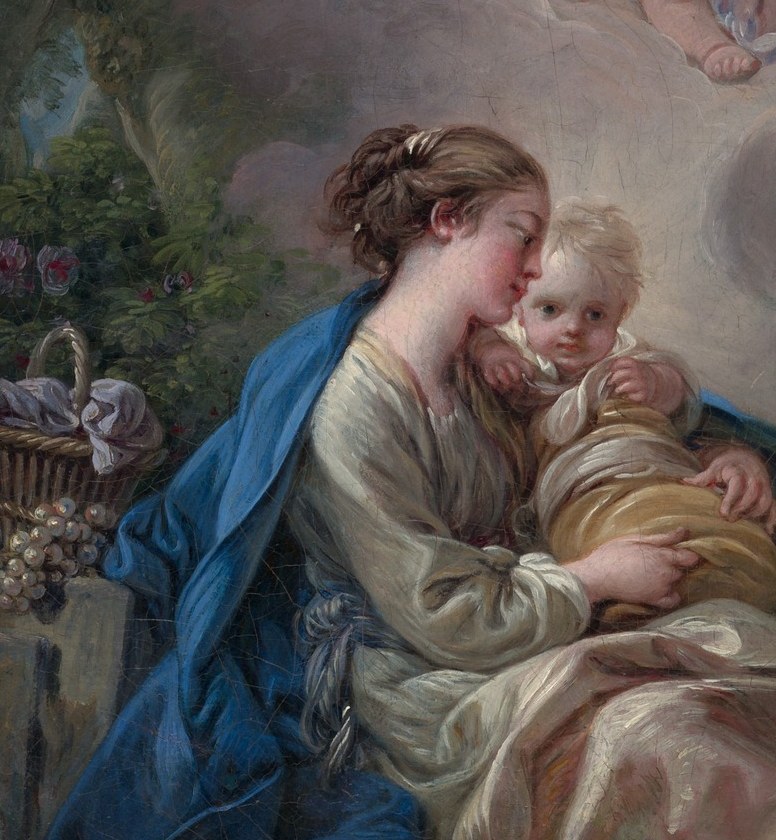
François Boucher painted "Virgin and Child with the Young Saint John the Baptist and Angels" in 1765, and it looks, at first, like pure Rococo sugar: pink cheeks, soft curls, flawless skin. But the painting is a systematic delivery of Marian theology, built on colour codes every 18th-century Catholic viewer could read.
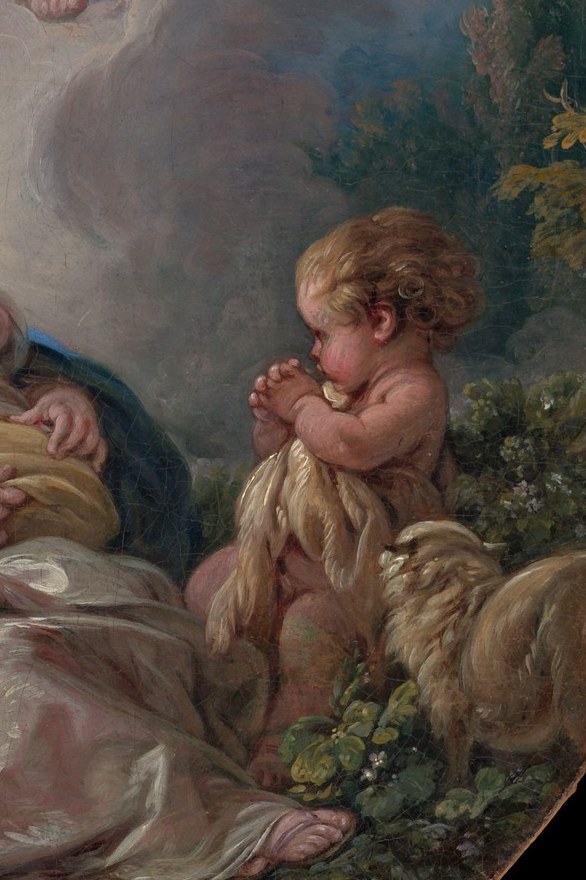
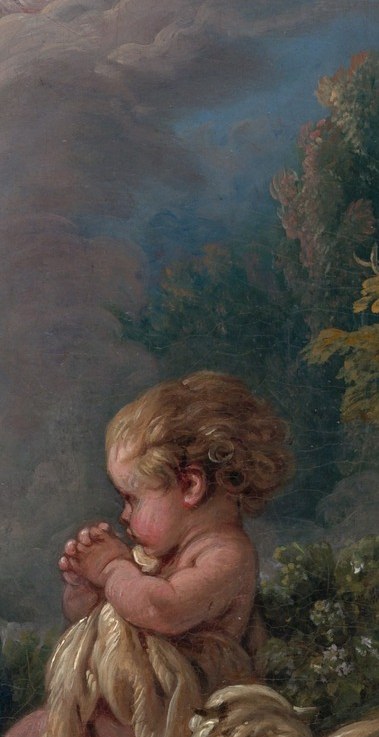
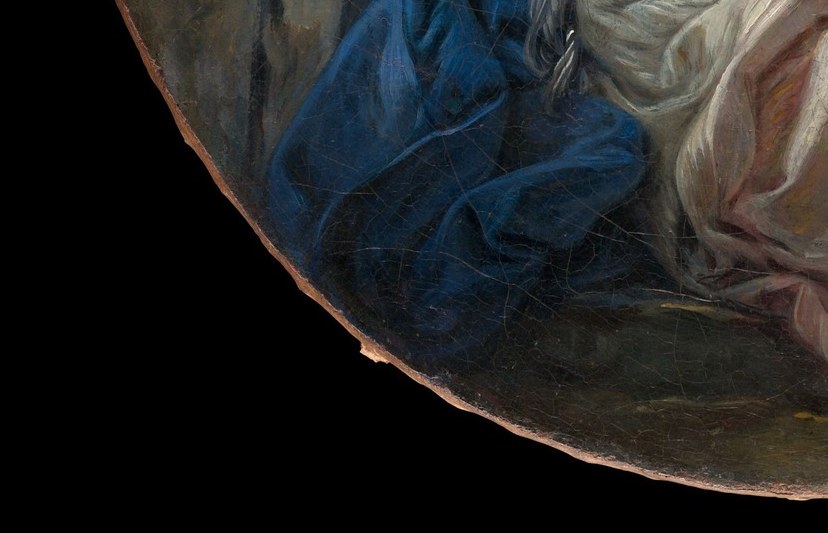
Watch the colours. Mary's blue mantle signals divinity; her red dress signals her humanity and the sacrifice to come. The young John the Baptist reaches toward Christ already carrying his reed cross, the attribute that identifies him as the one who will baptise Jesus. At the bottom edge, in a detail most people scroll right past, Boucher placed roses and lilies, both long-established Marian symbols.
Boucher was the most celebrated decorative painter of Louis XV's France, best known for pastoral nudes and mythological scenes. A religious commission like this was rarer for him, and he approached it the way he approached everything: with flawless technique and a deep knowledge of the iconographic tradition he was dressing in silk.
The painting has lived at The Metropolitan Museum of Art for decades, a quiet reminder that Rococo was never just about pleasure. It could also carry a theological argument on its back, in ultramarine and rose.
Details
Transcript
She looks like a costume party Madonna. Blue cloak, red dress. The colours were never casual. Blue meant divinity. Red, her humanity and sacrifice. Now look at the child reaching toward Christ. He carries a reed cross. The sign of the Baptist. Roses and lilies at the bottom edge. Mary's flowers. Boucher dressed a theological brief in silk and soft light.