The Crucifixion with the Converted Centurion by Cranach the Elder, Lucas
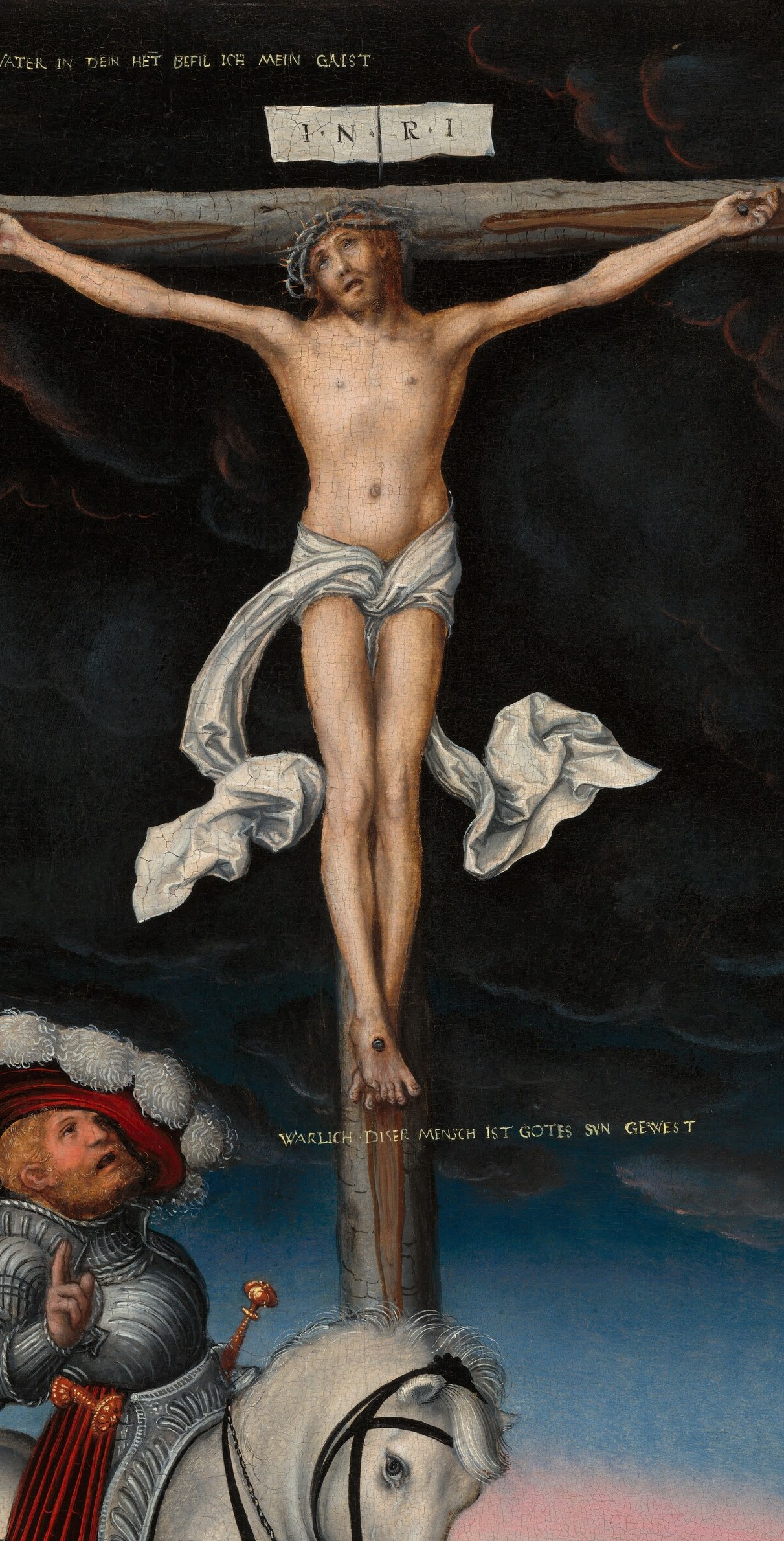
This is The Crucifixion with the Converted Centurion, painted in 1536 by Lucas Cranach the Elder. Cranach was court painter to the Electors of Saxony, a close friend of Martin Luther, and the most successful German artist of his lifetime. In this work he takes a familiar biblical scene and quietly embeds a detail almost no one notices.
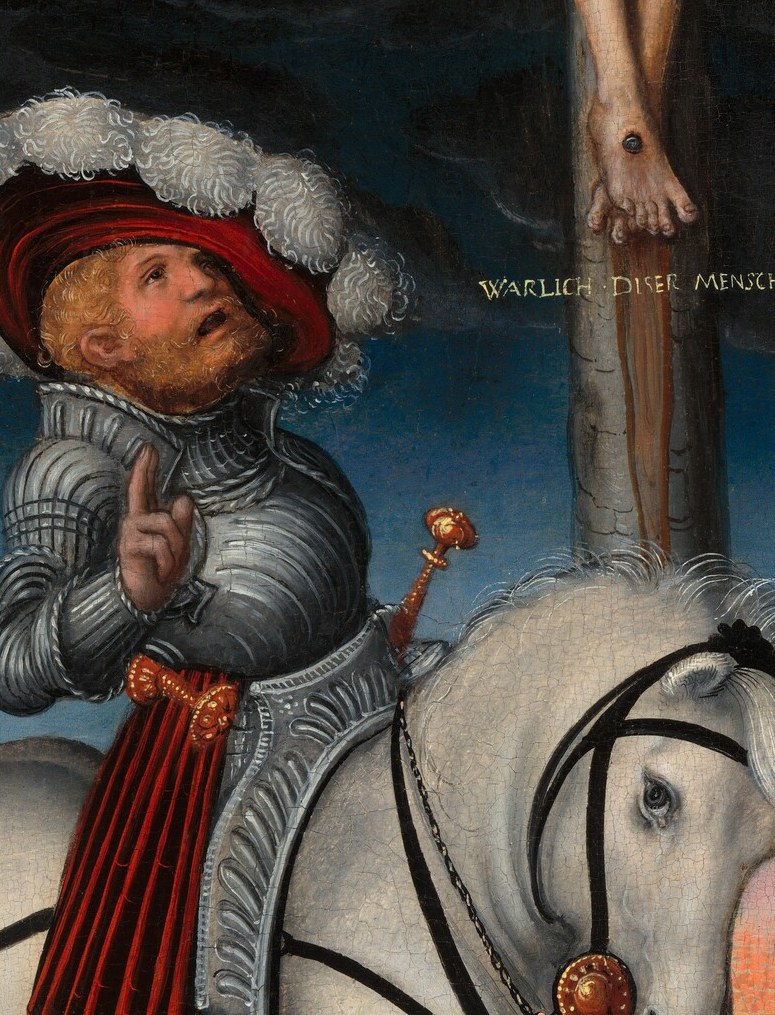
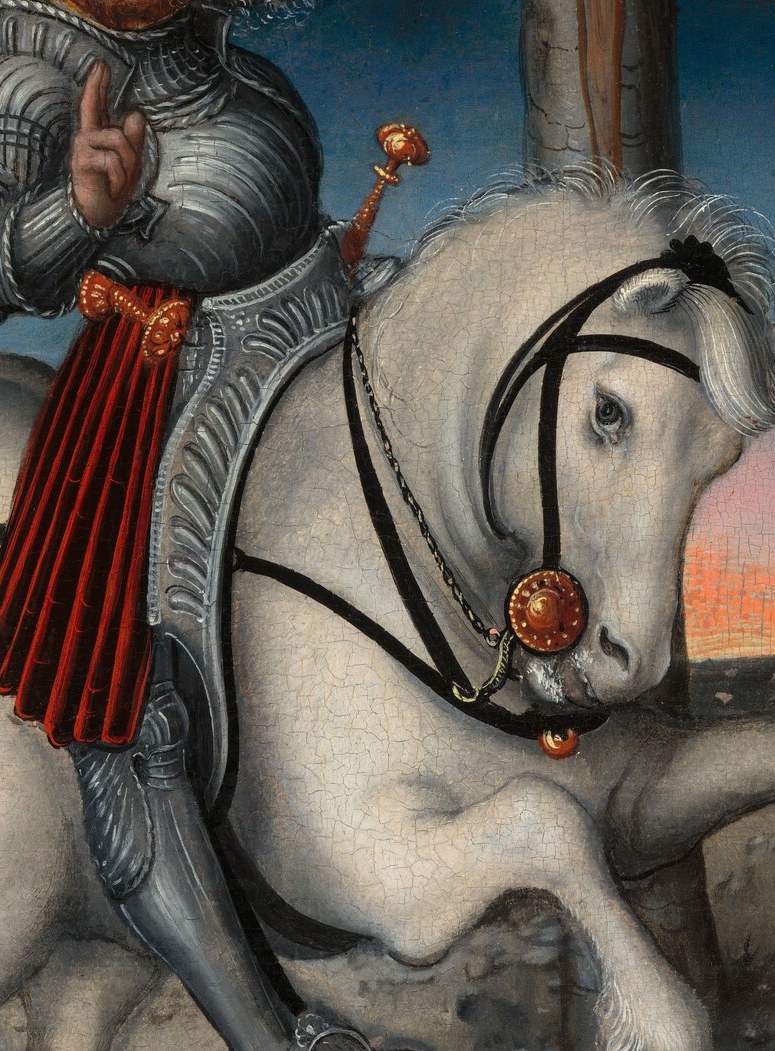
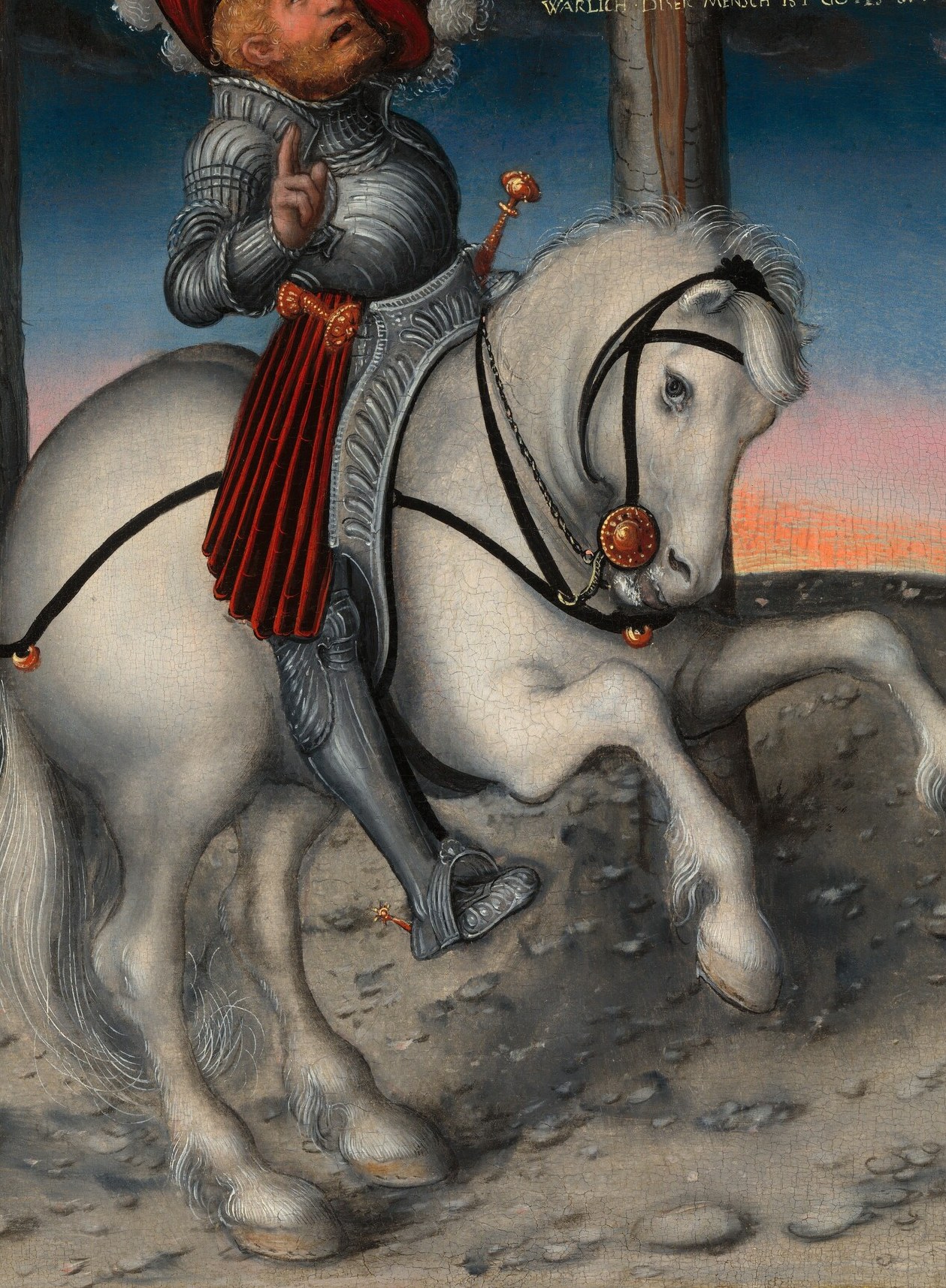
The painting's dramatic subject is the moment a Roman centurion, kneeling at the foot of the cross, recognizes Christ as the Son of God. Cranach gives the soldier gleaming armor and a white horse that fills the lower canvas, marking him as a figure of worldly authority confronting something beyond it. The sky splits between golden light at the horizon and roiling darkness above, a visual metaphor for the cosmic upheaval described in the Gospels.
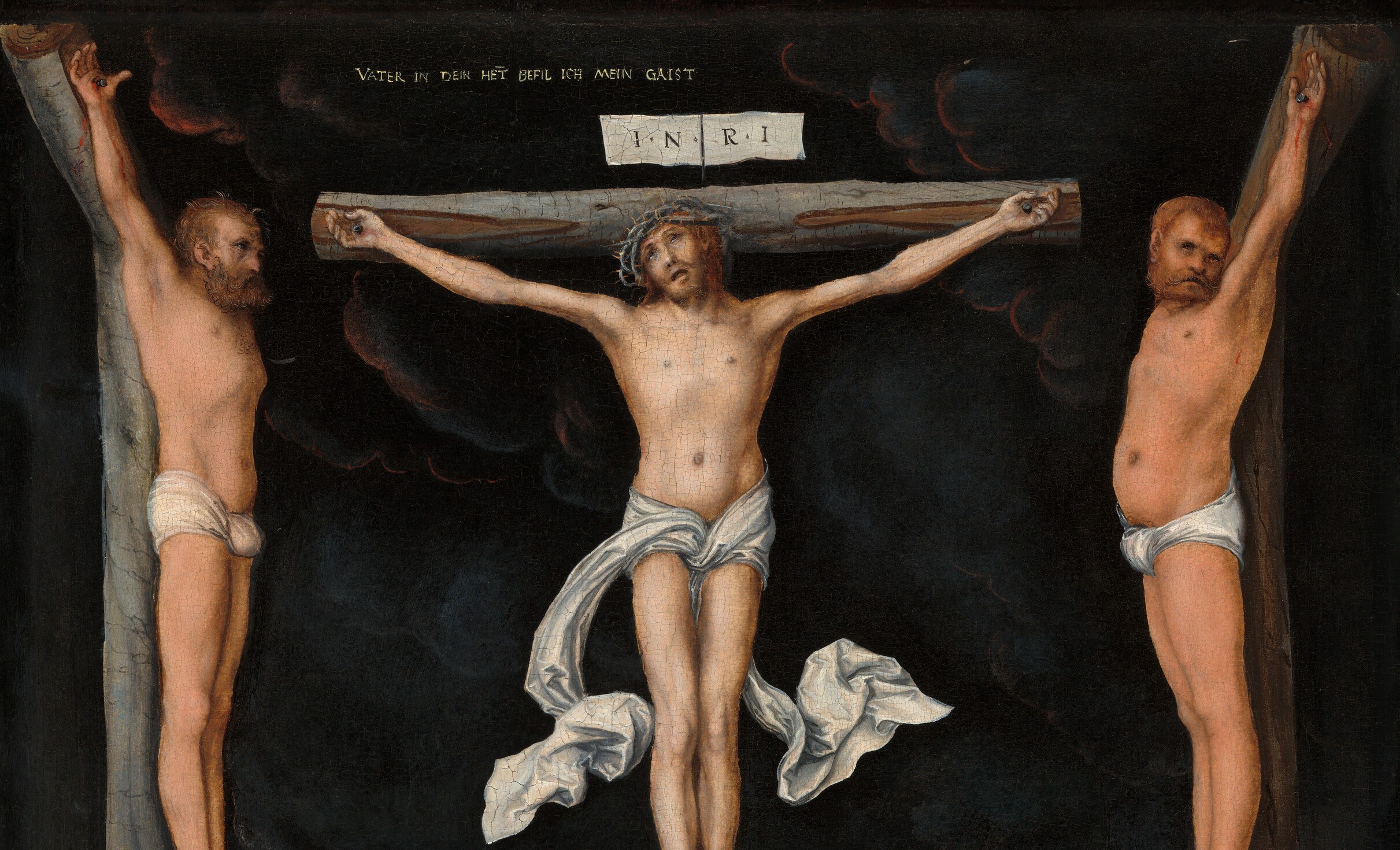
But the real secret is inside that darkness. Look into the black storm clouds above Christ's outstretched left arm and a small, spectral face emerges from the brushwork. Cranach did not write about this detail in any surviving document. We do not know if it represents God the Father, an angel, or a visual meditation on the idea that creation itself witnessed the crucifixion. The face is only visible under close inspection and specific light, suggesting it was meant for the painter himself or those who looked very, very carefully.
Cranach ran an enormous workshop and his son continued producing versions of his compositions for decades. But a hidden face in the clouds is the kind of personal, unrepeatable gesture a master leaves in a single panel. Five centuries later, the storm is still watching.
Details
Transcript
You notice the centurion first. A Roman commander, armor gleaming, face breaking into belief. The Gospels say he saw the sky tear open and knew who this was. Cranach painted that sky. But he hid something in the darkness. Look into the clouds above Christ's left arm. A tiny, ghostly face emerges from the blackness. Cranach gave the heavens a witness. The storm itself watches.