Julie Le Brun (1780–1819) Looking in a Mirror by Élisabeth Louise Vigée Le Brun
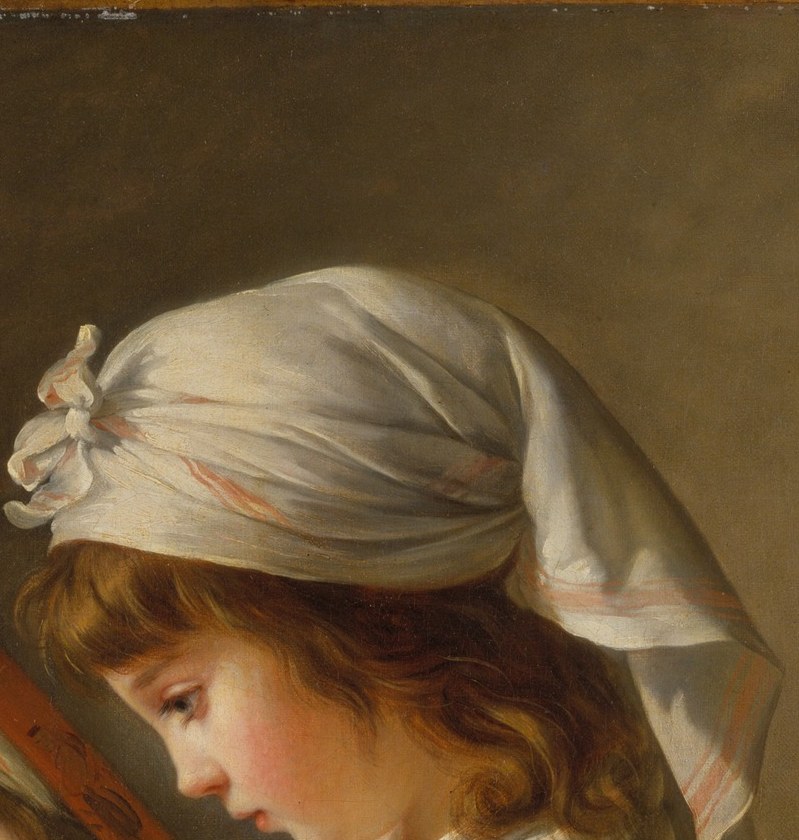
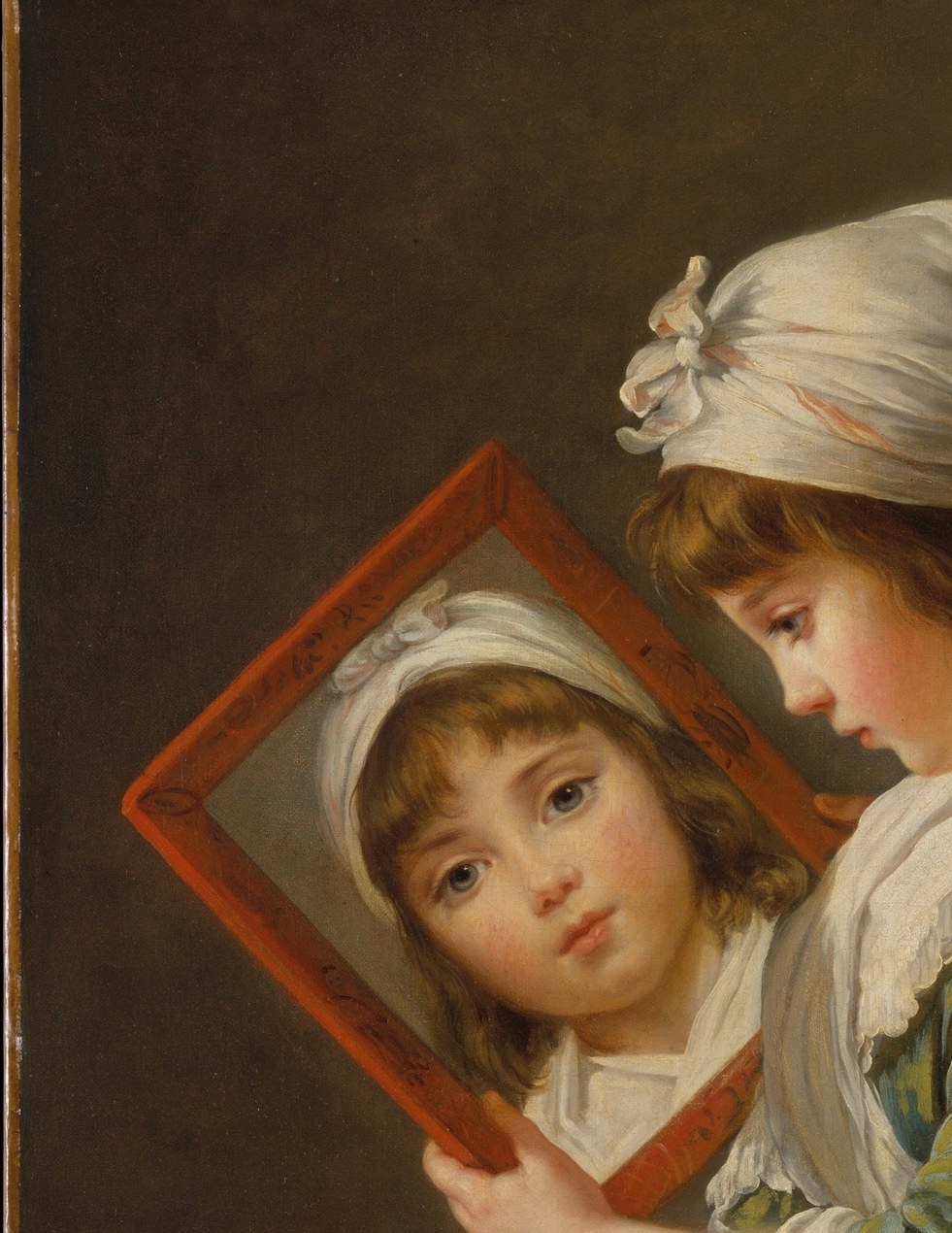
This is a portrait of a child, but it is also a portrait of longing. Painted in 1793 by Élisabeth Louise Vigée Le Brun, it shows her daughter Julie holding a red-framed mirror. The work hangs in The Metropolitan Museum of Art.
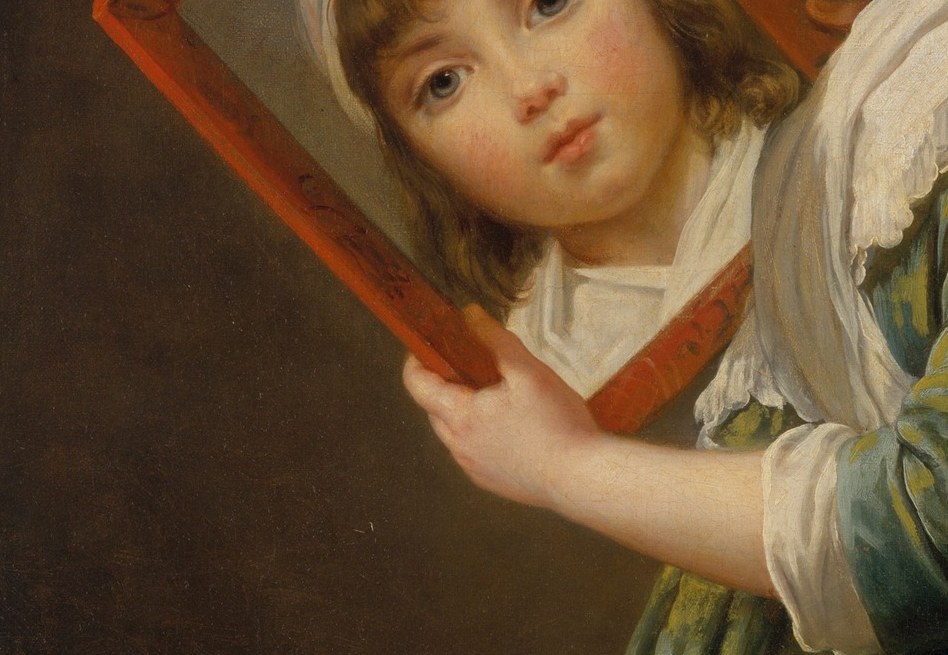
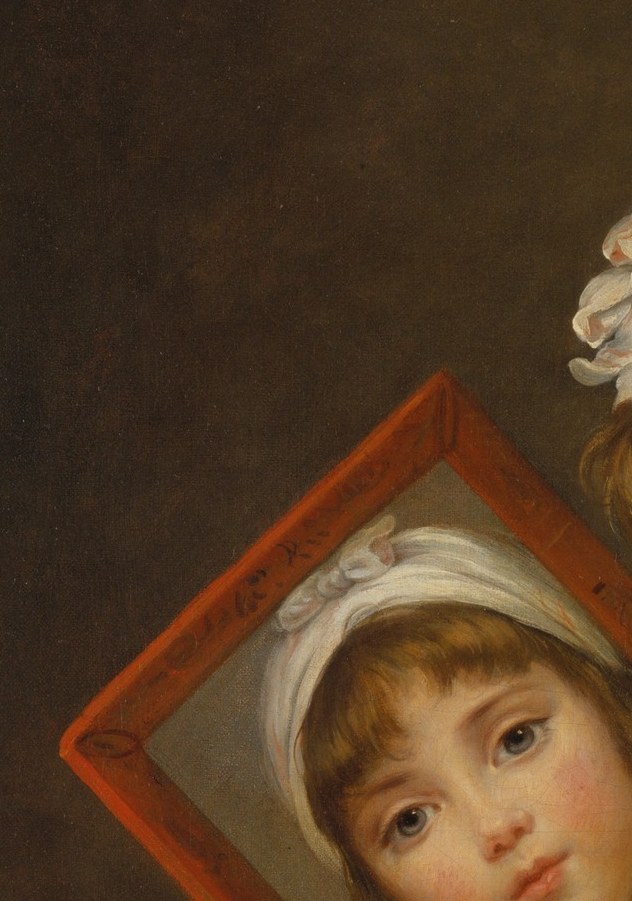
Look closely at Julie's face. Her profile gazes down and away from us, lost in thought. But her reflection in the mirror meets our eyes directly. Vigée Le Brun built a quiet trap: the real girl looks inward, while her painted double looks out, holding us in the room with her.
Vigée Le Brun was Marie Antoinette's favorite portraitist. When the Revolution came, she fled France with her daughter, leaving her husband, her home, and her entire career behind. She painted this in exile, far from the salons and patrons she knew. A mother alone, trying to fix her child's image on canvas while the world they shared dissolved.
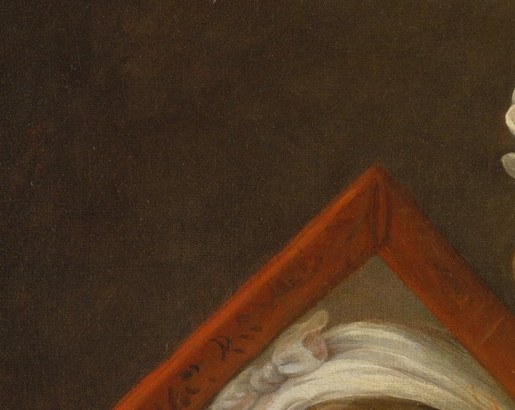
The mirror does the emotional work. It shows Julie twice: once as she was in that room, and once as her mother would always see her, facing forward, present, impossible to lose.
Details
Transcript
A little girl stares into a mirror. But the mirror shows her looking straight at you. This is Julie Le Brun. Her mother painted this. Her mother was Vigée Le Brun, portraitist to Marie Antoinette. In 1793, the Revolution forced her to flee France. She painted this in exile, holding onto her daughter the only way she could. Julie's face is here twice: the child seen, and the child remembered.