Breton Landscape by Jan Verkade
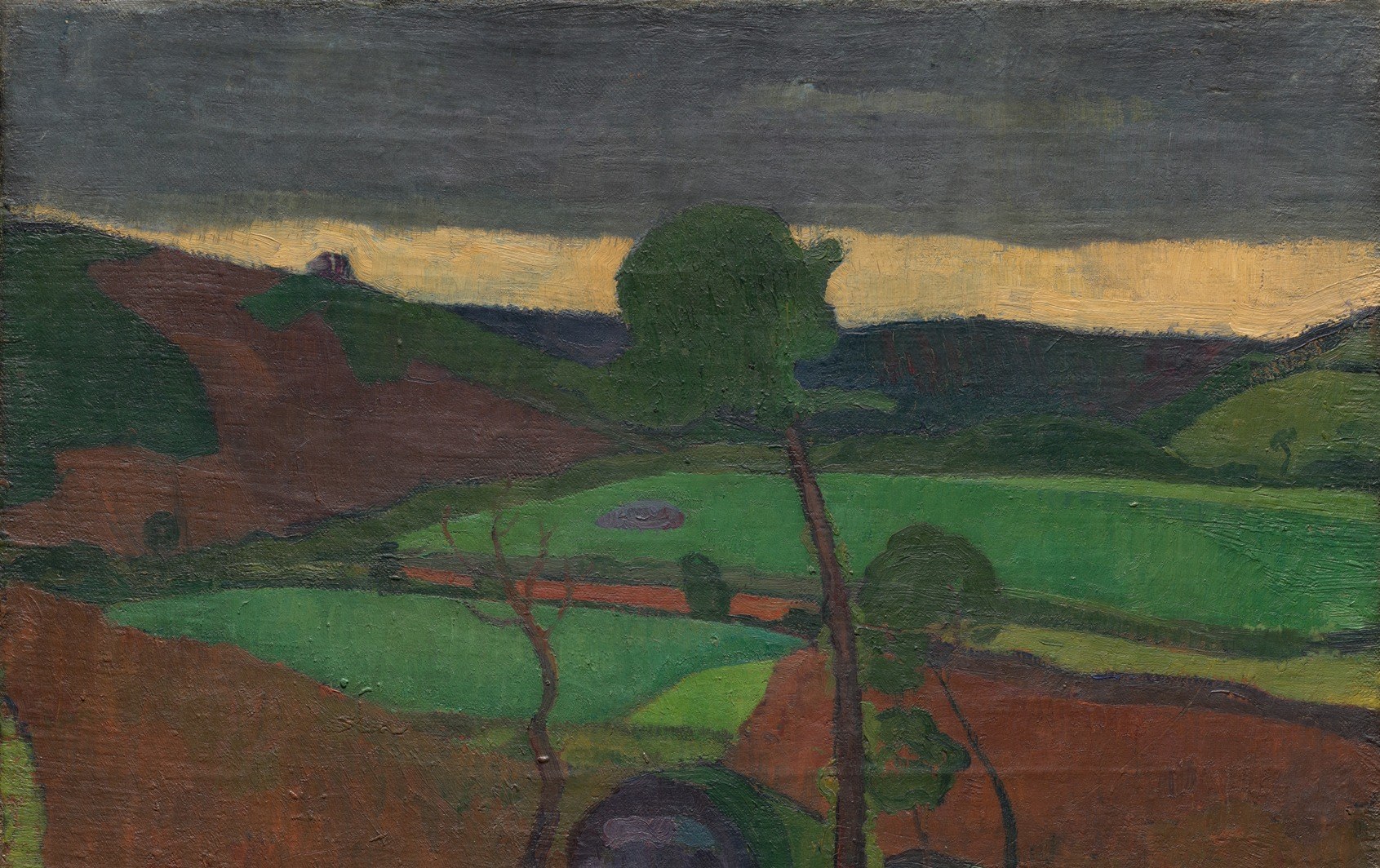
Jan Verkade's "Breton Landscape" (1896) is a powerful oil painting from The Cleveland Museum of Art. Verkade, a Dutch Post-Impressionist artist associated with the Nabis circle, later converted to Catholicism and became a Benedictine monk. This stark vista reflects his search for elemental and spiritual themes in nature.
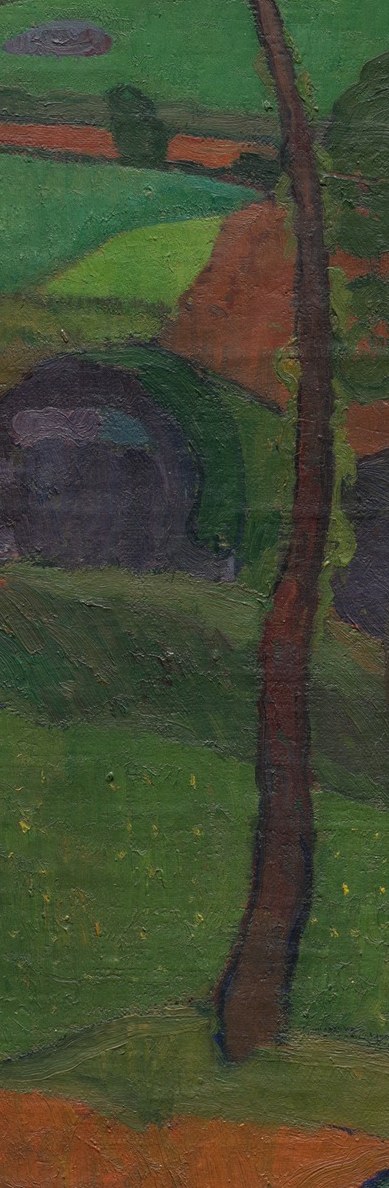
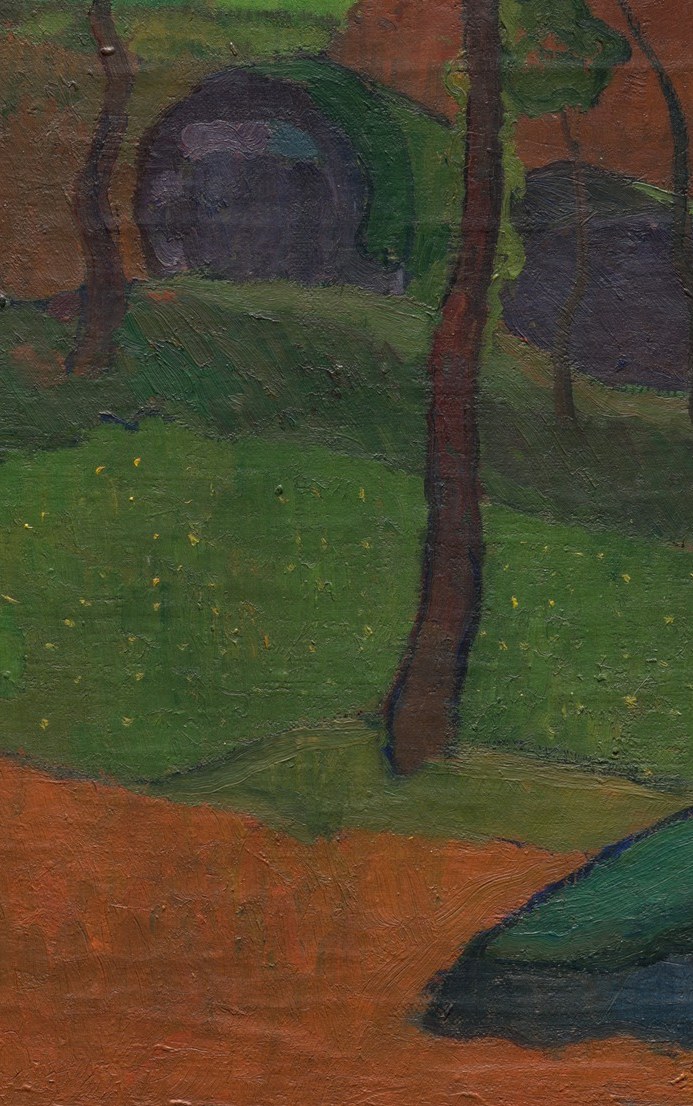
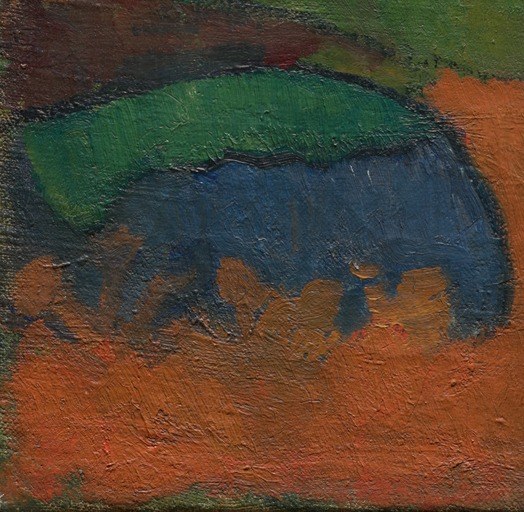
Observe the rolling hills and the prominent dark tree at the center. Notice the texture created by Verkade's bold brushstrokes and thick impasto application, characteristic of his Post-Impressionist style. The meandering dirt path draws the eye into the contemplative scene.
Influenced by Paul Gauguin, Verkade explored landscape as a means of expressing deeper sentiments. This period of his life, focused on rural subjects, predated his significant spiritual transformation and embrace of monastic life, where he continued his artistic endeavors within a religious context.
This painting captures the austere beauty of Brittany, offering a glimpse into the artist's inner world before his profound life change.
Details
Transcript
This landscape feels unusually stark. The painter was Jan Verkade, a Nabis artist. Notice the thick, textured paint. He applied paint heavily, like impasto. Look at the solitary tree center. Verkade later became a Benedictine monk. A quiet path leads through the scene. His art sought spiritual sentiment.