Princess María Francisca de Asis de Borbón and Her Son Infante Carlos Luis María Fernando de Borbón by Luis de la Cruz
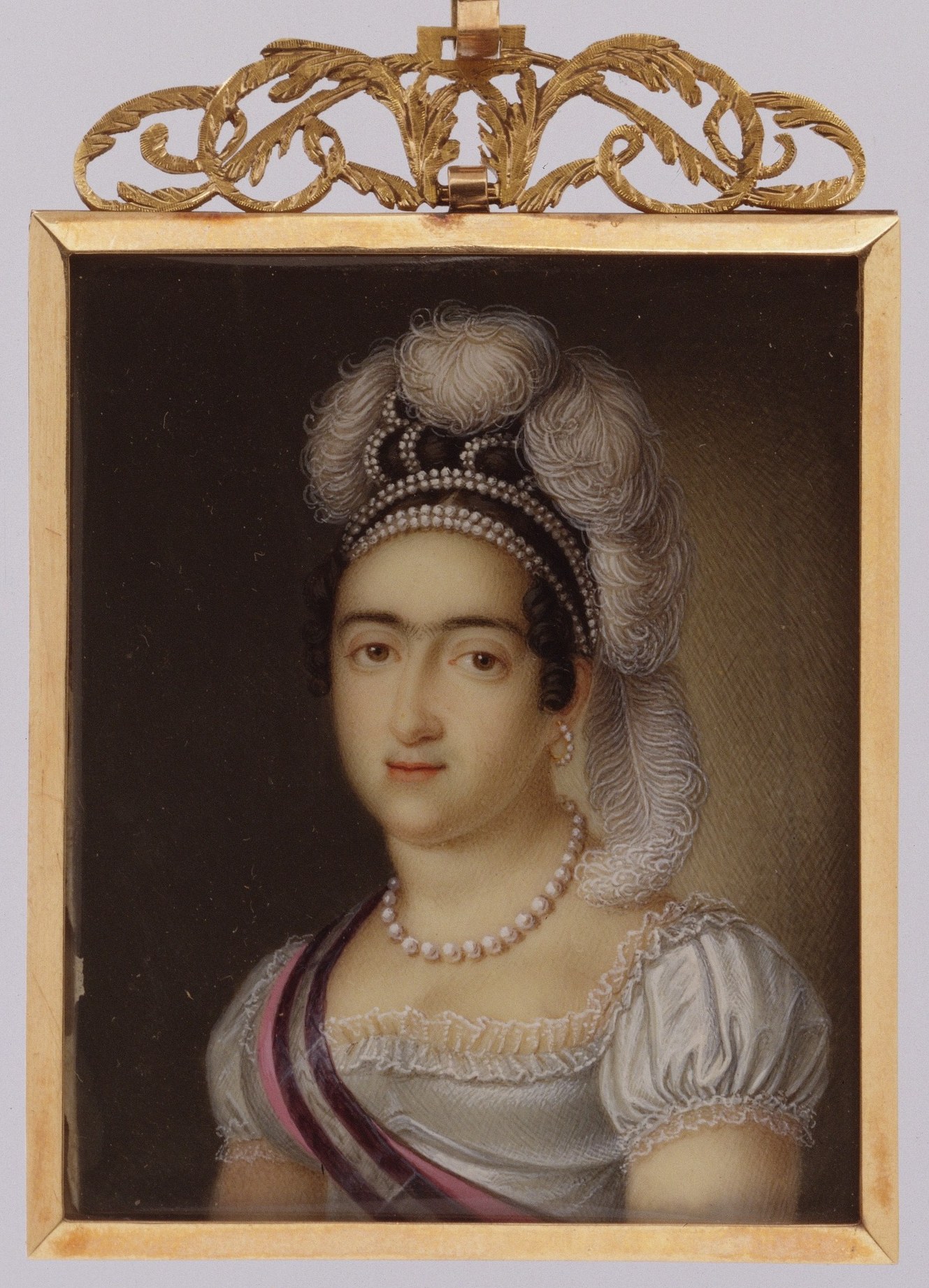
This is a miniature portrait on ivory from 1818: Princess María Francisca de Asis de Borbón and Her Son Infante Carlos Luis María Fernando de Borbón, painted by Luis de la Cruz. It lives in a chased gold frame smaller than your hand.
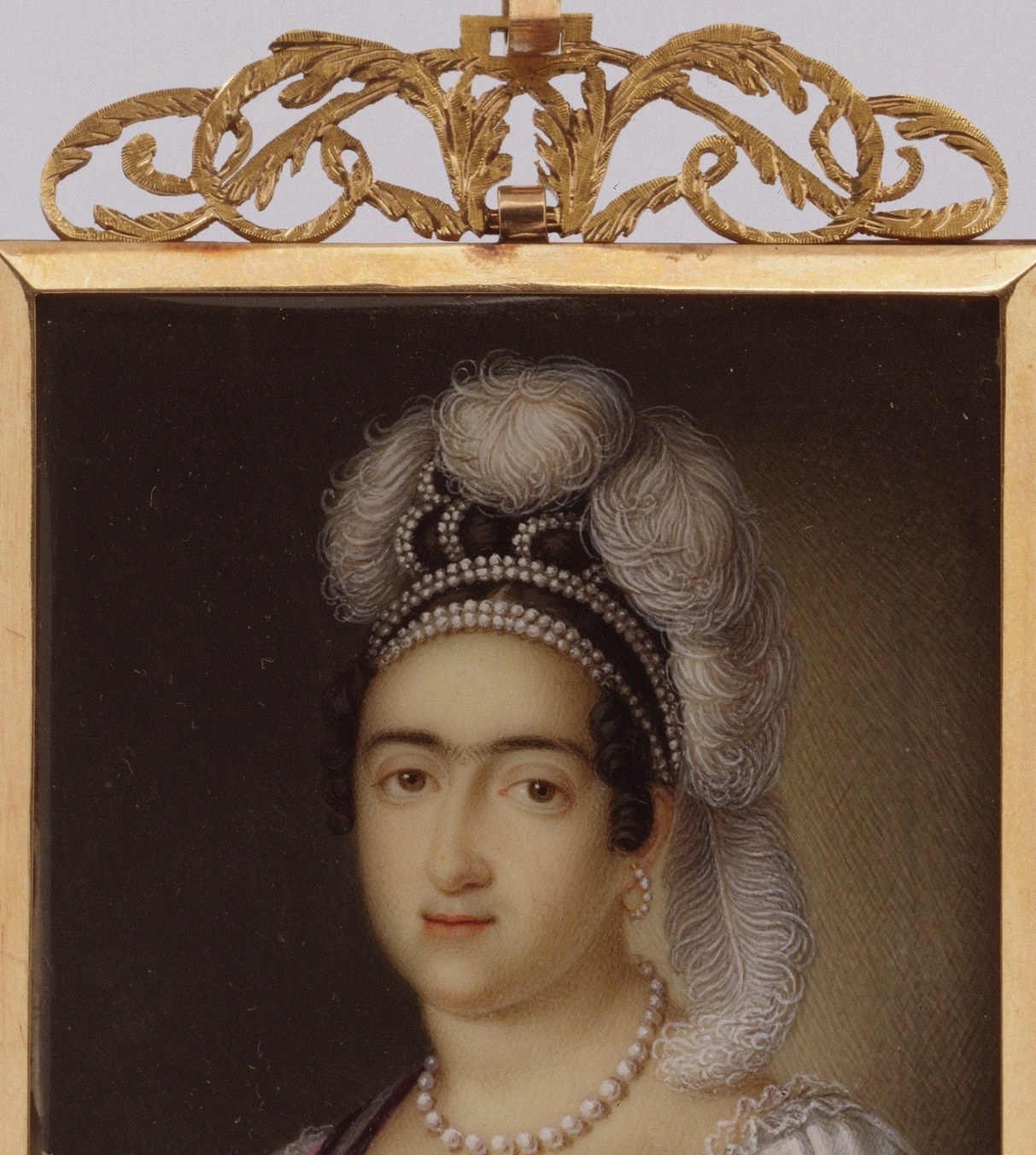
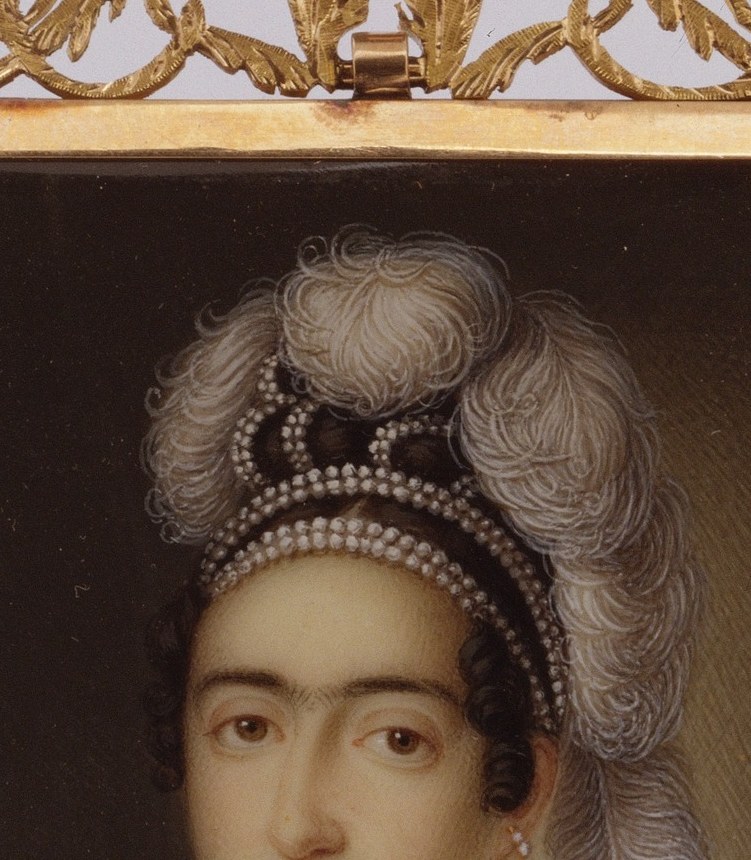
Look at the child first. Most people miss him. The infante is present only as a small hand resting on his mother's right shoulder, a compositional whisper that turns a formal court portrait into a private record of motherhood. Then look at the red sash crossing her chest: that is not decoration, it identifies a specific Spanish royal order and encodes her political rank. The towering feathered coiffure and the pearls at her throat are pure Bourbon dynastic language.
Luis de la Cruz was born in Puerto de la Cruz in 1776 and worked in this intimate format at a moment when miniature portraits on ivory were the most personal form of royal image-making. The ivory support does part of the painter's work for him: its white ground glows through translucent paint, so the sitter's skin appears to emit light rather than reflect it. Each pearl in her tiara had to be rendered individually with a brush barely wider than a single hair.
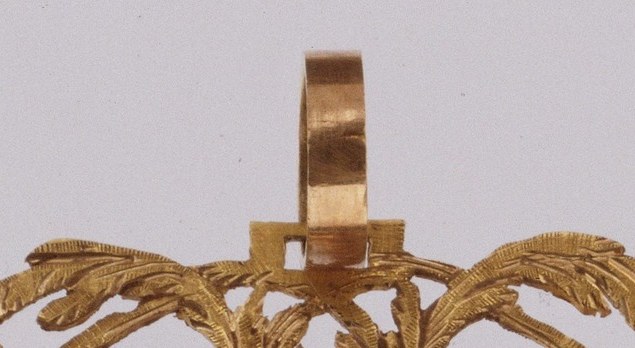
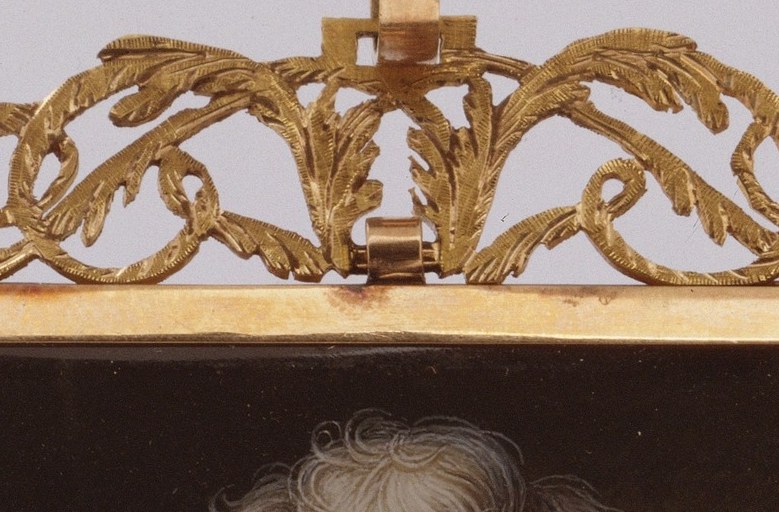
The little brass suspension bow at the top of the frame is the object's entire function, hiding in plain sight. This was meant to be worn or hung in a private room, not sealed in a vitrine. Within a generation, photography would make the painted miniature obsolete, and this exact kind of intimate, portable royal image would vanish from the world.
#arthistory #miniatureportrait #spanishroyalfamily
Details
Transcript
1818. A princess sits for a portrait. This towering feathered coiffure is the height of Spanish court fashion. Pearls at her throat are not just adornment. They are dynastic Bourbon code. That red sash across her chest? It names her political rank. Now look closely at her right shoulder. A small child's hand rests there. Her son. He has no face in this picture. The artist painted this on ivory. The glow of her skin is the material itself, shining through. This loop meant it was worn, or hung. A personal gift, before photography.