Artwork
Princess María Francisca de Asis de Borbón and Her Son Infante Carlos Luis María Fernando de Borbón
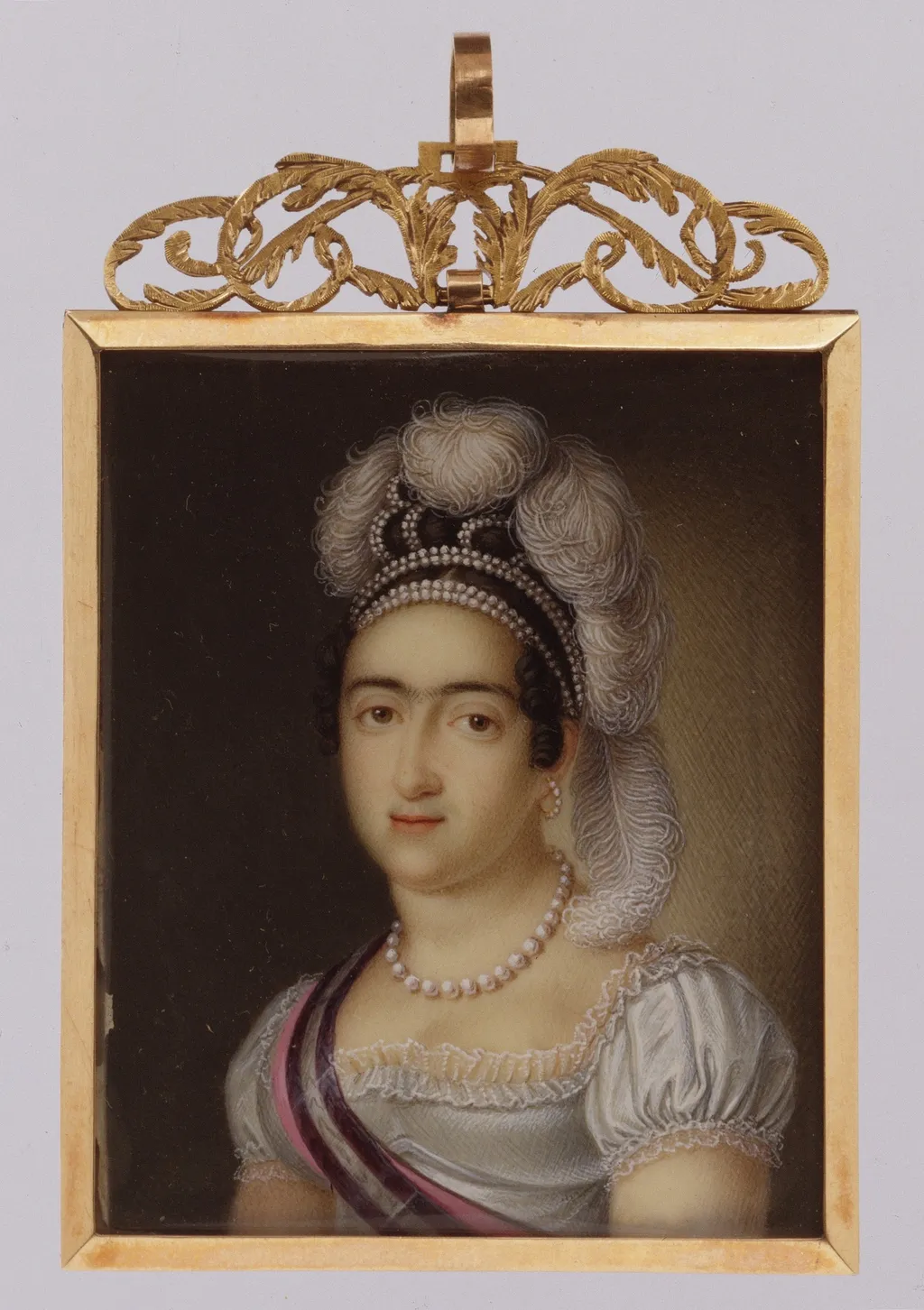
Princess María Francisca de Asis de Borbón and Her Son Infante Carlos Luis María Fernando de Borbón is an ivory painting by the Realist artist Luis de la Cruz. It dates from 1818 and is held in the collection of the Metropolitan Museum of Art.
About this work
Subject & Meaning
The princess wears the insignia of the Order of Queen Maria Luisa and the Order of the Golden Fleece, marks of her royal rank and dynastic alliances.
The ivory miniature shows Princess María Francisca de Asis de Borbón cradling her infant son, Infante Carlos Luis María Fernando de Borbón. The princess wears the insignia of the Order of Queen Maria Luisa and the Order of the Golden Fleece, marks of her royal rank and dynastic alliances. The presence of the infant underscores the continuation of the Bourbon line, while the ribbon associated with the orders highlights the family’s honorific distinctions.
As a small-scale portrait made in 1818, the work likely functioned as a personal commemorative piece asserting the legitimacy and status of the Bourbon branch during the post‑Napoleonic restoration.
Technique & Style
The work is a miniature painting executed on an ivory support, as indicated by its medium of ivory and its classification as a painting. Dating to 1818, the piece measures approximately 57 mm in height and 47 mm in width. As a miniature, it was likely rendered with precise, small‑scale brushwork to capture the sitters’ facial features and elaborate attire, including the Order of Queen Maria Luisa and the Order of the Golden Fleece.
The ivory ground provides a smooth, luminous surface that facilitates fine detail and subtle modeling. While the sources do not comment on the painting’s current condition, its materials and technique are typical of early‑nineteenth‑century Spanish miniature portraiture.
History & Provenance
The miniature painting titled Princess María Francisca de Asis de Asis de Borbón and Her Son Infante Carlos Luis María Fernando de Borbón was created in 1818 by the artist Luis de la Cruz. Executed on ivory, the work measures 57 by 47 centimeters and depicts the Infanta Maria Francisca of Portugal alongside her son, who is shown wearing the Order of the Golden Fleece and the Order of Queen Maria Luisa. The piece is currently held in the collection of the Metropolitan Museum of Art, where it is owned by John LaPorte Given.
The artwork has been exhibited at the Metropolitan Museum of Art, solidifying its place within their institutional history. The creation date is specifically recorded as January 1, 1818, marking the inception of this portrait.
The work, titled Princess María Francisca de Asís de Borbón and Her Son Infante Carlos Luis María Fernando de Borbón, was painted by Luis de la Cruz in 1818 using ivory as support. It measures 57 × 47 mm and belongs to the miniature genre. The painting is part of the Metropolitan Museum of Art’s collection, where it is catalogued under the museum’s inventory and has been displayed in exhibitions organized by the institution.
Context
The 1818 ivory miniature by Luis de la Cruz portrays Infanta María Francisca de Borbón with her son Carlos Luis, a composition documented in both the artist’s catalogue and the Metropolitan Museum of Art’s records. As part of the museum’s collection of Spanish court portraiture, the piece exemplifies the neoclassical miniaturist trend that flourished among Iberian aristocracy in the early nineteenth century. Its inclusion in recent Met exhibitions highlights scholarly interest in the visual representation of royal lineage and the patronage networks of the period.
The work’s provenance, including ownership by John LaPorte Given, further illustrates the circulation of such miniatures among European collectors.
Overview
This small painting, rendered on ivory, portrays Princess María Francisca de Asis de Borbón alongside her son, Infante Carlos Luis María Fernando de Borbón. The intimate scale and delicate medium highlight the subjects, presented within an ornate frame. It offers a glimpse into royal portraiture, distinct from larger canvas works common during the period, emphasizing personal connection and refined detail.
Own this work as a print
Artist & collection

- Portrait of Joséphine de Beauharnais, Empress of the French
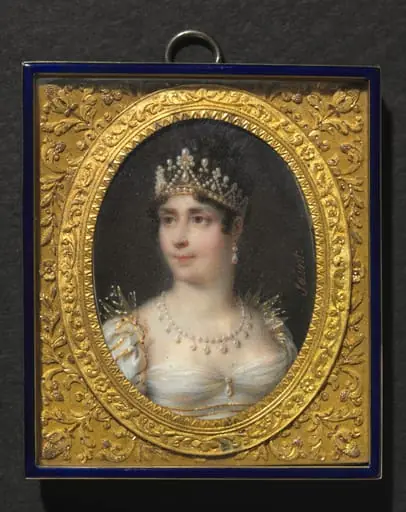 Portrait of Joséphine de Beauharnais, Empress of the French
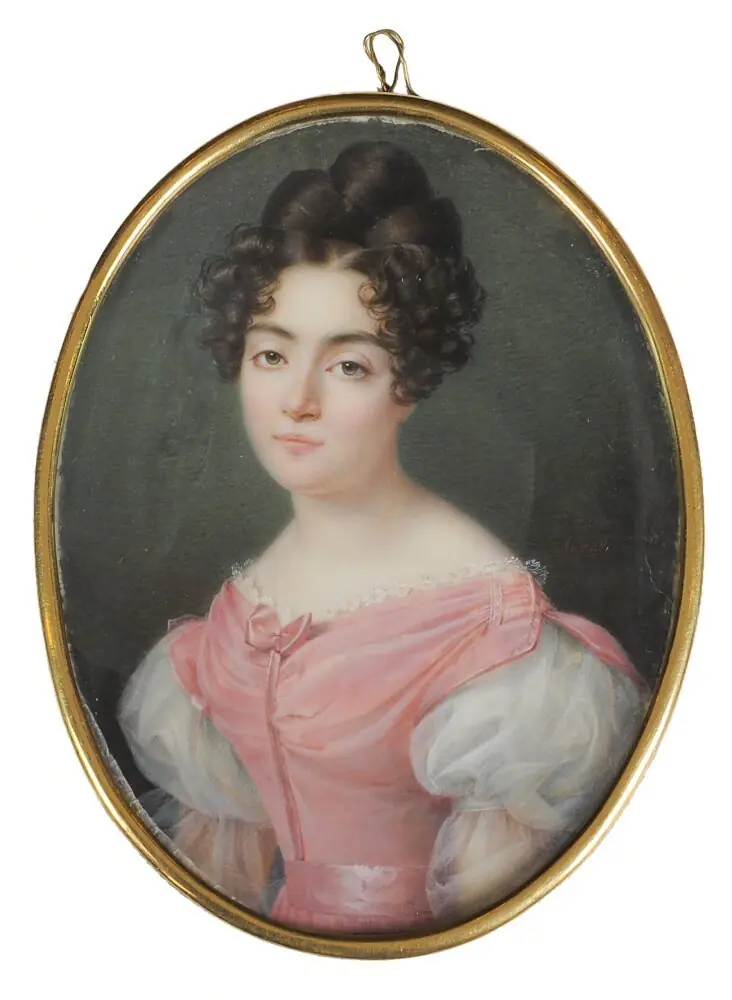 Unknown woman
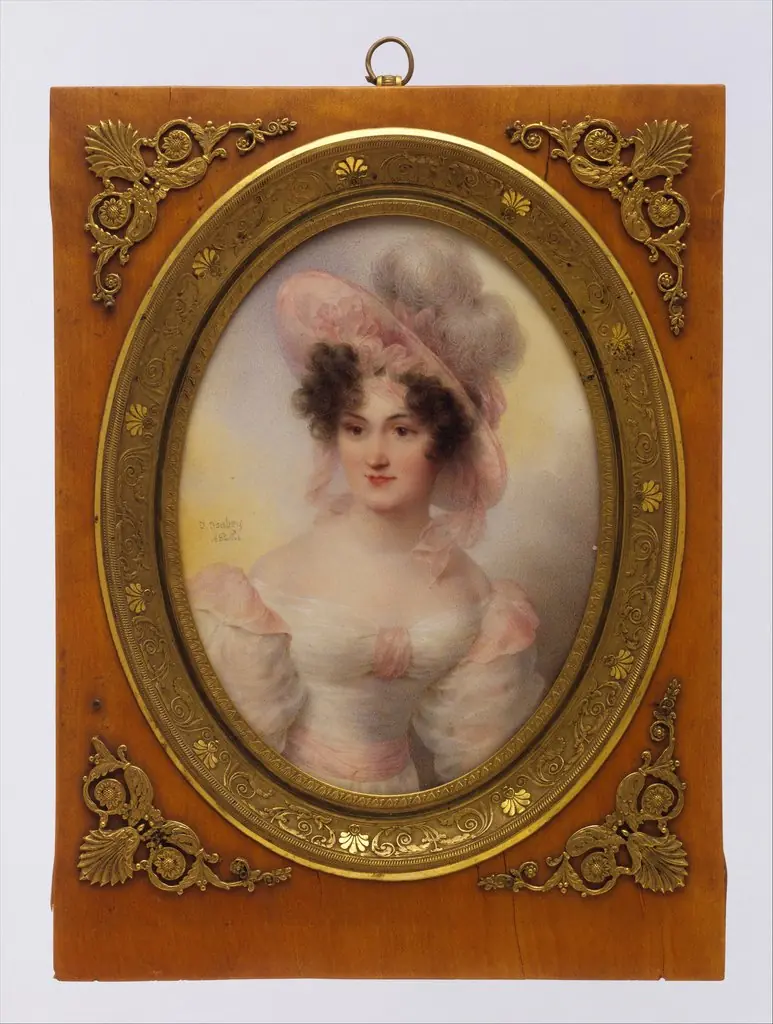 Mrs. Rufus Prime (Augusta Temple Palmer, 1807–1840)
 Portrait of a woman
 Portrait of Wilhelmina van Pruisen (1751-1820)
 Portrait of Hortense de Perregaux, Duchess of Ragusa
 Portrait of Hortense de Perregaux, Duchess of Ragusa
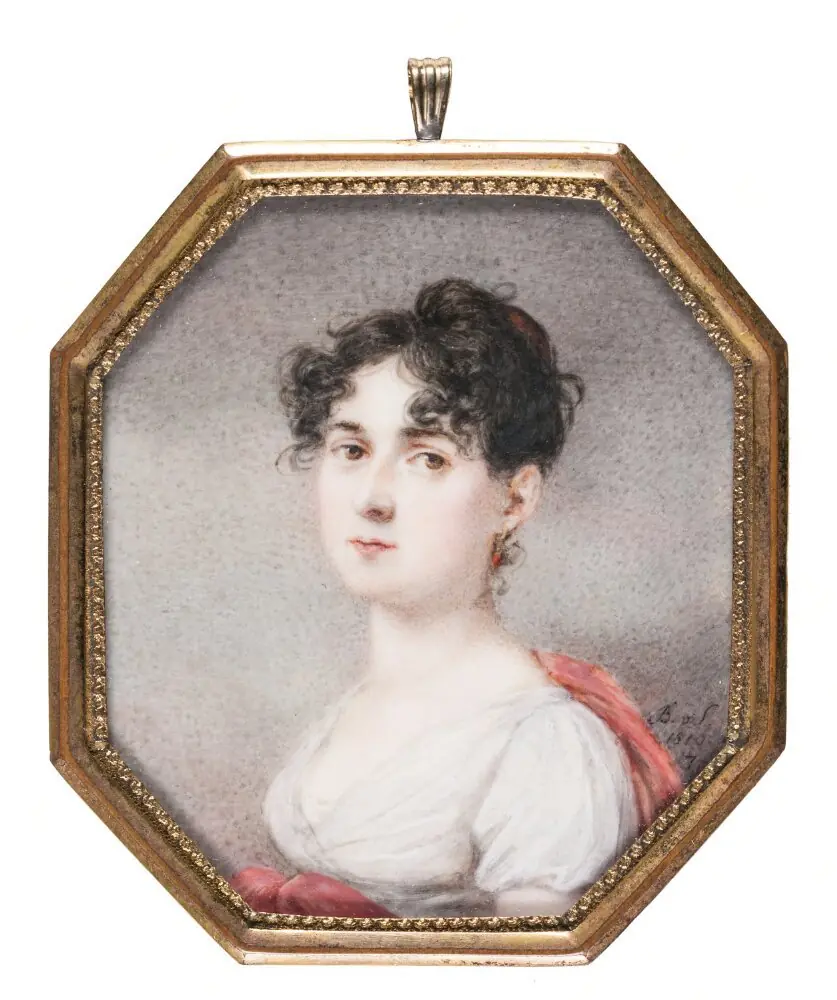 Young Lady
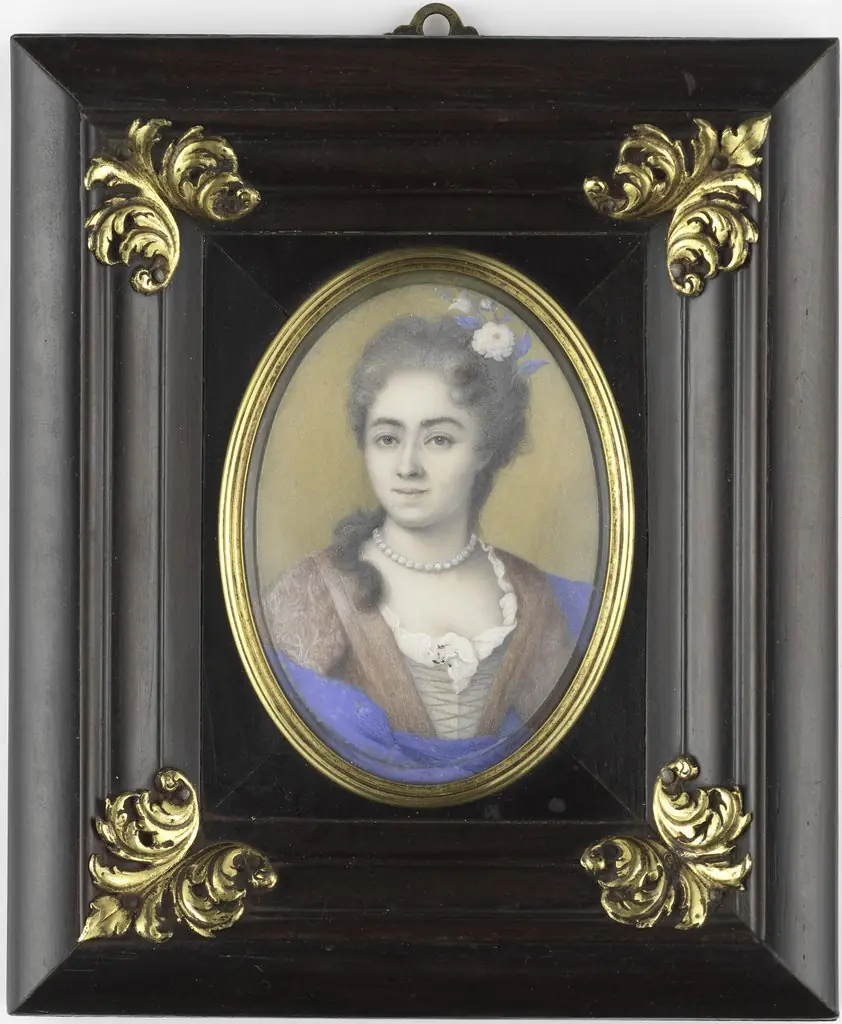 Portrait of Henrietta van Pee (1692-1741)
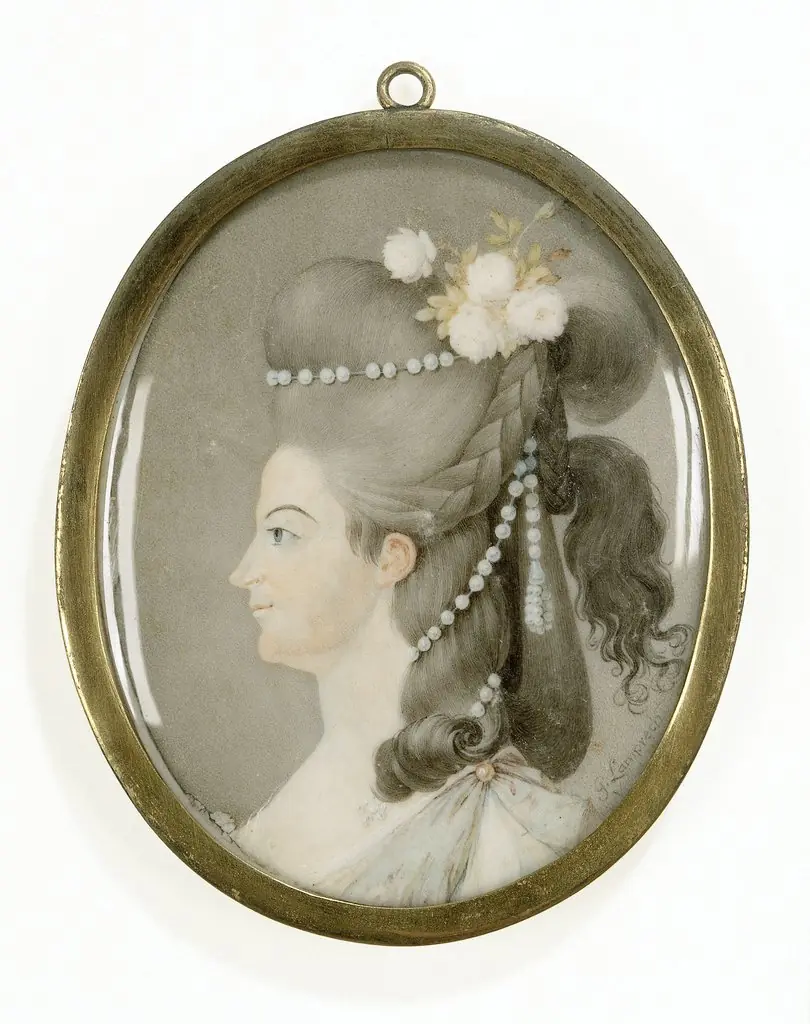 Frederika Sophia Wilhelmina (1751-1820), prinses van Pruisen. Echtgenote van prins Willem V
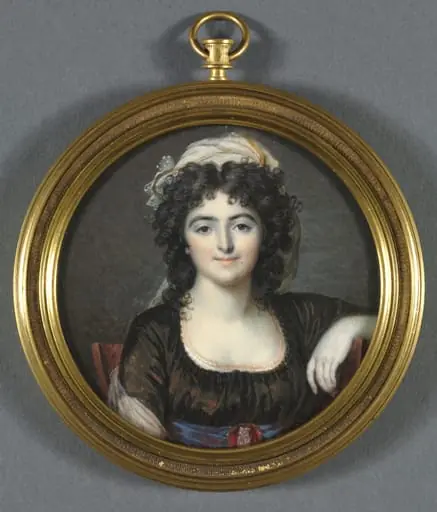 Portrait of a Woman in a Brown Dress