The Chess Players by Thomas Eakins
View the artwork: The Chess Players →
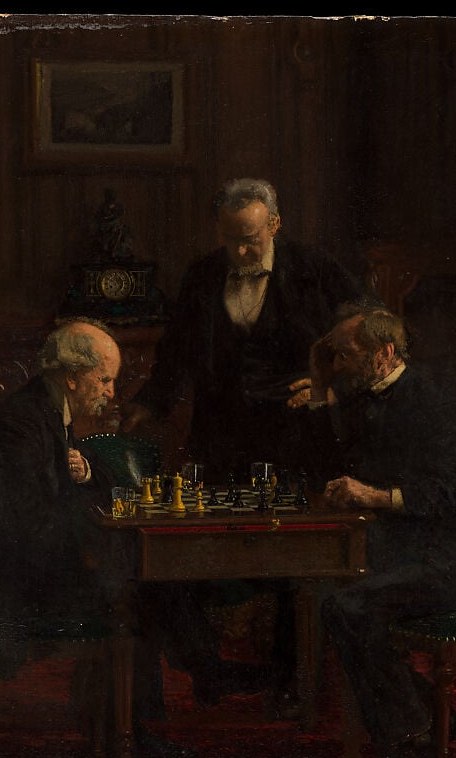
Thomas Eakins walked this painting into the Metropolitan Museum of Art in 1881 and gave it to them. It became the very first work the Met ever accepted directly from a living artist, a gilded-age Philadelphian simply handing over his proof of genius.
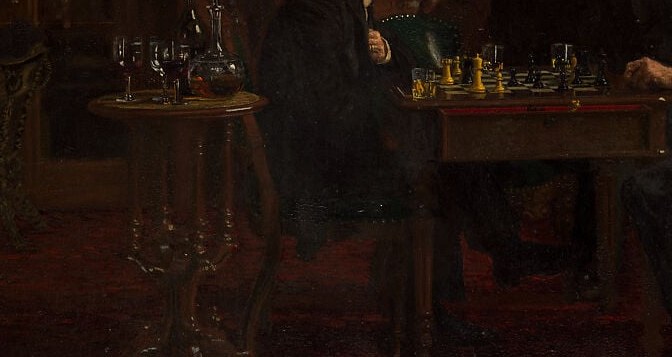
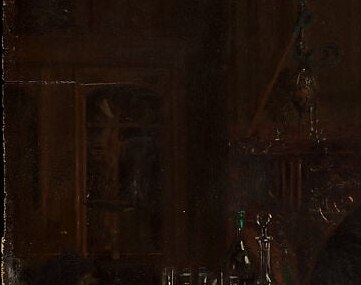
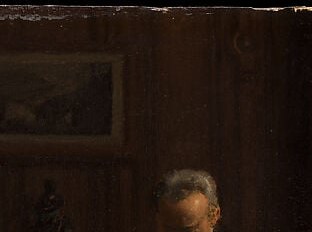
The man standing at center is the artist's father, Benjamin Eakins. He hovers over two friends locked in a chess game inside a Renaissance Revival parlor. Look for the Gérôme reproduction on the back wall, Eakins put it there to acknowledge his teacher Jean-Léon Gérôme, the French academic painter who trained him in Paris.
But the real signature is hidden in plain sight. The table drawer bears a Latin inscription: "Benjamin Eakins's son painted this in '76." It collapses the whole painting into a single gesture, a son's act of witness, offered to his watching father, then offered to the nation.
A chess game, a father, a teacher, a gift. Eakins never needed a dealer.
#arthistory #thomaseakins #americanrealism
Details
Transcript
In 1881, a Philadelphia painter gave this to the Met. Thomas Eakins. He delivered it by hand. The man standing is his father, Benjamin. Now read the Latin on the drawer. It says: Benjamin Eakins's son painted this in '76. He hid an homage to his teacher, too. The first living artist the Met ever said yes to.