Artwork
The Chess Players
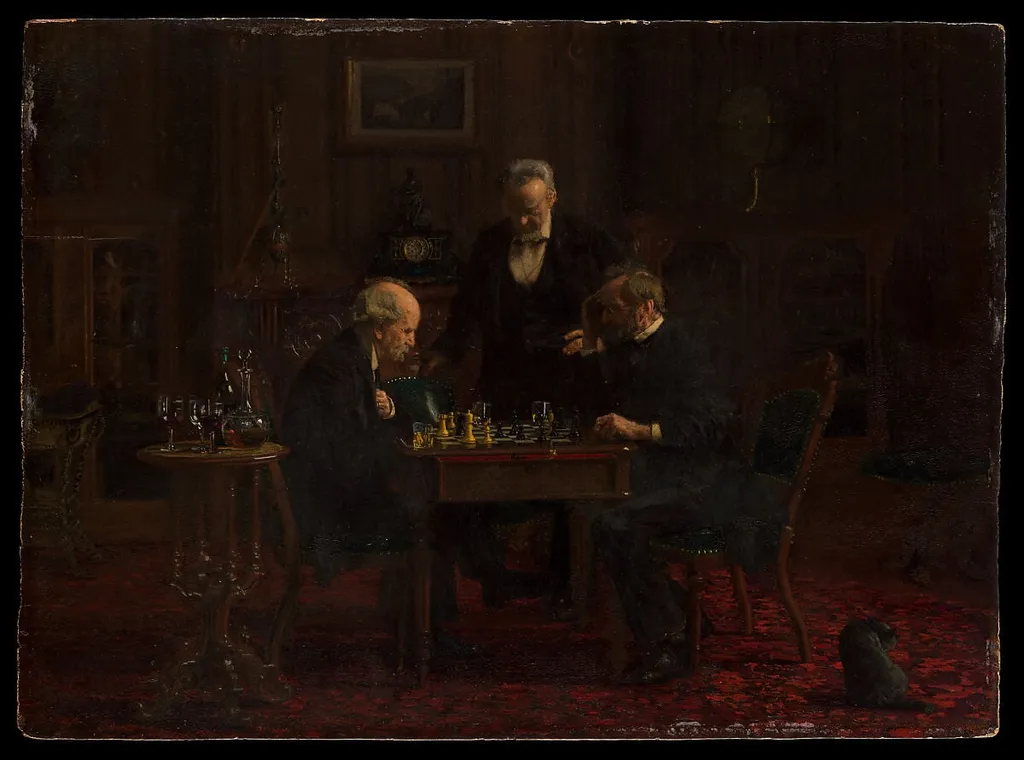
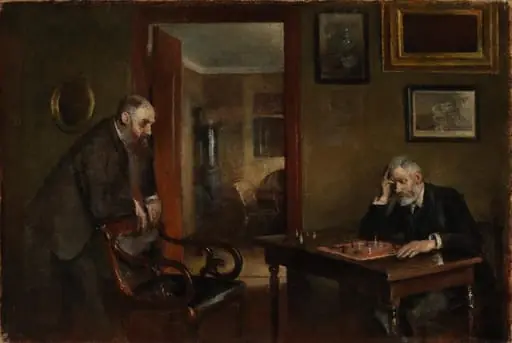
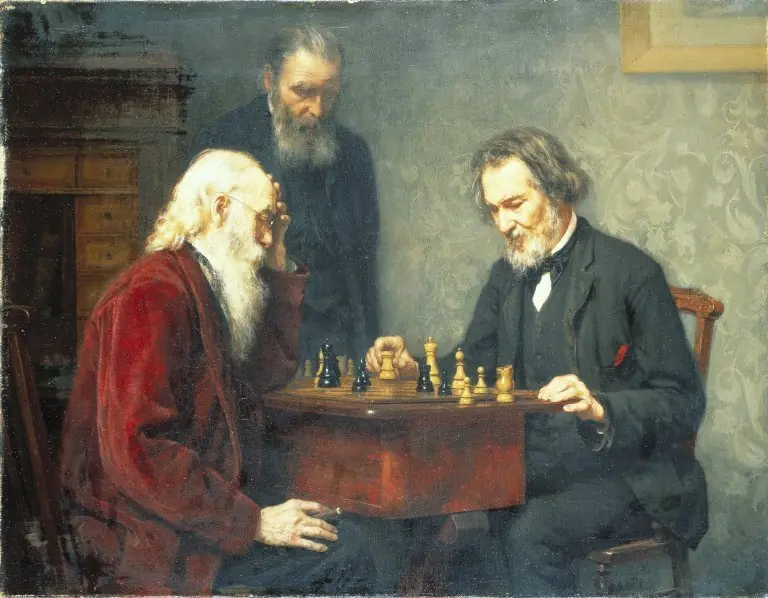
The Chess Players is an oil painting by the American Realist artist Thomas Eakins. It dates from 1876 and is held in the collection of the Metropolitan Museum of Art.
About this work
Thomas Eakins painted his father Benjamin watching two friends play chess in a Philadelphia parlor in 1876, signing the table drawer in Latin: "Benjamin Eakins's son painted this in '76." When he gave the panel to the Metropolitan Museum in 1881, it became the first gift the Met accepted from a living artist.
Subject & Meaning
Together, these carefully chosen props transform a simple genre scene into a meditation on aged wisdom, mortality, and the games people play against fate.
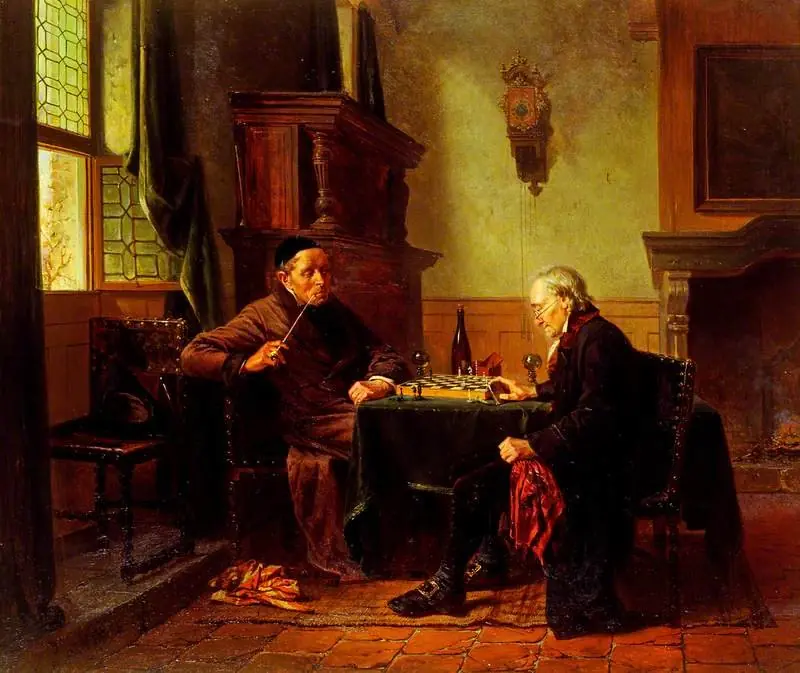
Eakins’s The Chess Players depicts two elderly men absorbed in a game of chess in a sunlit parlour, surrounded by objects that enrich the scene with intellectual and mortal undertones. The chessboard itself, a Staunton set, signifies strategy and mental discipline, while the globe and hookah hint at worldly knowledge and leisurely contemplation. Behind the players, a framed print bears the gladiators’ salute “Hail Caesar!
We Who Are about to Die Salute You,” a direct memento mori that infuses the quiet domesticity with an awareness of life’s brevity. The presence of a cat, a pendulum clock, and the afternoon light further reinforce themes of time passing and reflection. Together, these carefully chosen props transform a simple genre scene into a meditation on aged wisdom, mortality, and the games people play against fate.
Technique & Style
Eakins painted The Chess Players in oil on a wood panel, a support that allowed fine detail. The work measures 29.8 × 42.6 (likely inches). As a genre scene, the composition is densely packed with a meticulously described interior: figures sit around a chess table amid a parlour filled with objects such as a pendulum clock, hookah, globe, and cat. The artist's handling is precise, capturing the textures of wood, fabric, glass, and the subtle play of afternoon light across the room.
The painting exemplifies Eakins's commitment to realistic depiction, with careful attention to the sitters' aged features, clothing, and the reflective surfaces of the game pieces.
History & Provenance
Painted in 1876, The Chess Players was originally in the possession of Thomas Eakins. The work subsequently became part of the collection of the Metropolitan Museum of Art, its present location. No commission or further provenance details are documented in the supplied sources.
The Chess Players is held at the Metropolitan Museum of Art in New York, where it is part of the museum's American Wing collection. The painting is classified under the American Wing's genre scenes. No accession number or inventory number is provided in the available sources, and no specific exhibitions are documented.
Overview
The Chess Players is an 1876 oil-on-wood genre painting by the American artist Thomas Eakins. The work depicts a quiet domestic scene within a Philadelphia home, where two men are absorbed in a game of chess while an older man, identified as the artist's father, Benjamin Eakins, stands observing them. Set against a backdrop of a Renaissance Revival parlor, the composition emphasizes the concentration of the players and the contemplative stance of the viewer.
Eakins executed the piece with precise realism, capturing the textures of the furniture and the subtle interplay of light in the interior. A Latin inscription on the table drawer explicitly states, "Benjamin Eakins's son painted this in '76," marking the work as a personal tribute to his father. Created during a pivotal year for Eakins, who had recently returned from studies in Paris and was establishing his reputation in Philadelphia, the painting reflects his commitment to depicting modern American life with psychological depth and anatomical accuracy. The work is currently held in the collection of the Metropolitan Museum of Art in New York.
Artist & collection
Artist
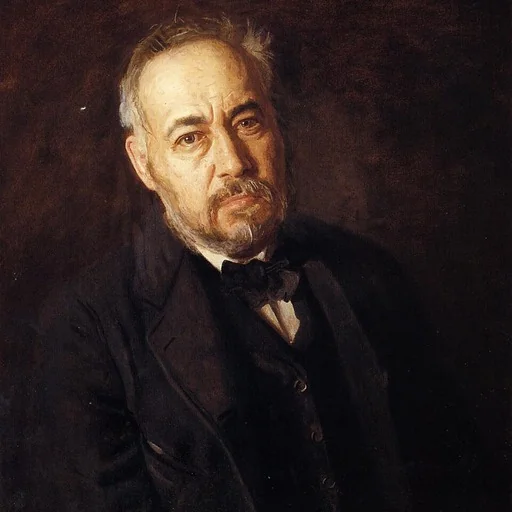
Thomas Cowperthwait Eakins (; July 25, 1844 – June 25, 1916) was an American realist painter, photographer, sculptor, and fine arts educator.

 Studied in the How to Look at a Painting course