Henry G. Marquand by John Singer Sargent
John Singer Sargent's portrait "Henry G. Marquand" (1899, oil on canvas, The Metropolitan Museum of Art) was met with criticism for its informal pose and technique. Despite the controversy, it's now celebrated as a masterful depiction of the sitter's contemplative nature.
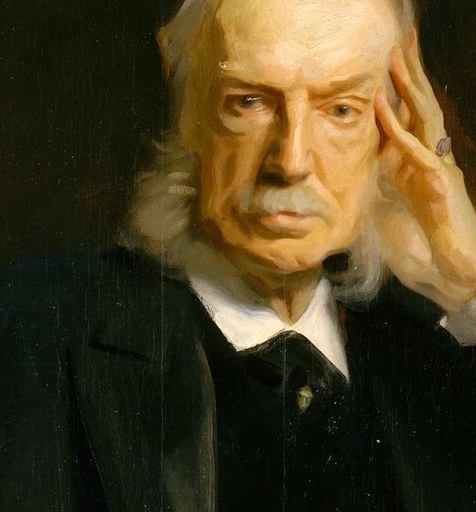
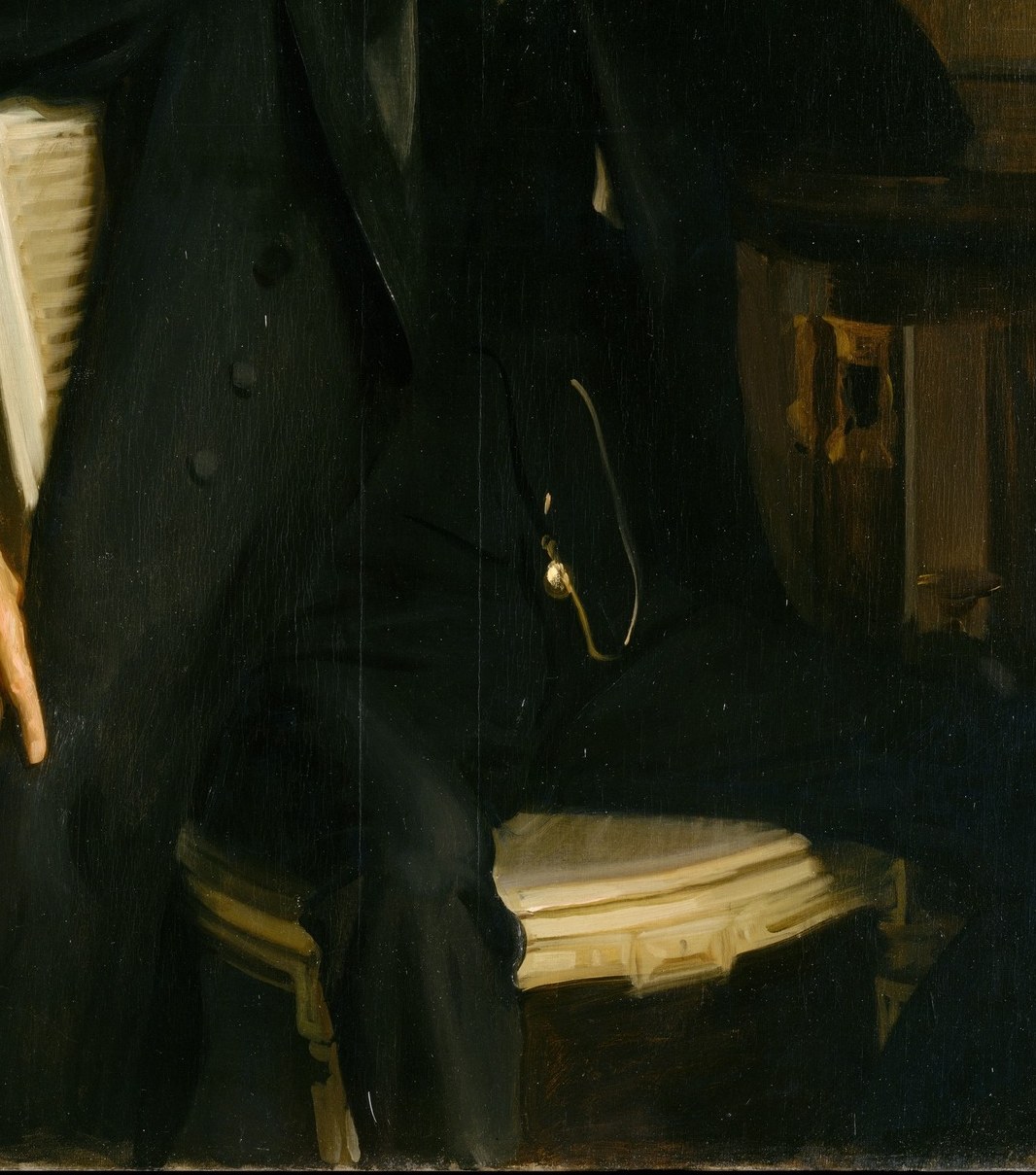
Observe how Marquand's face conveys gravitas and introspection, with his hand resting on his forehead suggesting deep thought or weariness. Notice the aged rendering of his left hand and the rich texture of his formal suit, highlighting Sargent's skill.
Sargent, an American expatriate renowned for his portraits of elites, painted this work late in his career. The portrait's bold composition and looser brushwork, characteristic of American Impressionism, were considered unconventional by some critics at the time, leading to backlash.
This painting ultimately showcases Sargent's ability to capture the psychological depth of his subjects, transcending the initial controversy to become a significant work in his oeuvre.
Details


Transcript
This portrait was criticized upon its debut. Look at his direct and intelligent gaze. His hand on his forehead suggests contemplation. Sargent painted this in 1899, late in his career. The rendering of his left hand shows age. Critics felt the pose was too informal. The rich texture of his suit speaks to status. Sargent’s technique was seen as too loose then.