Saint Romuald by Guiduccio Palmerucci
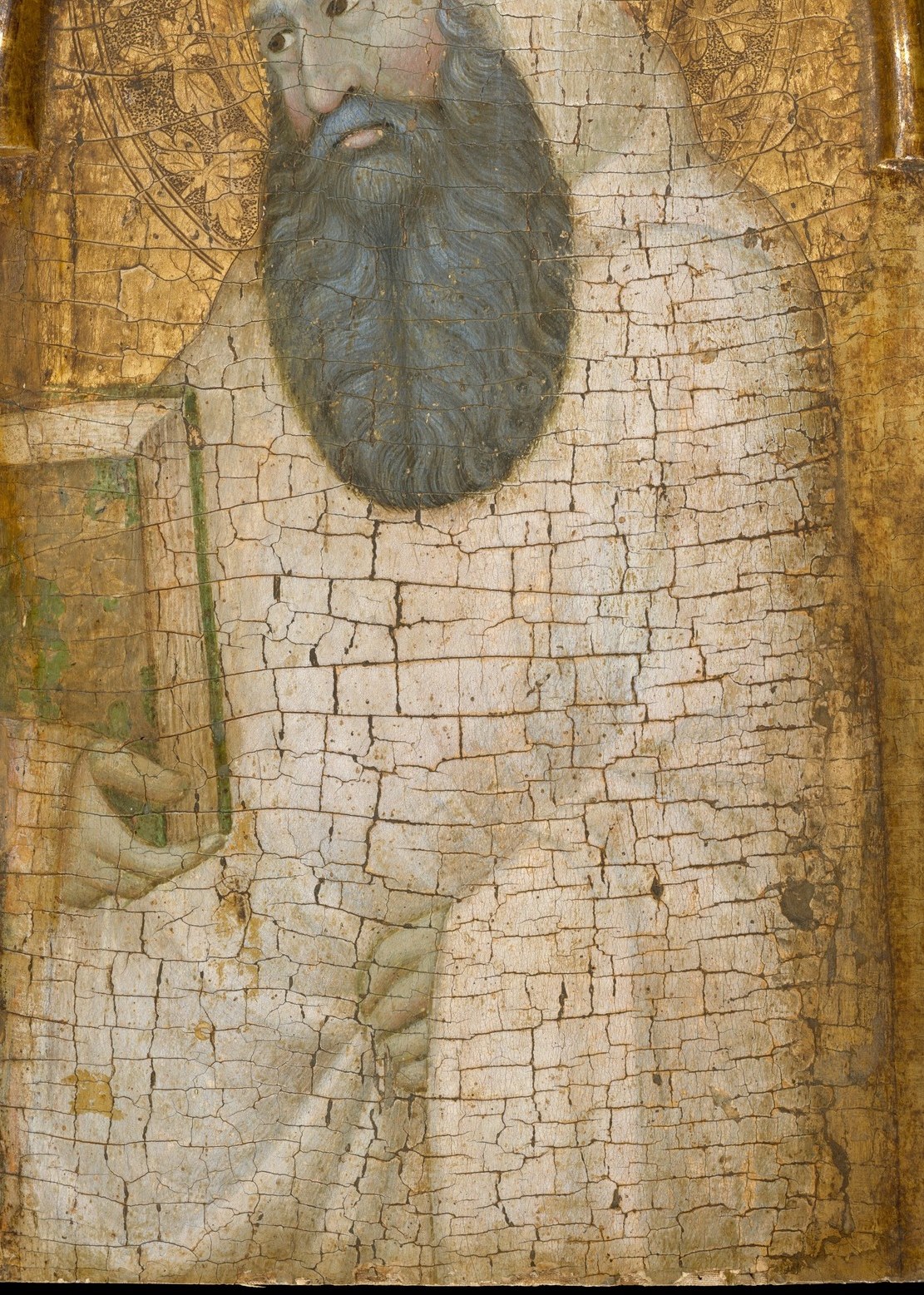
Saint Romuald, painted around 1325 by Guiduccio Palmerucci, is a devotional portrait of the founder of the Camaldolese order, now in the collection of The Metropolitan Museum of Art. It is a quiet giant of the early Trecento, standing just at the moment when Italian painting began to turn inward.
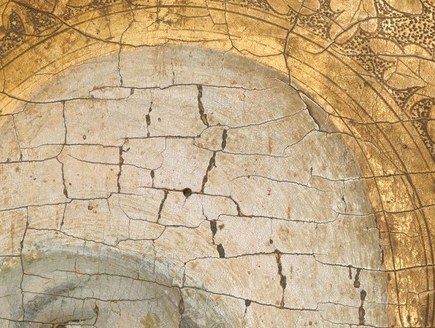
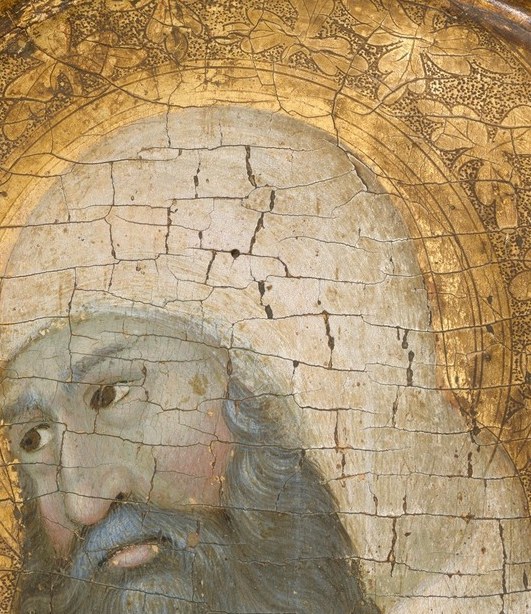
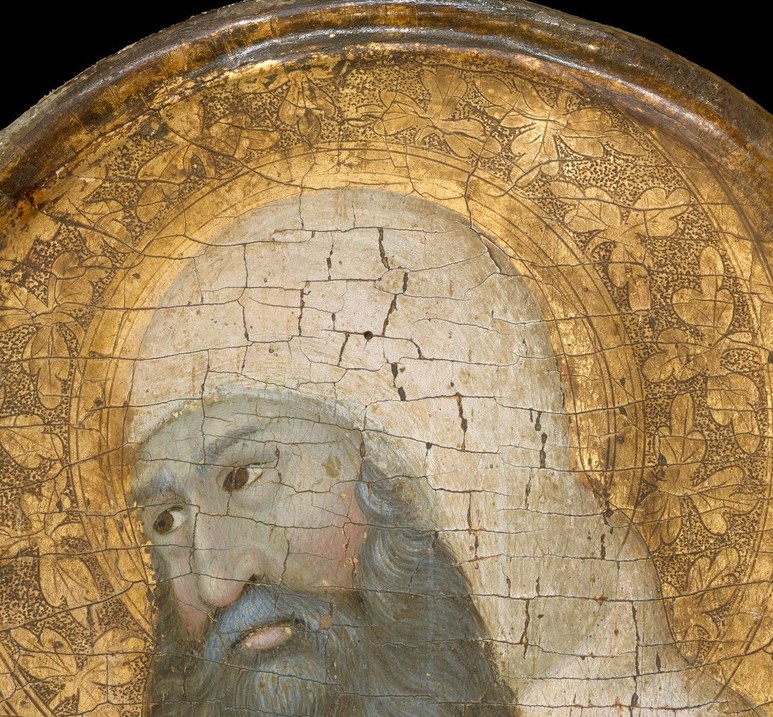
You can feel the shift in the saint's downcast eyes. A strictly Byzantine icon demands a frontal, otherworldly stare that meets the viewer directly. Romuald refuses it. His gaze angles slightly downward-left, an early signal of human interiority breaking through the eternal gold. The painter also gives you a visual puzzle: the halo is painted gold on gold leaf, its edge only faintly distinguishable. You have to look closely to find it.
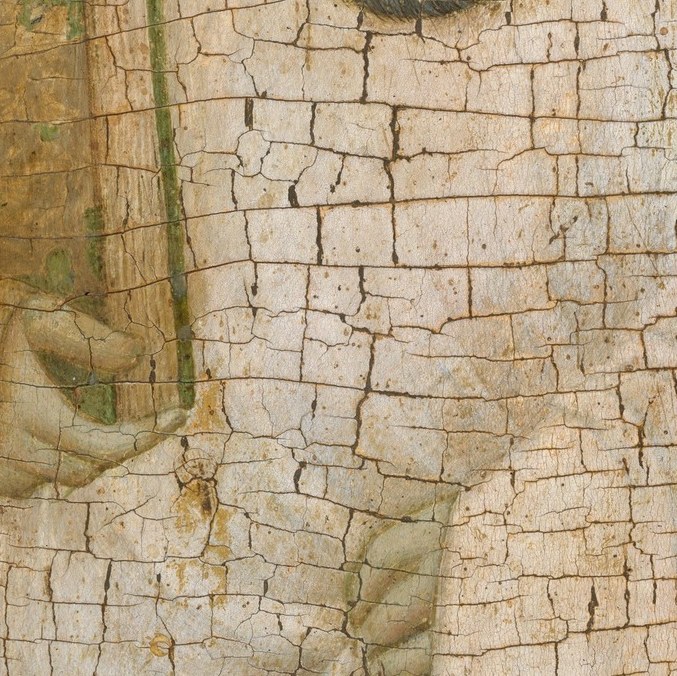
The stark white habit immediately identifies Romuald as Camaldolese, an order that combined community life with the silence of a hermitage. He cradles the monastic rule he authored in reverential hands. For an artist about whom almost nothing is known, Guiduccio Palmerucci left real tenderness in those fingers. The dense craquelure across seven centuries of tempera only deepens the sense that you are looking at something that has kept vigil for a very long time.
A painting that hides its own halo is a painting that trusts you to slow down and look.
Details
Transcript
The saint stares downward, refusing the viewer. Against every rule of icon painting, he won't meet your gaze. His white habit marks him as Camaldolese, a monk of strict silence. Cradled in his hands, the monastic rule he wrote. Now look at the halo. Gold on gold, it nearly disappears into the eternal behind him. Palmerucci painted this seven centuries ago, and the cracks are now part of the story.