The Album by Édouard Vuillard
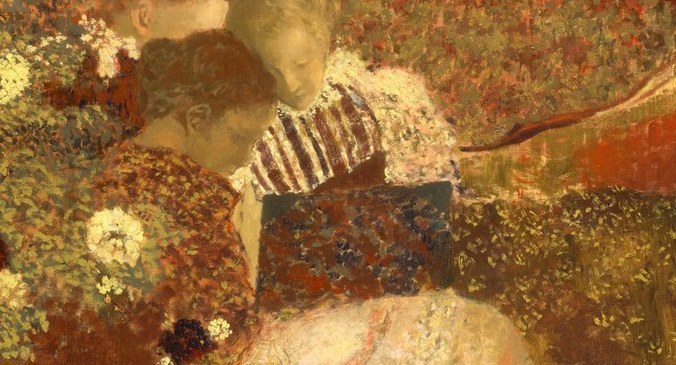
Édouard Vuillard's *The Album*, painted in 1898, is a quiet exploration of domestic intimacy and pattern. Part of The Metropolitan Museum of Art's collection, it reflects his avant-garde work as a member of Les Nabis.
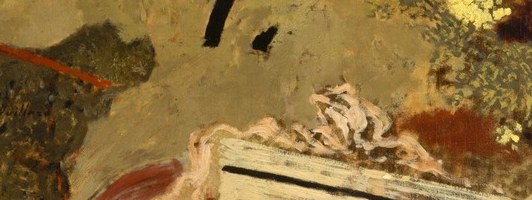
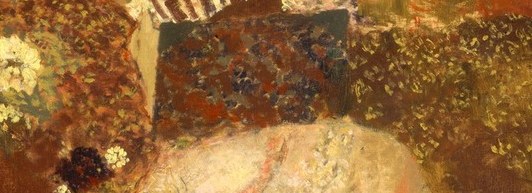
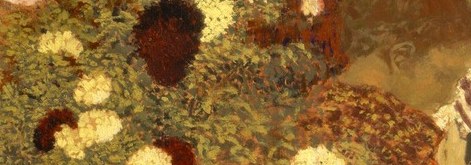
Look closely at how the woman in the dark dress seems to merge with the intricate background patterns. Vuillard used flattened planes of color, reminiscent of Japanese woodcuts, to create a sense of decorative harmony that draws the viewer into a private, contemplative moment.
Created during his Nabi period, this painting exemplifies Vuillard’s shift from large public scenes to more intimate interiors. It captures a moment of quiet reflection, foregrounding personal experiences over dramatic narratives, a common theme in fin-de-siècle art.
What details do you notice that create this sense of quietude?
Details

Transcript
This painter, a Nabi, drew inspiration from Japanese prints. He flattened spaces, making figures almost disappear into patterns. Here, a woman quietly holds a treasured album. Her dress, the chair, the wall, all become one decorative surface. This reflects the Nabi's focus on decorative harmony and introspection. He chose quiet, domestic scenes over grand public dramas.