A Connibo Village by Catlin, George
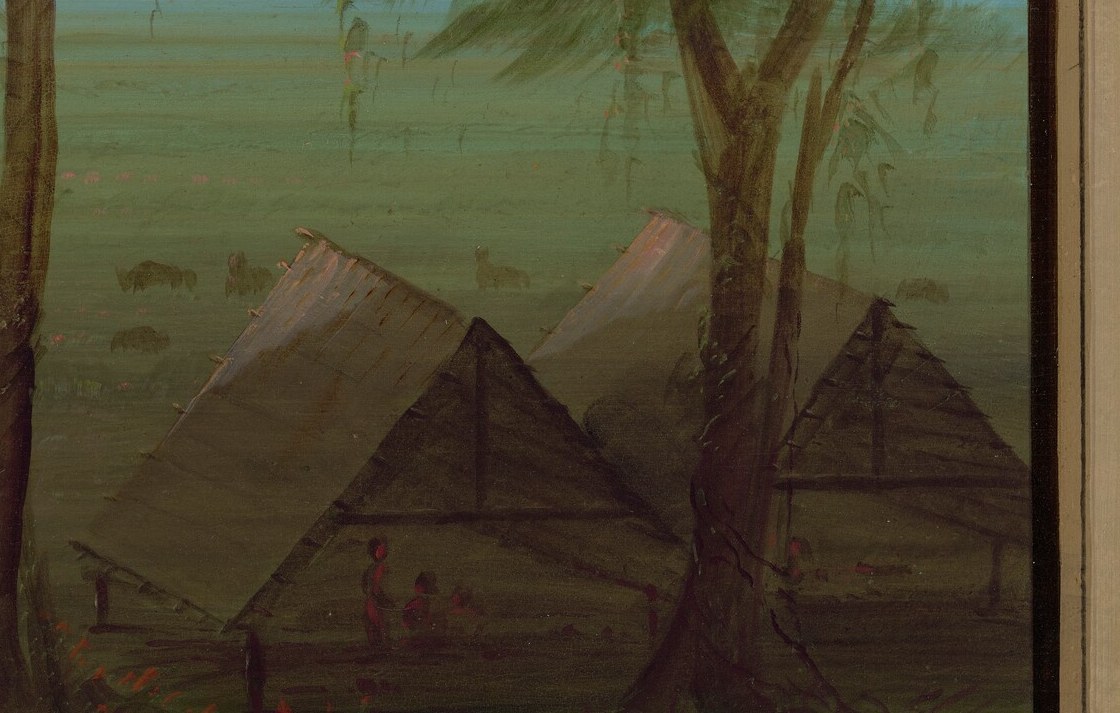
In *A Connibo Village*, painted between 1854 and 1869, George Catlin, an American lawyer-turned-painter, documented the tranquil everyday life of a Peruvian community. This oil painting, housed in the National Gallery of Art, Washington, D.C., offers a glimpse into a world far from his usual subjects.
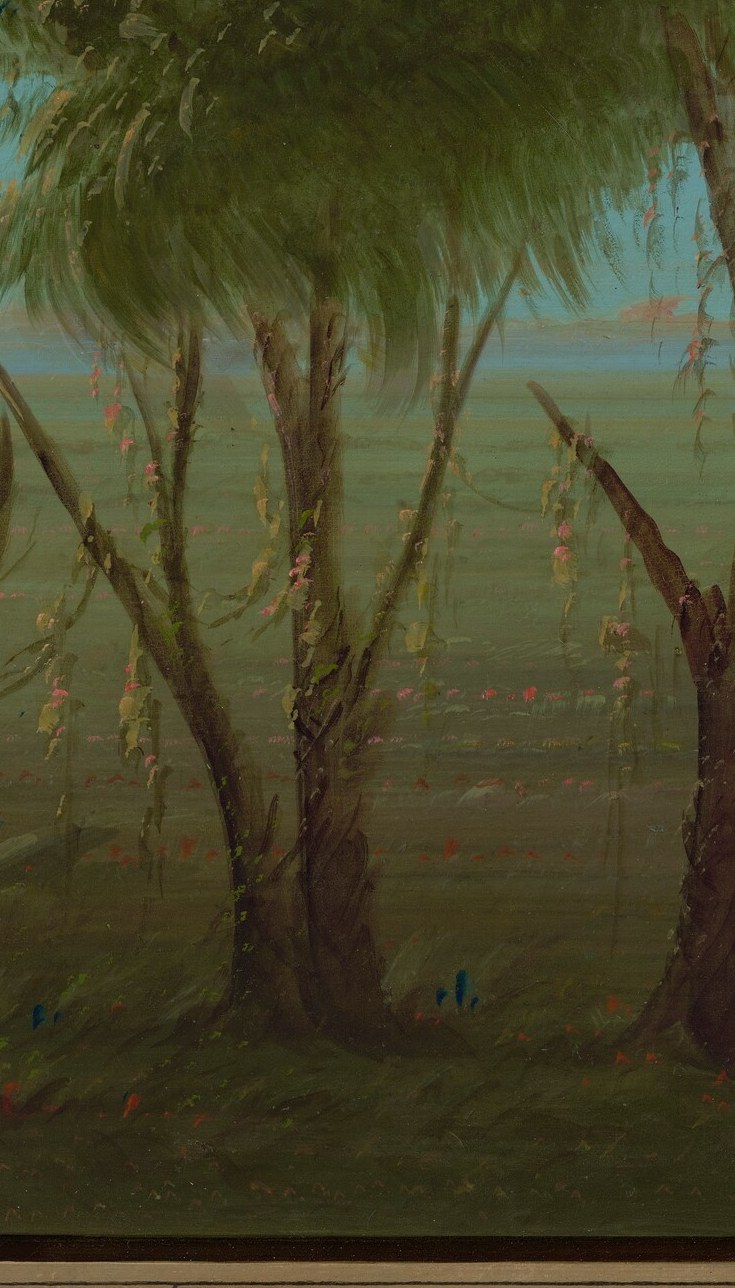
Notice the soft light on the thatched roofs and the single, gnarled tree at the center, anchoring the composition. The small, indistinct figures moving among the huts convey a sense of quiet activity, reflecting Catlin's focus on the ordinary.
Catlin dedicated his career to creating a visual record of Indigenous peoples, traveling extensively throughout the Americas. He made five journeys to the American West in the 1830s, painting portraits and writing accounts of Plains Indian communities. This later work reflects his continued commitment to visual ethnography, documenting cultures amid rapid change.
Through his art, Catlin aimed to preserve images of cultures he believed were disappearing. What stories do you see in the details of this village?
Details
Transcript
This painter spent his life documenting Indigenous cultures. He traveled to the American West five times in the 1830s. He recorded Plains Indian life through portraits and accounts. Years later, he painted this scene from a Peruvian village. His mission: to preserve visual records of changing cultures.