Still Life with Pig's Head, Trotters and Sausage by Monogrammist JVR
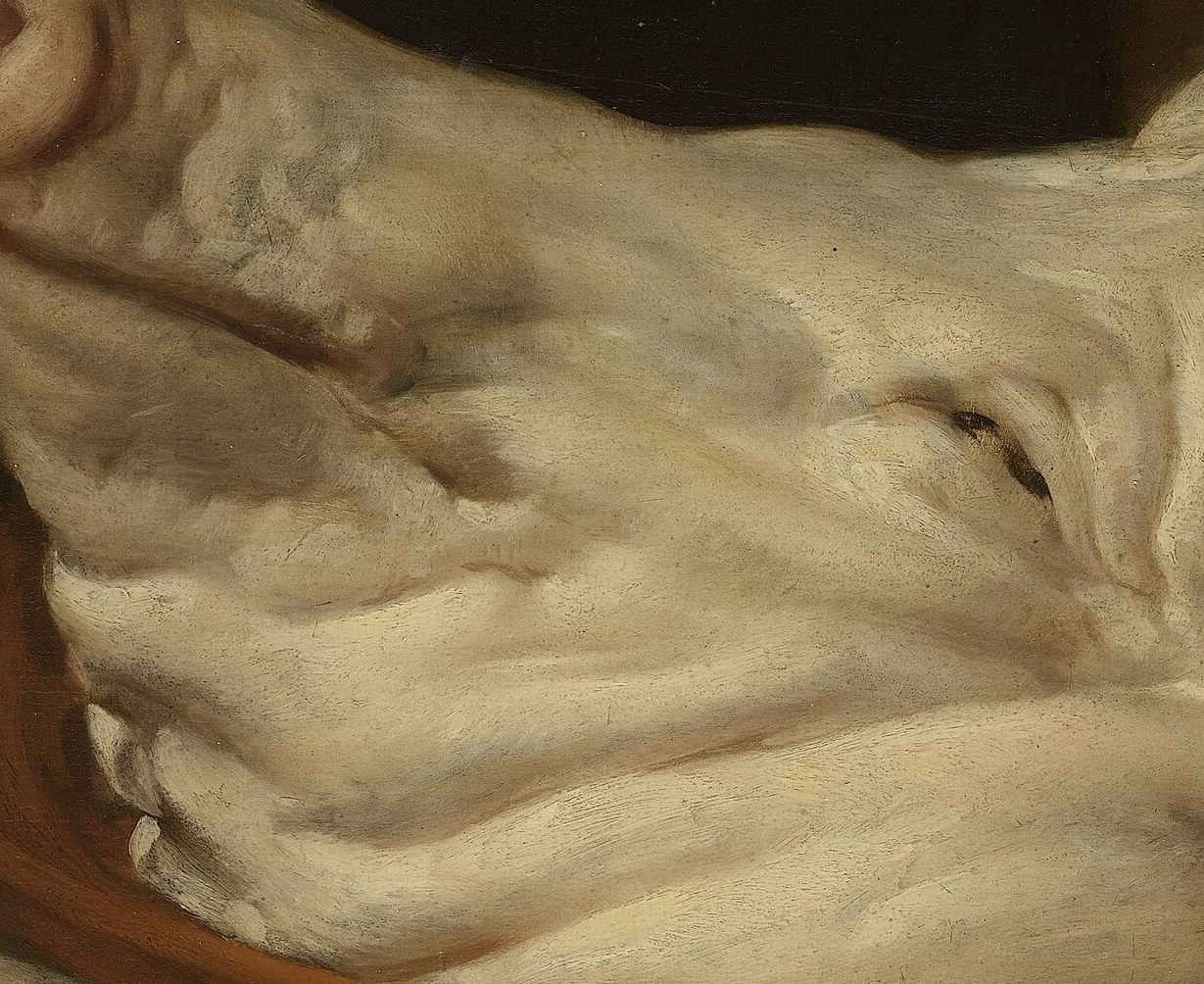
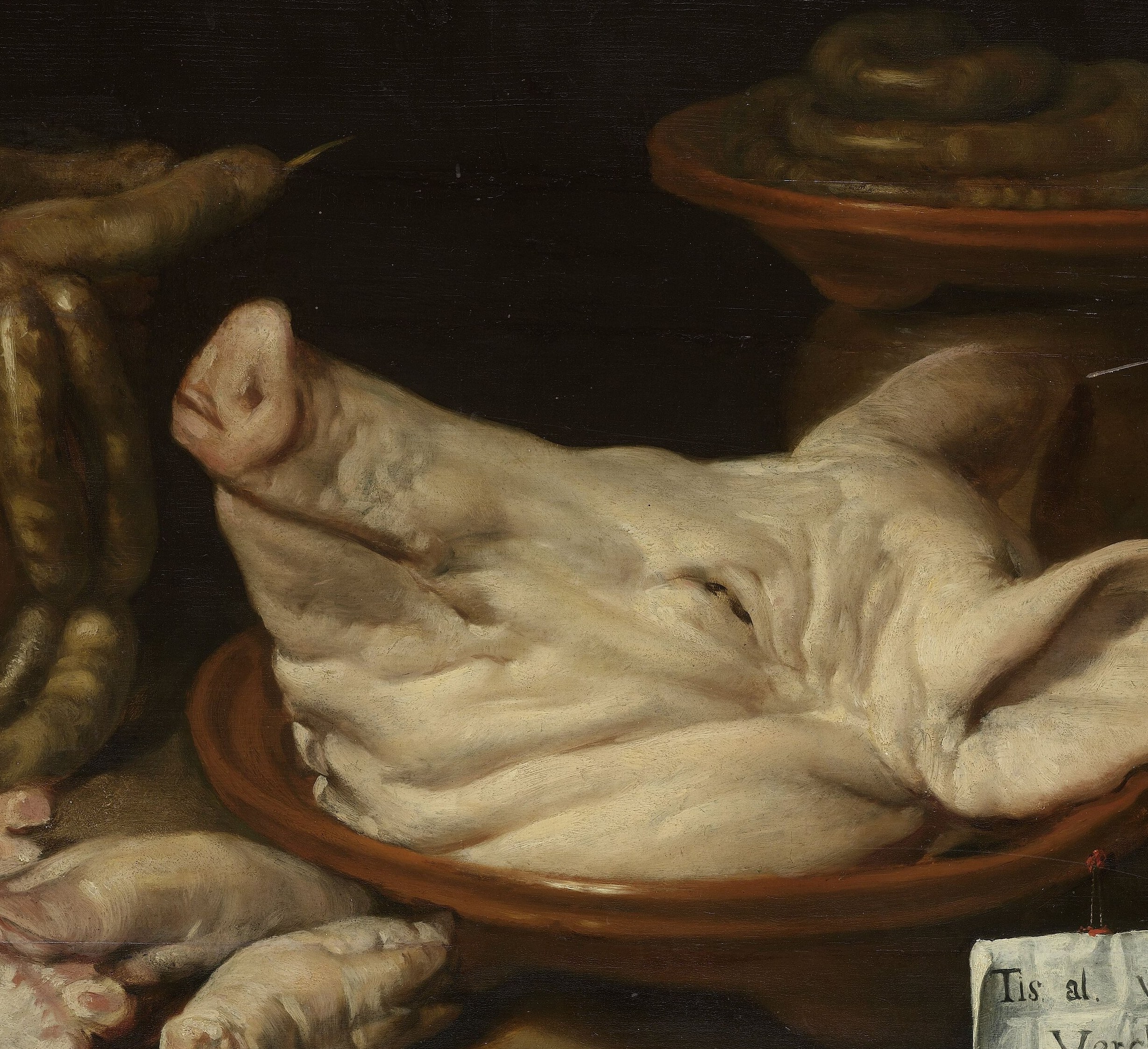
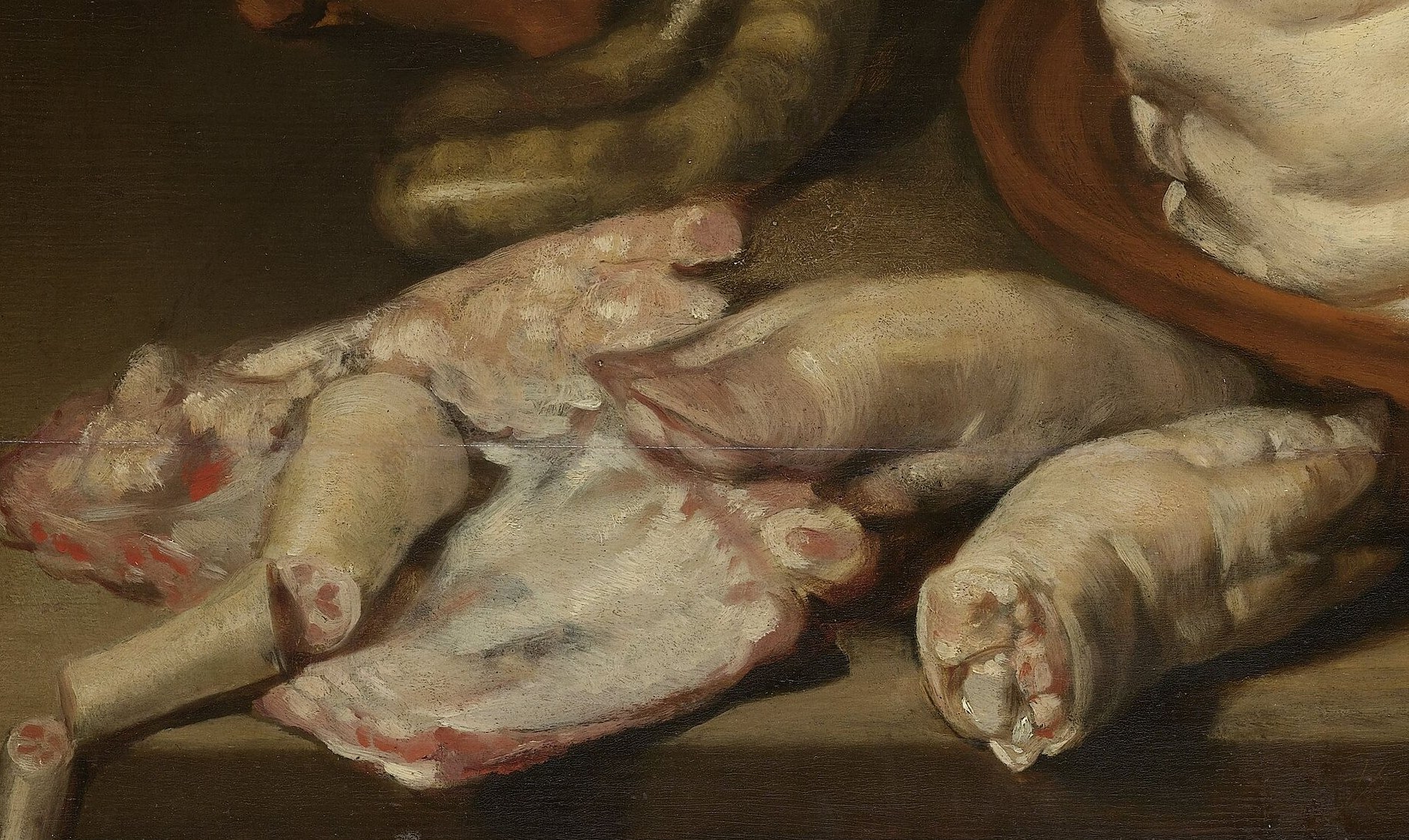
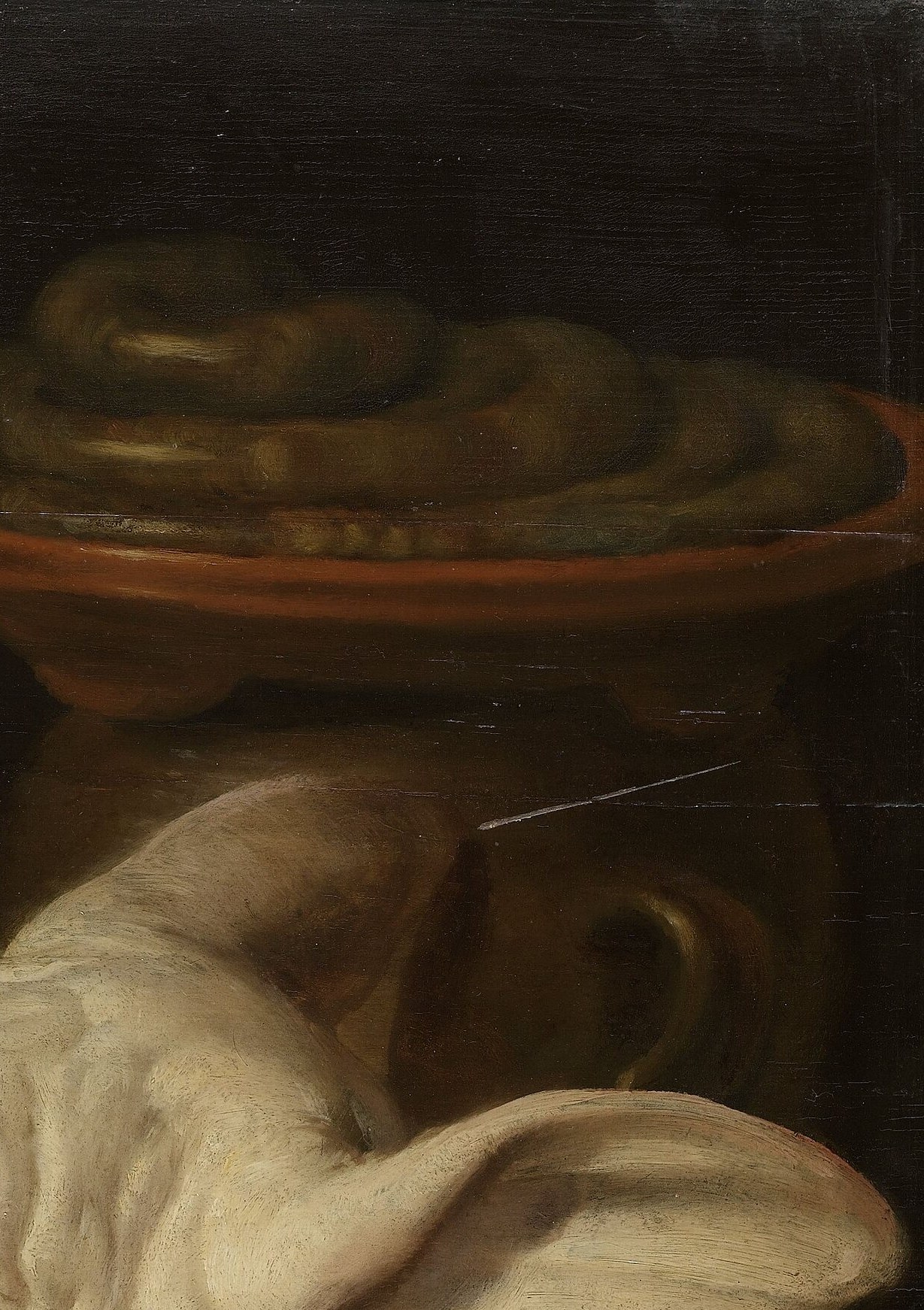
Still Life with Pig's Head, Trotters and Sausage hangs in the Rijksmuseum as a brutally honest document of a 17th-century kitchen. Painted around 1600 by the Monogrammist JVR, it depicts a full butcher's inventory: a severed pig's head, two cloven trotters, and a tangled coil of sausages, with only a humble clay pitcher for company.
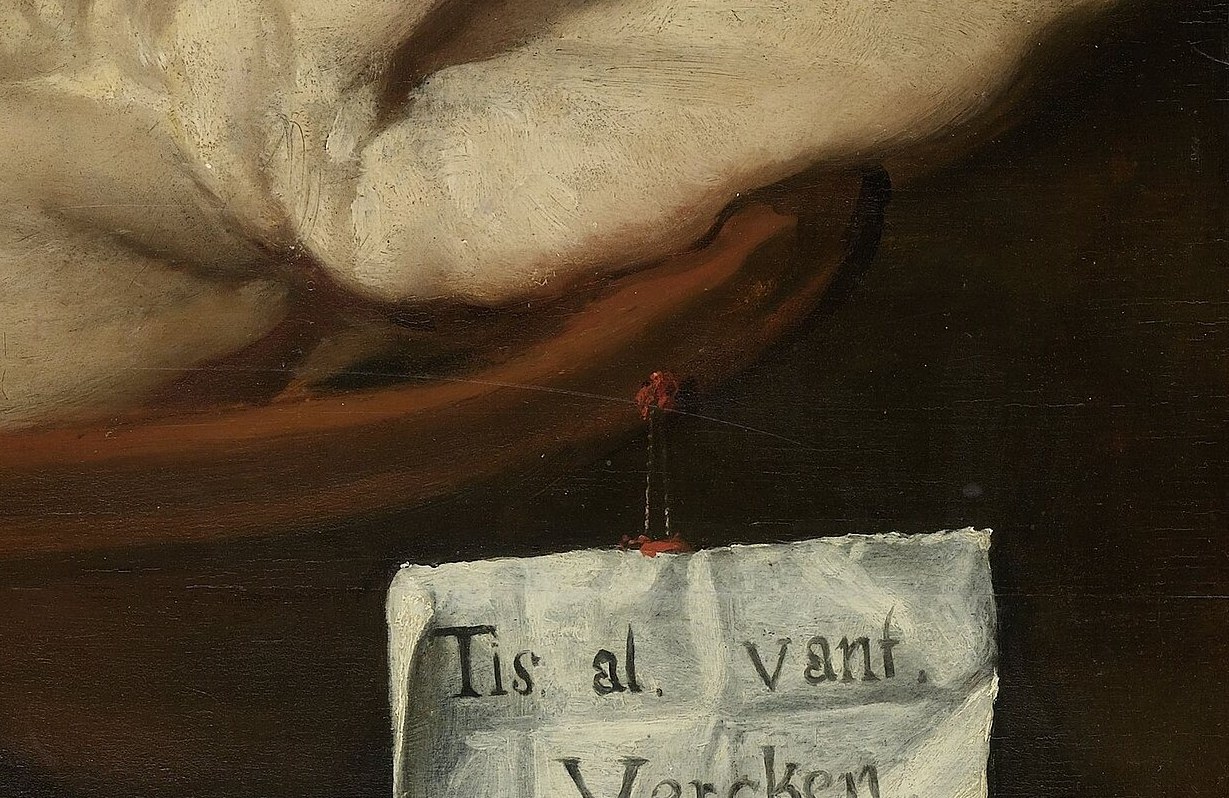
The artist's real identity is lost. The signature on the label in the lower right is the only clue he left behind. Without a famous name attached to the canvas, the painting spent centuries in quiet obscurity, treated as little more than a grim period curiosity.
Early 20th-century auction records tell the story. Before the monogram was connected to a coherent body of work and the painting was recognized as a rare early food still life, it sold in London for a sum equivalent to less than 900 dollars today. It changed hands as an anonymous piece of butcher-shop decor.
Now it lives under museum lighting, its pale flesh and deep shadows studied for their technical precision. When you look at the waxy skin of that pig's head, you are seeing exactly what a forgotten master put down with a brush over four centuries ago, during a time when his life's work was valued at almost nothing.
Details
Transcript
The butcher's block, painted around 1600. A pig's head, trotters, and coils of sausage. It hangs in the Rijksmuseum today, prized for its blunt honesty. The painter signed it with three letters: JVR. No one knows his full name. He remains a ghost. Because of that obscurity, this museum piece once sold for under 900 dollars.