Gold and Brown: Self-Portrait by Whistler, James McNeill
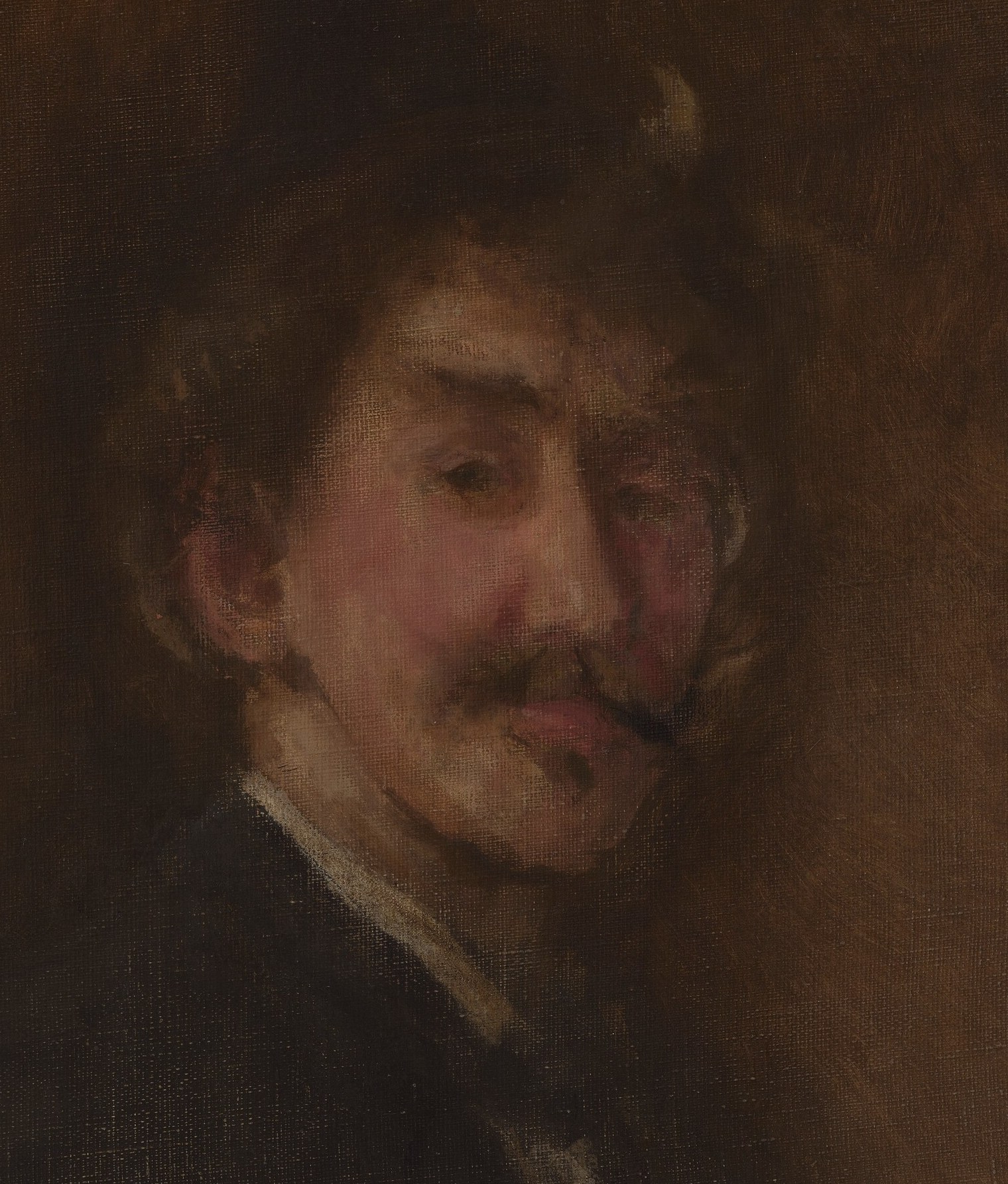
James McNeill Whistler painted 'Gold and Brown: Self-Portrait' around 1896 to 1898. It is not simply a picture of the artist, but a musical score in oil. Whistler rejected story-driven art, believing a painting should function like a harmony, with colors and forms arranged for their own sake.
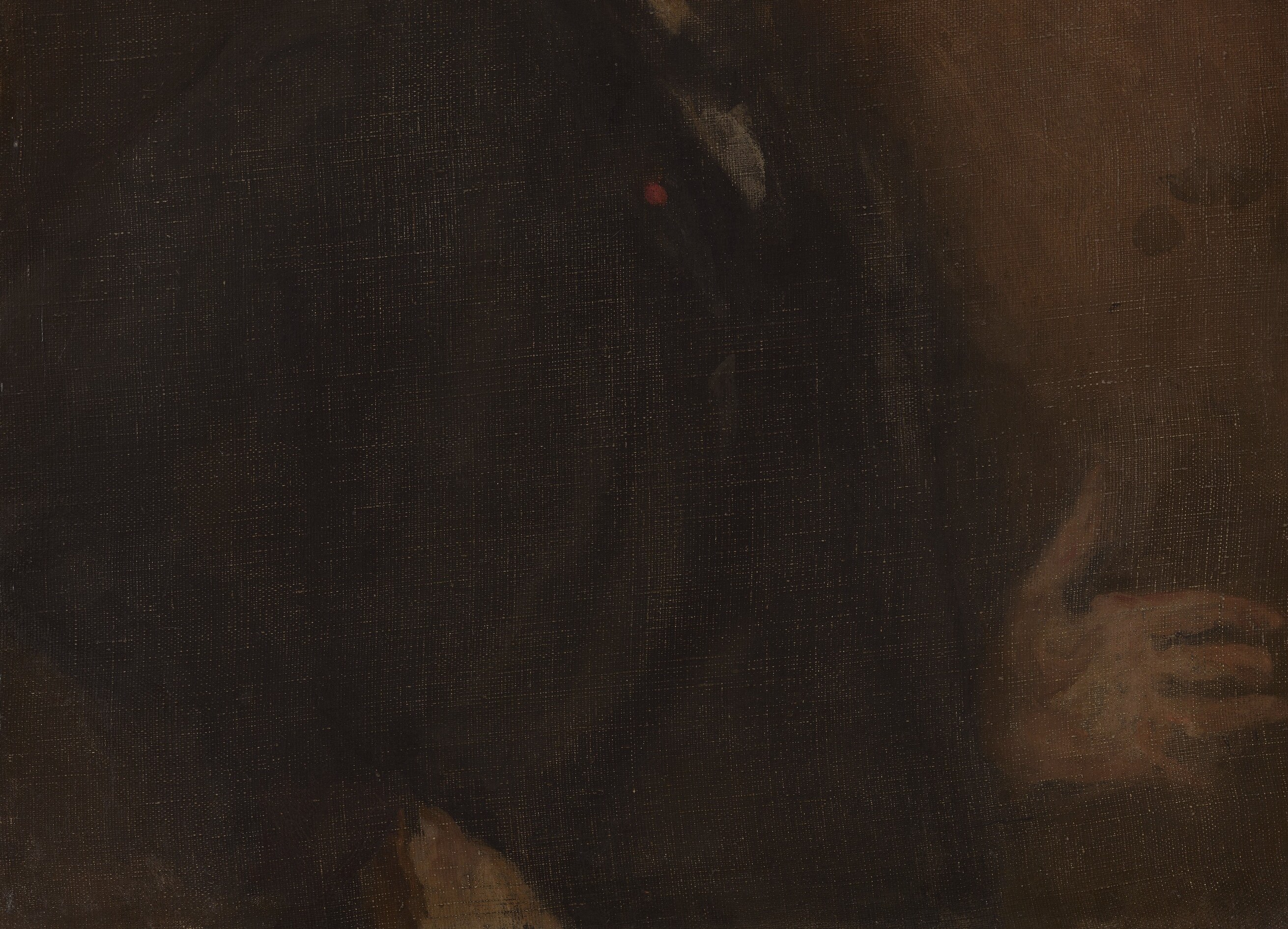
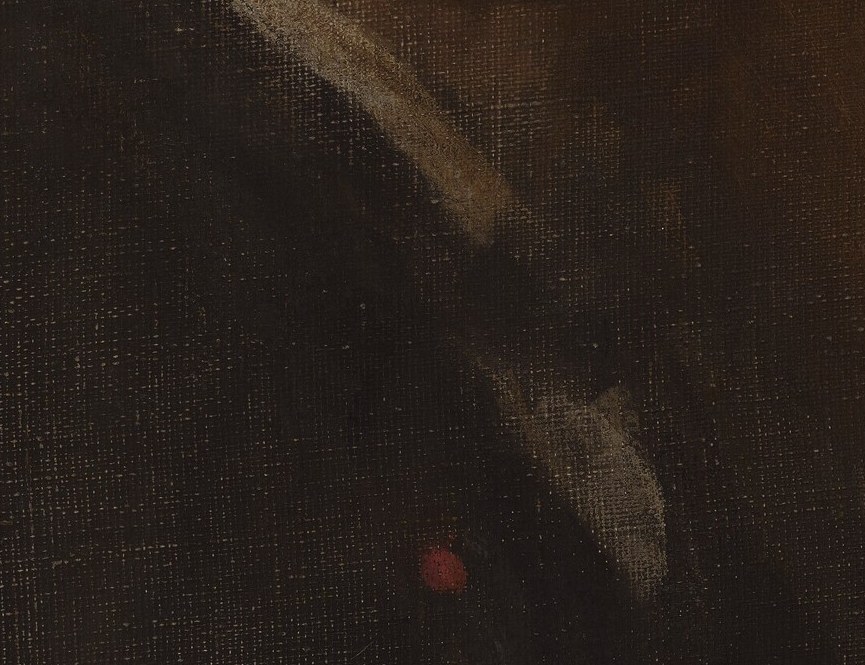
The title gives the game away. In this darkly atmospheric work, the two colors are the instruments. The enveloping dark coat is the brown, a tonal mass that deliberately dissolves into the void of the background. The single bright note is the pale cravat, acting as a pivot between the face and the emptiness. Even the gold background is not dead space; it is a carefully considered color field.
Whistler painted this in London, where the American expatriate was a famously combative and dandyish figure. He fought critics in court and signed his works with a delicate butterfly. His credo, 'art for art's sake,' is the entire program of this self-portrait.
Whistler believed Art alone should provide the line, color, and form, no story needed. Does this painting work on you purely through its tones and shapes?
Details


Transcript
The title is the first clue: Gold and Brown. For Whistler, a painting was like music. He called his works arrangements and harmonies, not portraits. Here, the gold background is not empty space. It is an instrument. His dark coat is the brown. It nearly dissolves into the void. He refuses outline. The shoulder vanishes into the background. The single bright note is his cravat. A pivot between face and void. He turns his face into the light, but never fully, a strategy of incompleteness.