Hay Wagon by Willem de Zwart
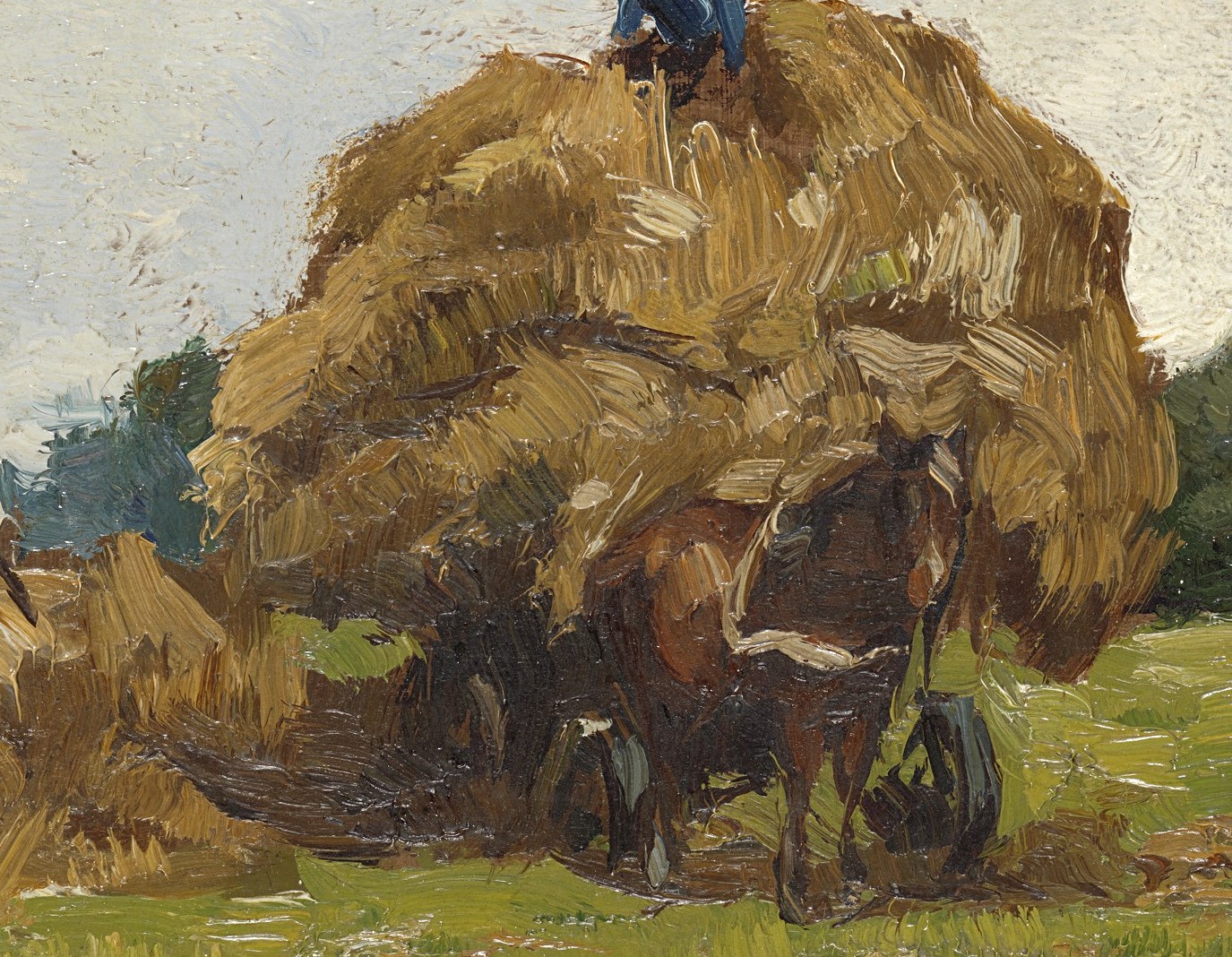
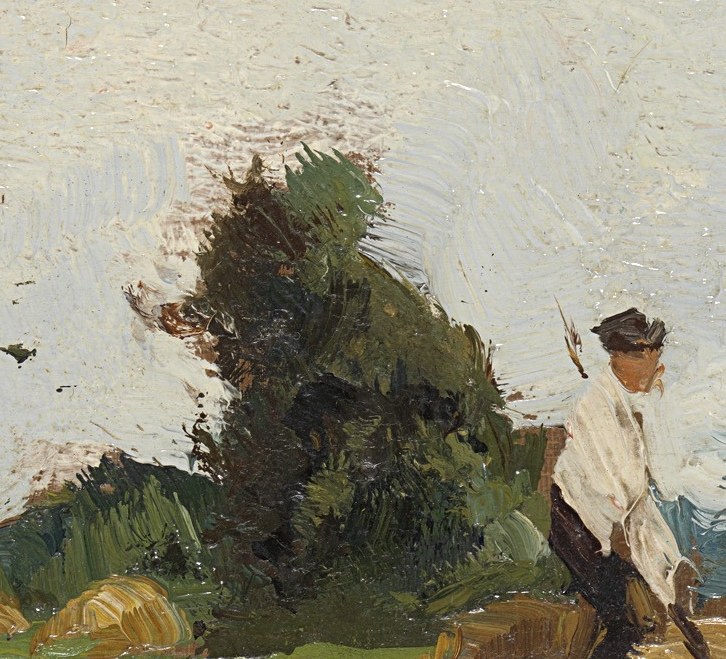
Willem de Zwart's Hay Wagon (1908, Rijksmuseum) is a farm scene built from paint so thick it becomes relief sculpture. Trained in the Hague School's tradition of invisible brushwork, de Zwart abandoned smooth blending for a technique called impasto that leaves every stroke standing.
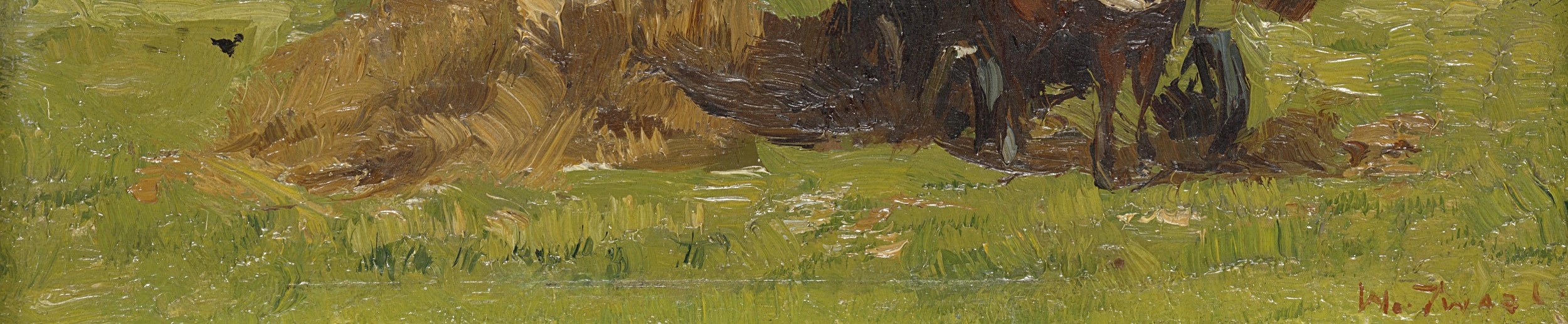
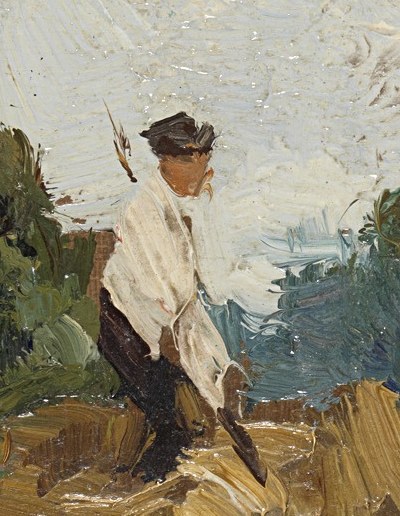
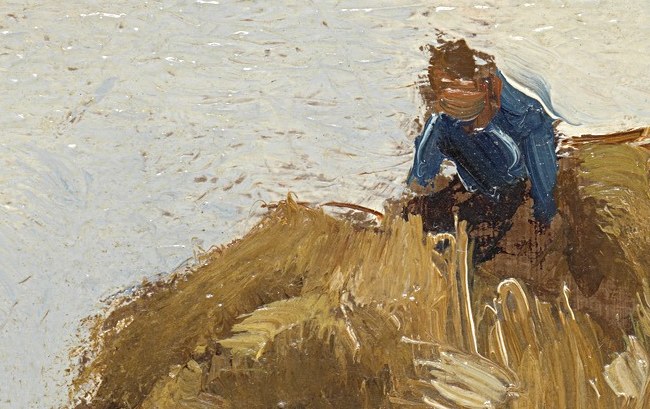
Look at the haystack. Each stroke is a ridge of pigment, laid on in dense waves that give the straw real weight. The grass in the foreground was applied so heavily it still catches light more than a century later. Even the workers are carved from the same thick pigment.
De Zwart painted this at 46, deep in his transition from Hague School tonal realism toward the brighter spontaneity of Amsterdam Impressionism. The work entered the Rijksmuseum's collection, where it remains.
A farm scene is an ordinary subject. The paint is what makes it monumental.
Details
Transcript
The Hague School prized smooth, invisible brushwork. De Zwart chose visible strokes. The hay is built from thick, deliberate strokes. Nothing is hidden. This is impasto. The paint stands up from the canvas. A worker pauses. Even his clothes are carved from heavy pigment. He was 46. He had left the Hague School behind.