Madonna and Child with the Infant Saint John the Baptist by Orsola Maddalena Caccia
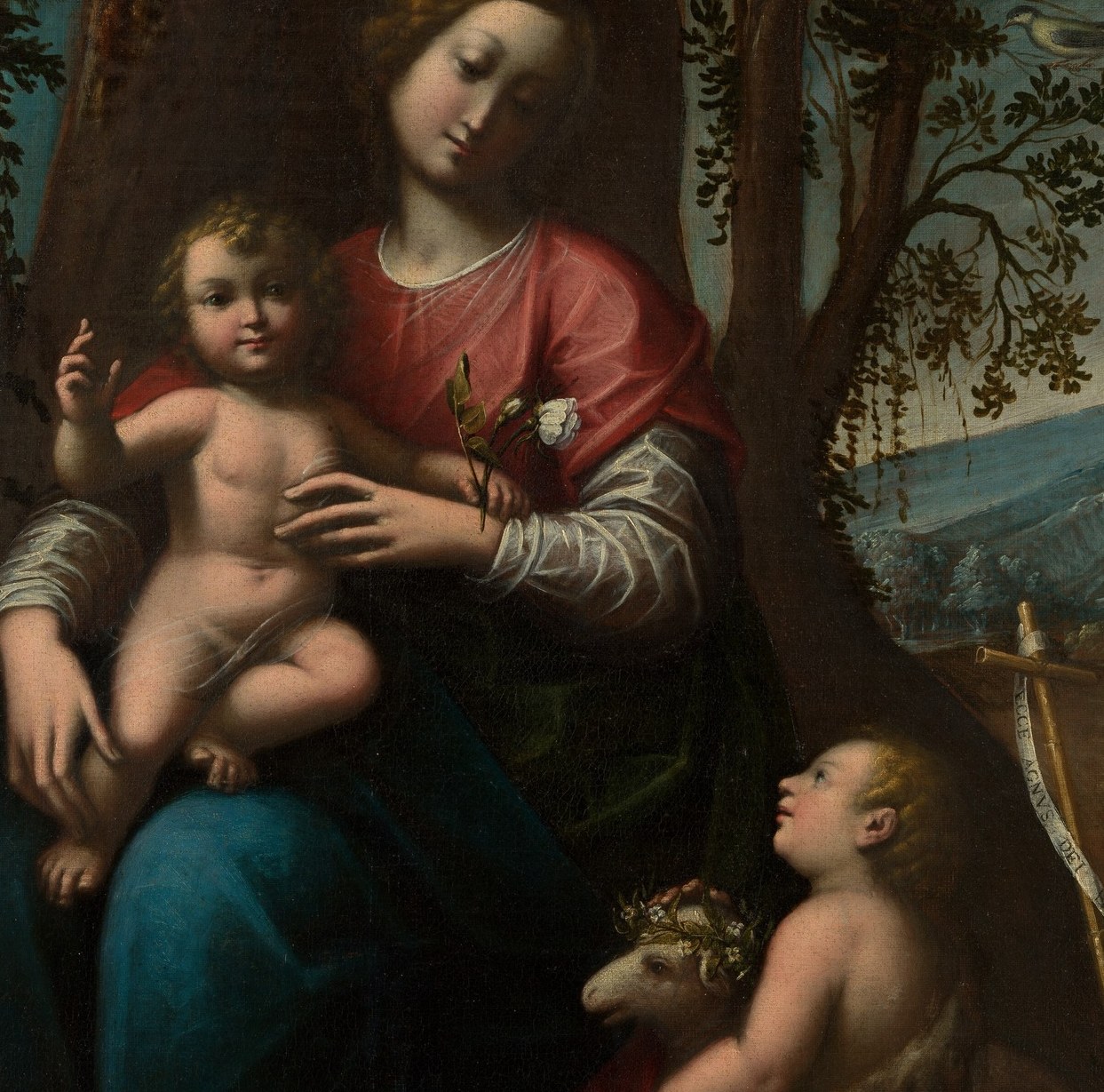
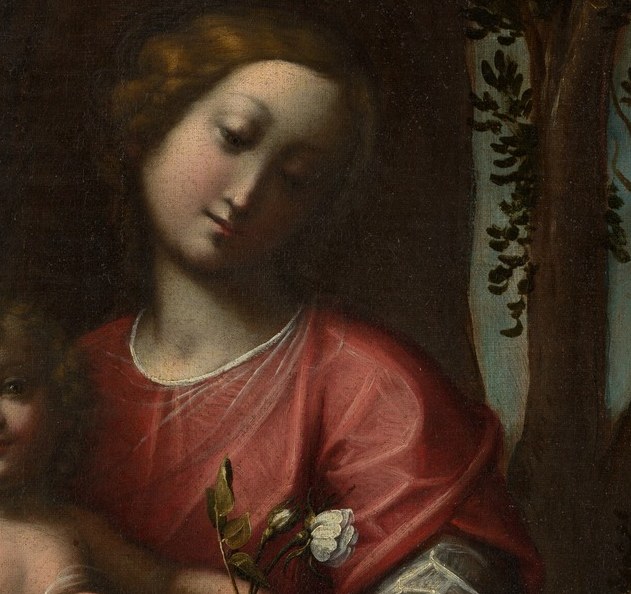
This is "Madonna and Child with the Infant Saint John the Baptist," painted around 1625 by Orsola Maddalena Caccia, an Italian Mannerist painter and Ursuline nun who ran a large, successful workshop from her convent in Moncalvo.
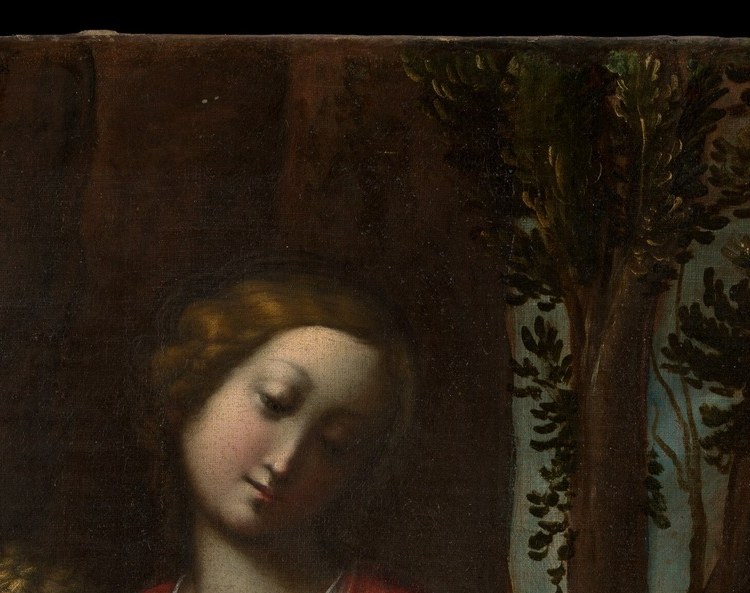
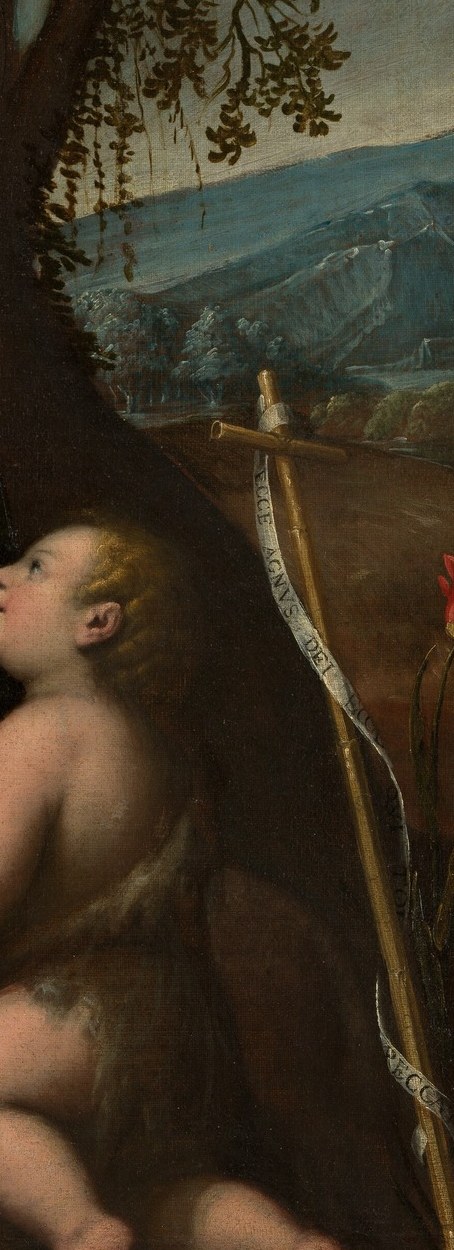
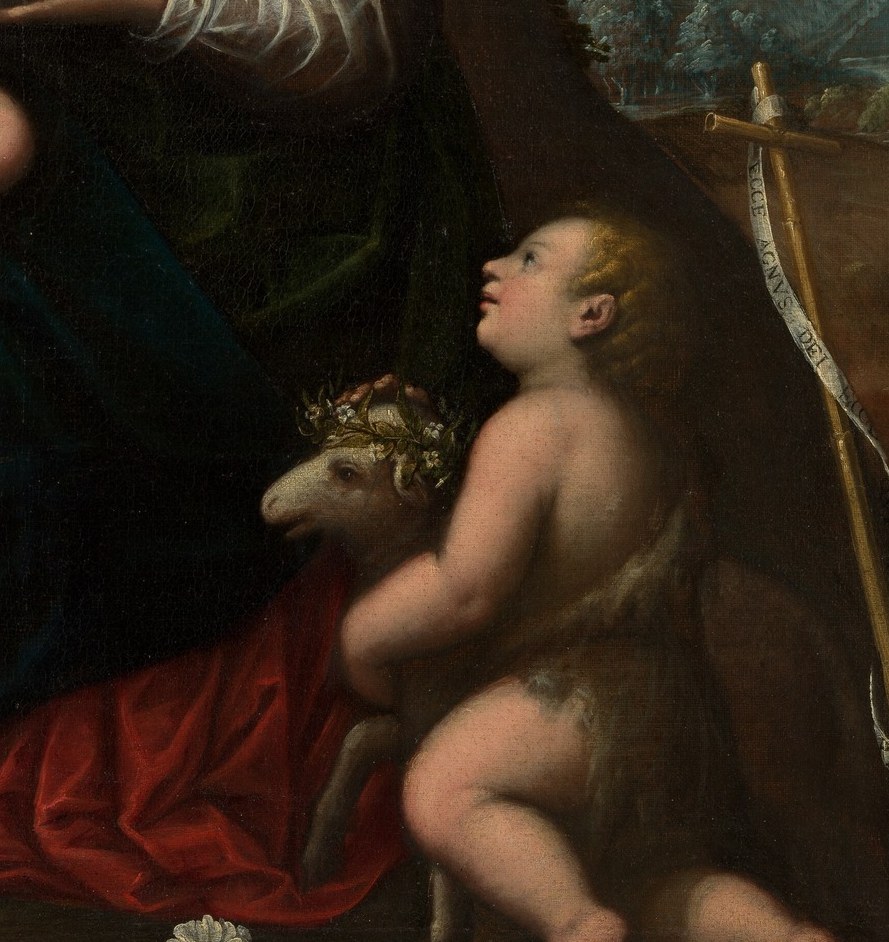
Look first at the Virgin's face and Christ's upward gaze, a silent dialogue weighted with tenderness. Then follow the red cloth across the lower third of the canvas, echoing the red of Mary's robe. Saint John kneels on the right, his reed staff bearing the Agnus Dei banner, a traditional symbol this nun rendered with careful precision. The background dissolves into a luminous river valley, showing the Leonardesque sfumato influence that traveled deep into the 17th century.
Caccia was born Theodora Caccia, daughter of the painter Guglielmo Caccia. After taking her vows, she inherited his workshop and six assistants. For centuries, her works were misattributed to her father or male contemporaries; her signature was simply overlooked. Art historians in the 20th century began untangling her hand from the 'School of Caccia' label, restoring her authorship canvas by canvas.
The financial arc here is not about a single auction record. It is about the slow, steady revaluation of an entire body of work. As her canvases move from anonymous storage to museum walls, the market corrects itself. A nun who painted vast altarpieces and intimate still lifes is finally priced as a master, not a curiosity.
Details
Transcript
For three centuries, her name was mentioned only in footnotes. Ursula Caccia. A nun who ran her father's workshop. Her paintings were often filed under 'School of' her father. But look at the drapery. That weight, those folds. Chiaroscuro. Light and shadow carved like sculpture. The canvas reattributed to her in the 20th century. A nun's signature, hidden for 300 years. Now the price of her work climbs with her rediscovered name.