Girl with Cherries by Marco d'Oggiono
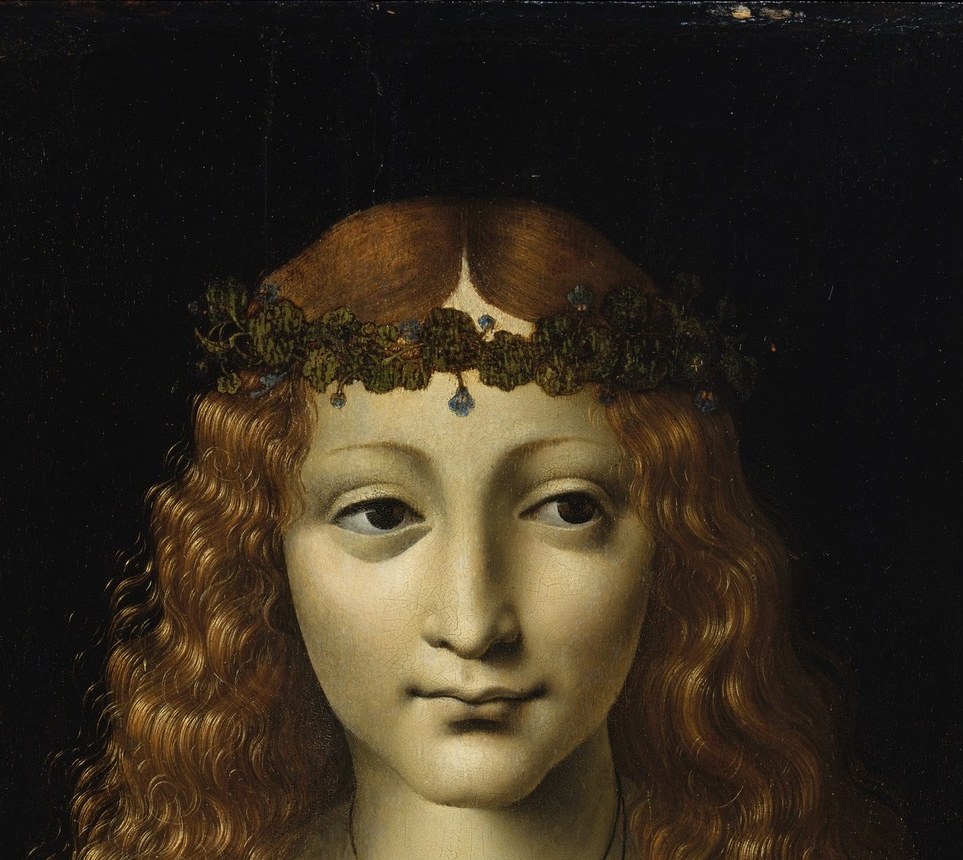
This is Girl with Cherries, painted in 1496 by Marco d'Oggiono. It hangs today in The Metropolitan Museum of Art, but for centuries, no one knew his name. They thought it was a Leonardo.
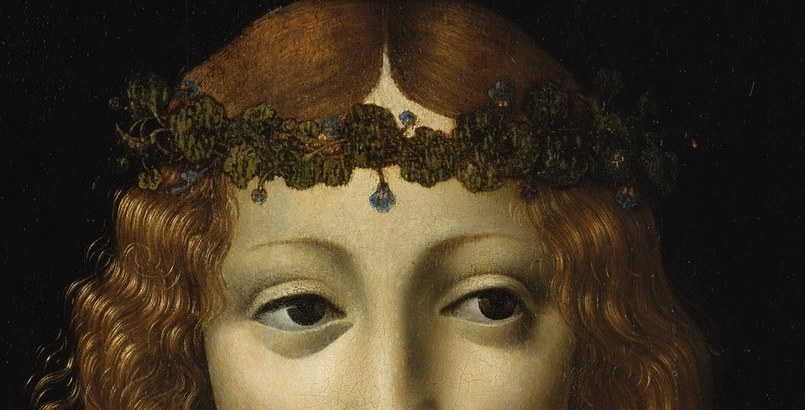
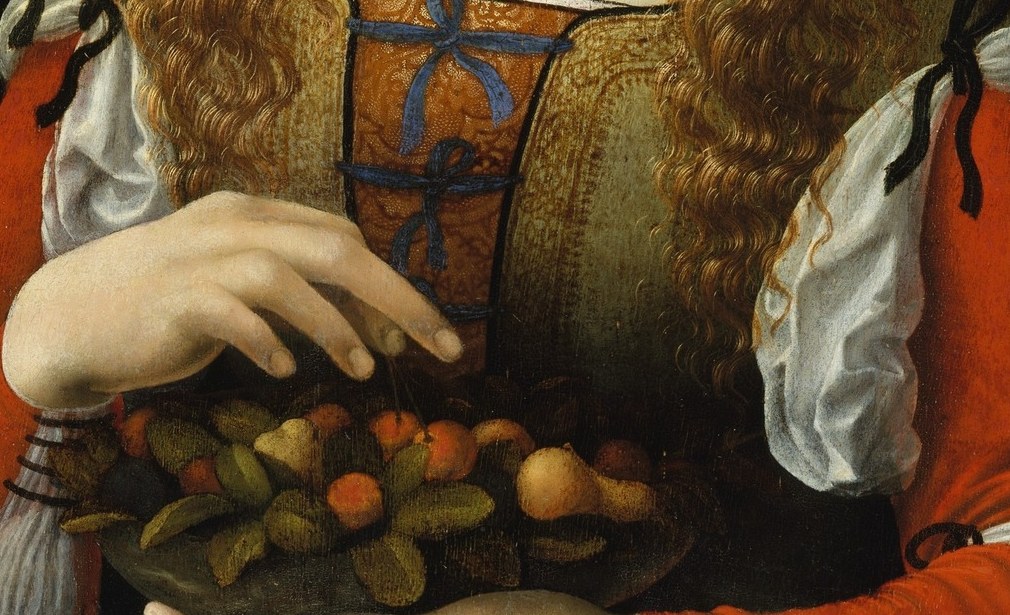
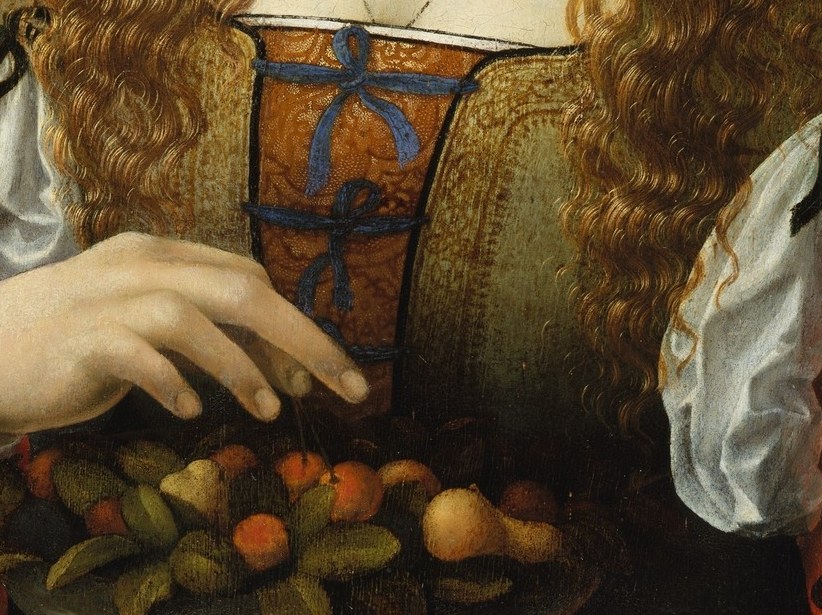
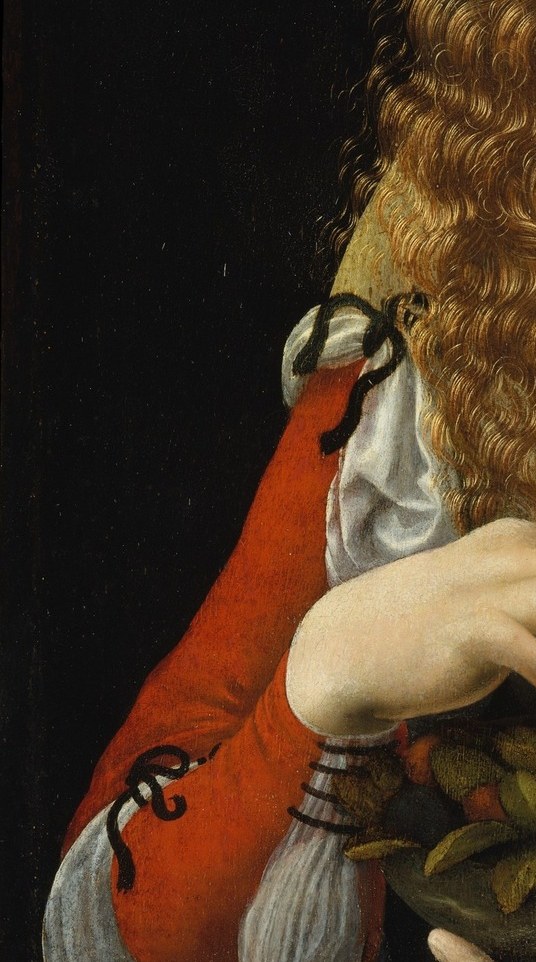
Look at her face: the soft shadow around the jaw, the downcast almond eyes. That's sfumato, Leonardo's signature technique, executed here by his most faithful pupil. The cherries in her hands, rendered with startling freshness, were a Renaissance symbol of virtue. The jeweled headband and the crisp white chemise peeking from her red sleeve are all markers of high Milanese fashion.
Marco d'Oggiono was Leonardo's chief student in Milan. His workshop practice consisted largely of replicating the master's compositions, and he became exceptionally good at it. So good, in fact, that his copies were sold and collected as authentic Leonardos. This painting is one of them: an intentional deception that held for hundreds of years.
Oggiono was more than a forger; he was a technical master in his own right. But his greatest skill was vanishing into another man's style. How do you value a perfect copy?
Details
Transcript
She looks like a Leonardo. The sfumato, the gaze. For centuries, that's exactly what people believed. But this is a forgery, painted by his most trusted student. Marco d'Oggiono made a career of copying his master. He sold this one as an original da Vinci. And it worked.