Hussars by George Hendrik Breitner
George Hendrik Breitner built his reputation on Amsterdam street scenes: rain, harbors, working people. But Hussars (1885), at the Rijksmuseum, turns that same realist eye to three cavalry soldiers crossing an open field.
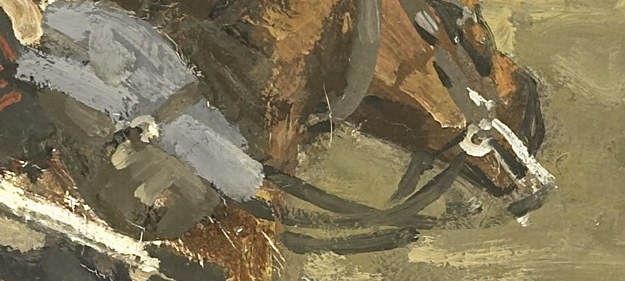
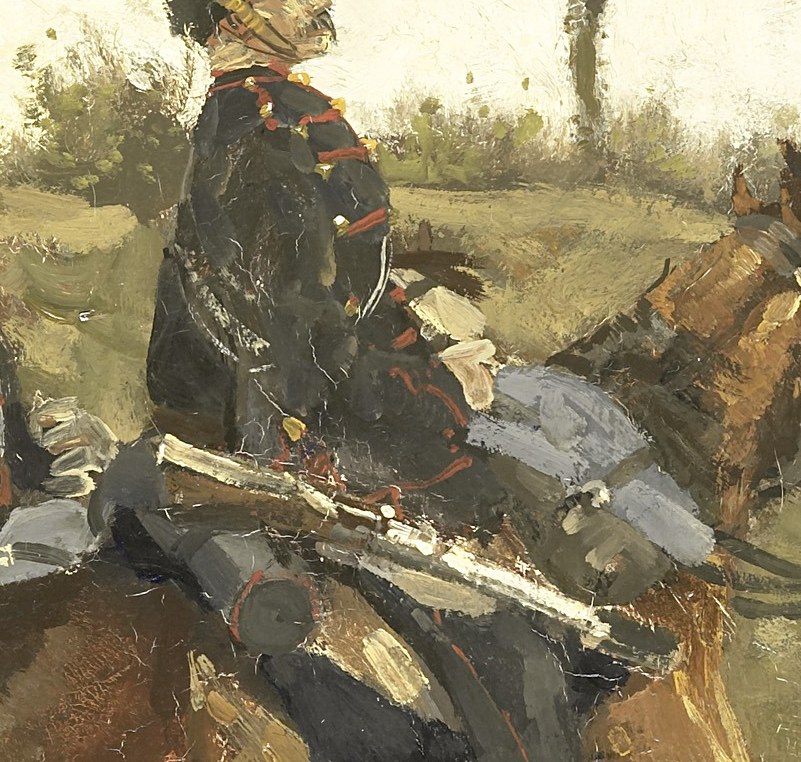
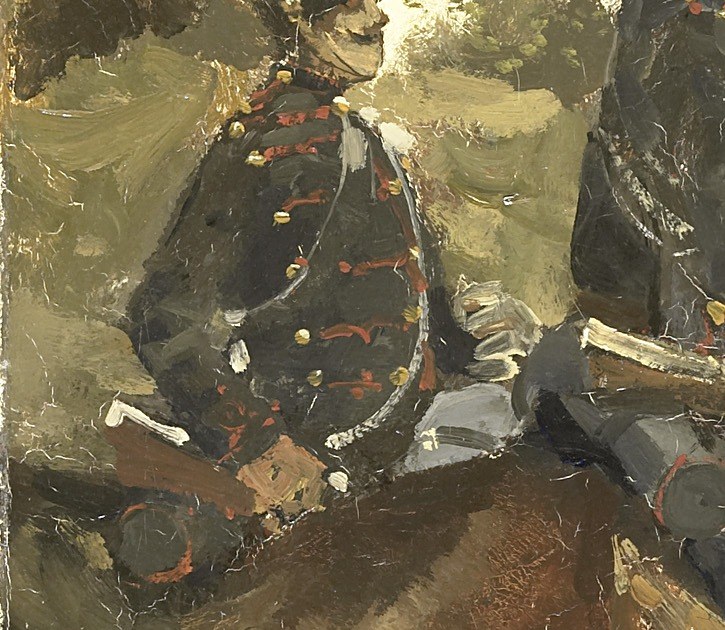
Their faces are stoic, not heroic. The central hussar stares forward, a man doing a job, not posing for glory. A rifle hangs from his saddle. Breitner's loose brushstrokes, the same he used for rainy streets, blur the horses' legs into motion.
Breitner was also a photographer, using his camera to study weather and movement before translating them into paint. Hussars comes from a brief period when he explored equestrian subjects alongside his urban work. Same approach, different men.
He gave soldiers the same quiet attention he gave a dockworker in the rain. Not battle. Three men riding forward, doing their duty. What do you see in their faces?
Details
Transcript
Breitner painted Amsterdam. Rain, docks, working people. And soldiers. Three men on horseback. A rifle hangs from the saddle, ready. His face: stoic. Duty, not glory. He painted soldiers the same way he painted everyone.