An Episode from the Life of Publius Cornelius Scipio by Bellini, Giovanni
View the artwork: An Episode from the Life of Publius Cornelius Scipio →
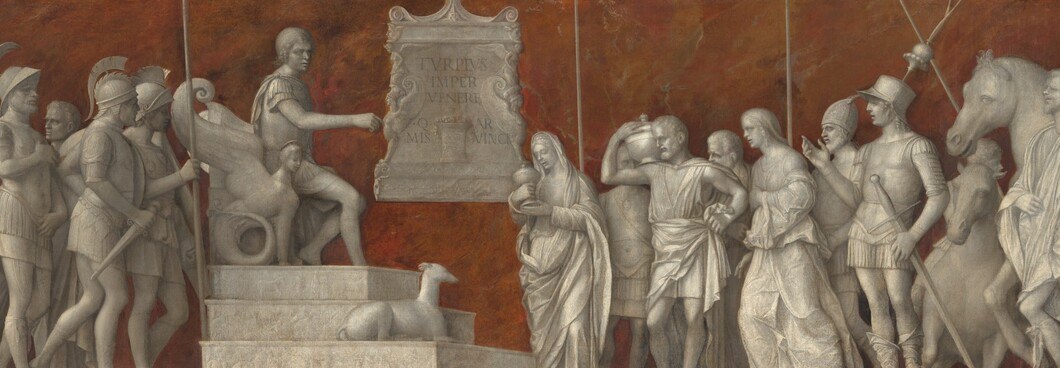
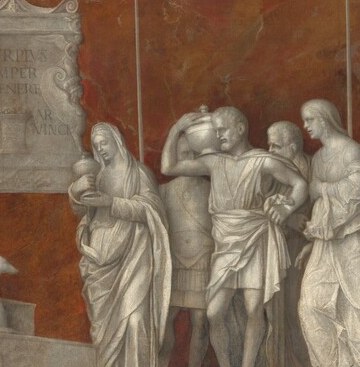
Giovanni Bellini's "An Episode from the Life of Publius Cornelius Scipio" hangs in the National Gallery of Art in Washington, D.C., painted around 1507. The canvas is an illusion: oil paint made to look like ancient Roman marble relief. Bellini never saw ancient Rome, but he understood that a moral lesson from antiquity needed to feel like a monument, permanent and unarguable.
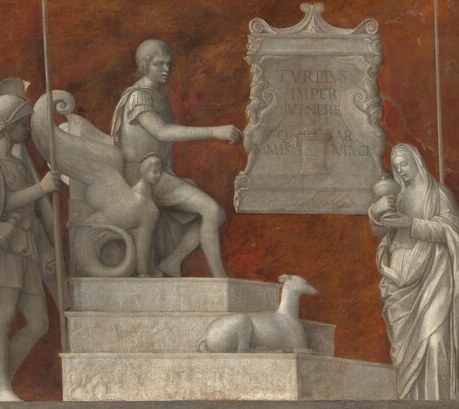
The story is "The Continence of Scipio." After a military victory, the general Scipio had the right to claim a captive woman as spoils of war. Instead, he returns her to her betrothed. Look at the center of the composition: the outstretched arm and the space between the figures is the exact moment the transaction becomes a moral act. The grisaille modeling, all gray stone tones, makes the gesture feel carved into history.
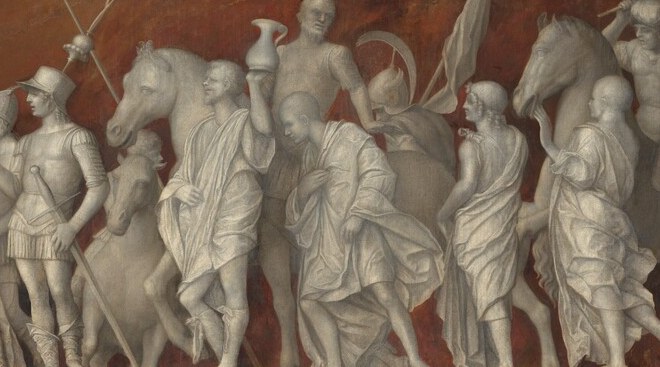
What most people scroll past is the right margin. A column of Roman soldiers processes off-frame, but tucked behind them at the extreme right edge is a small cluster of background figures. They are not soldiers. They are likely the conquered, the people whose point of view the official narrative excludes. Bellini, working in Venice at the height of its power, knew something about who gets to stand in the foreground of a history painting.
The painting is a masterclass in what is shown and what is hidden. The next time you see a grisaille work, ask yourself: who is watching from the edge?
#arthistory #renaissance #giovannibellini
Details
Transcript
At first glance, this looks like Roman history carved in stone. Bellini painted it in the 1500s, but he wasn't copying a sculpture. The grisaille tricks the eye, oil paint pretending to be marble. The story: General Scipio returns a captive woman to her family. His outstretched arm is the hinge of the whole moral argument. Everyone here is Roman, the soldiers, the kneeling supplicant. Now look at the far right edge of the painting. Small figures, barely visible. The conquered, watching the official story.