Lions in a Mountainous Landscape by Théodore Géricault (French, 1791–1824)
This is Théodore Géricault's *Lions in a Mountainous Landscape*, painted around 1818 and housed at The Metropolitan Museum of Art. Géricault was a foundational figure in the Romantic movement, known for his dramatic and emotional works.
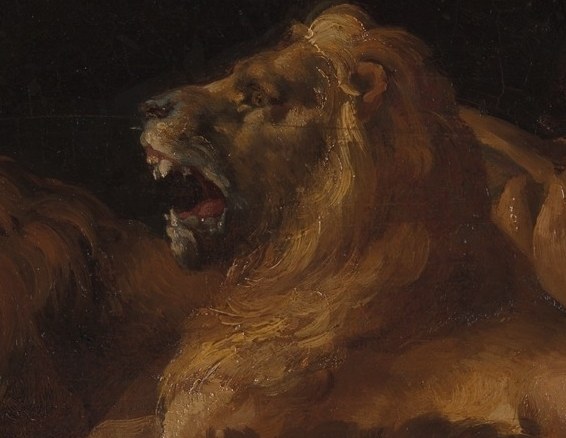
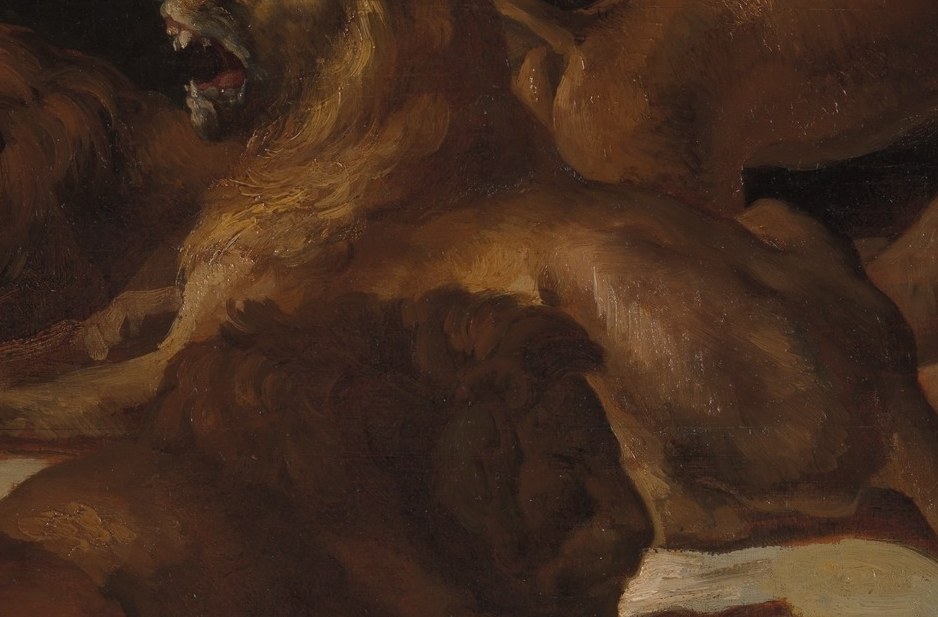
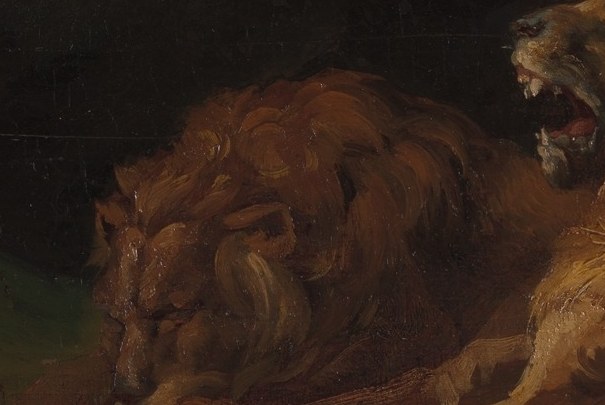
Observe the striking contrast between the warm, golden lions and the dark, stormy sky. The artist masterfully uses chiaroscuro to sculpt the animals' forms, emphasizing their power and the wildness of their habitat.
Completed during a period of intense artistic innovation, this painting reflects Géricault's fascination with raw nature and exotic subjects. Works like this are now priceless cultural assets, with insurance valuations easily running into the millions.
What else might Géricault have been trying to convey with this powerful imagery?
Details
Transcript
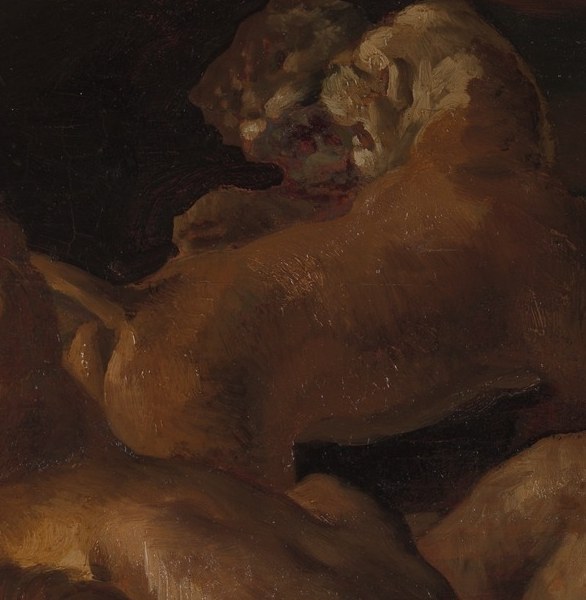
This roaring lion head shows raw power. Warm lions contrast the dark sky. The painter made light and shadow dramatic. Géricault was a pioneer of Romanticism. This scene is from 1818. Look at the mother lion with her cub. The museum's insurance value is immense.