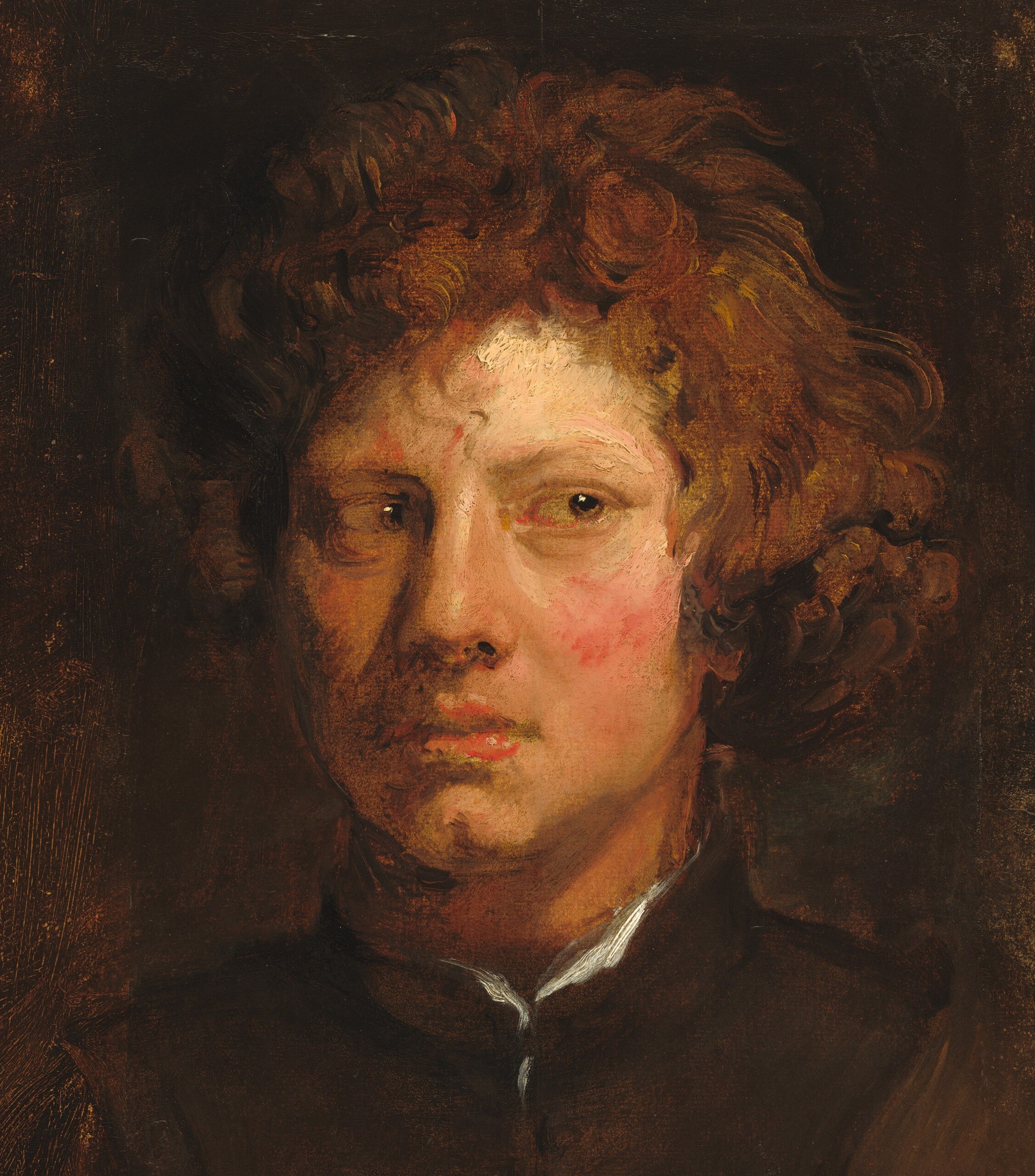
Head of a Young Man by Dyck, Anthony van, Sir
This striking "Head of a Young Man" by Sir Anthony van Dyck, painted around 1618, offers a glimpse into the early genius of an artist who would redefine portraiture. Housed at the National Gallery of Art, it showcases his distinct style even as a young painter.
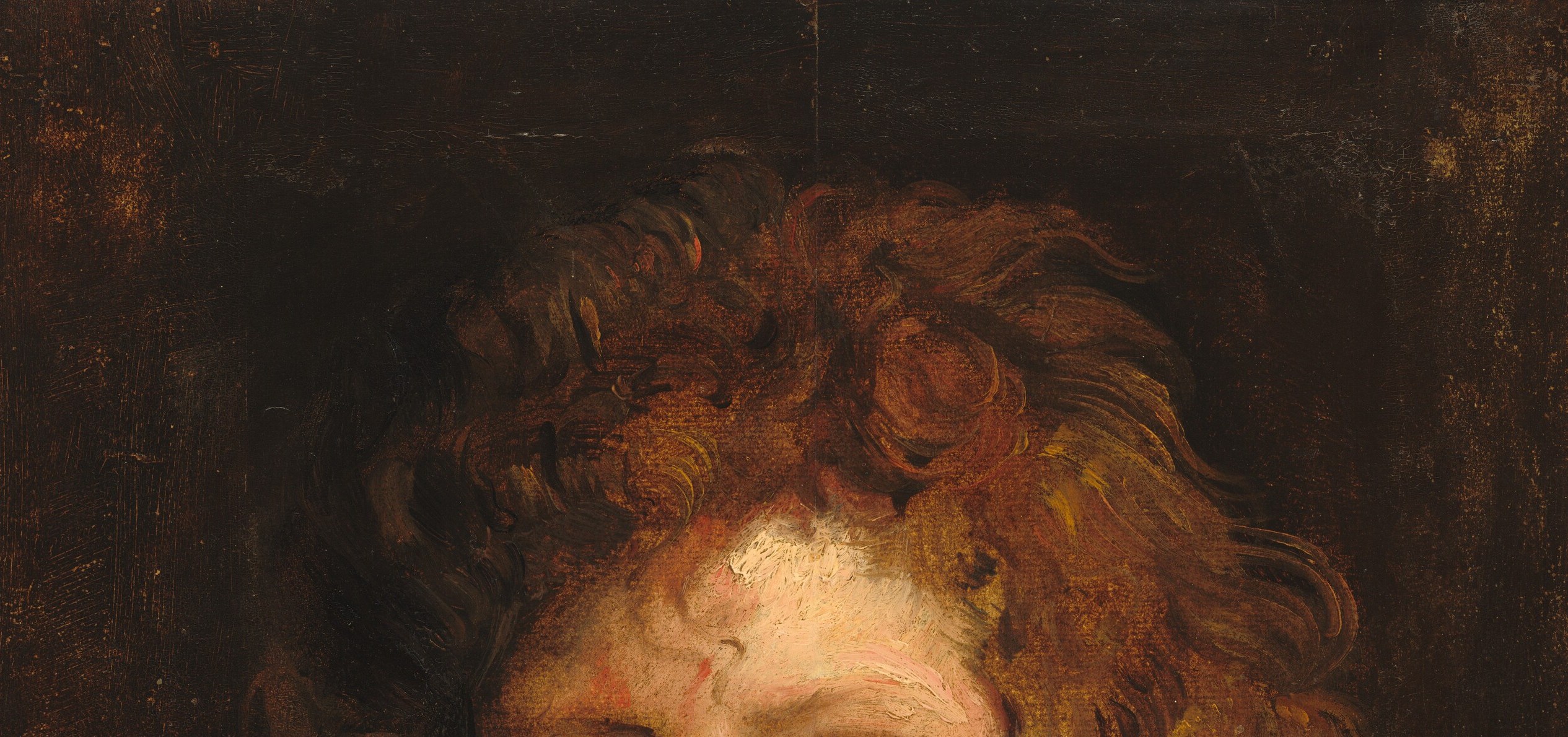
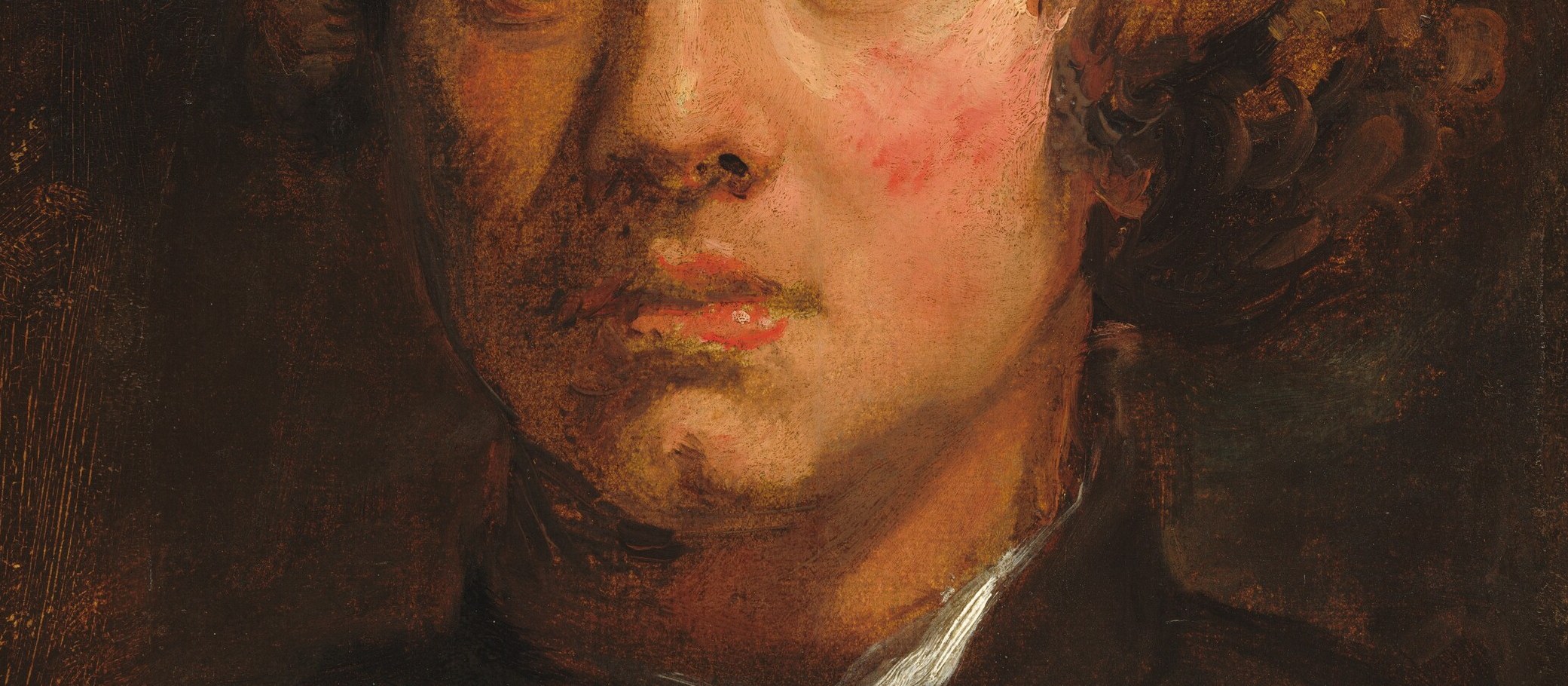
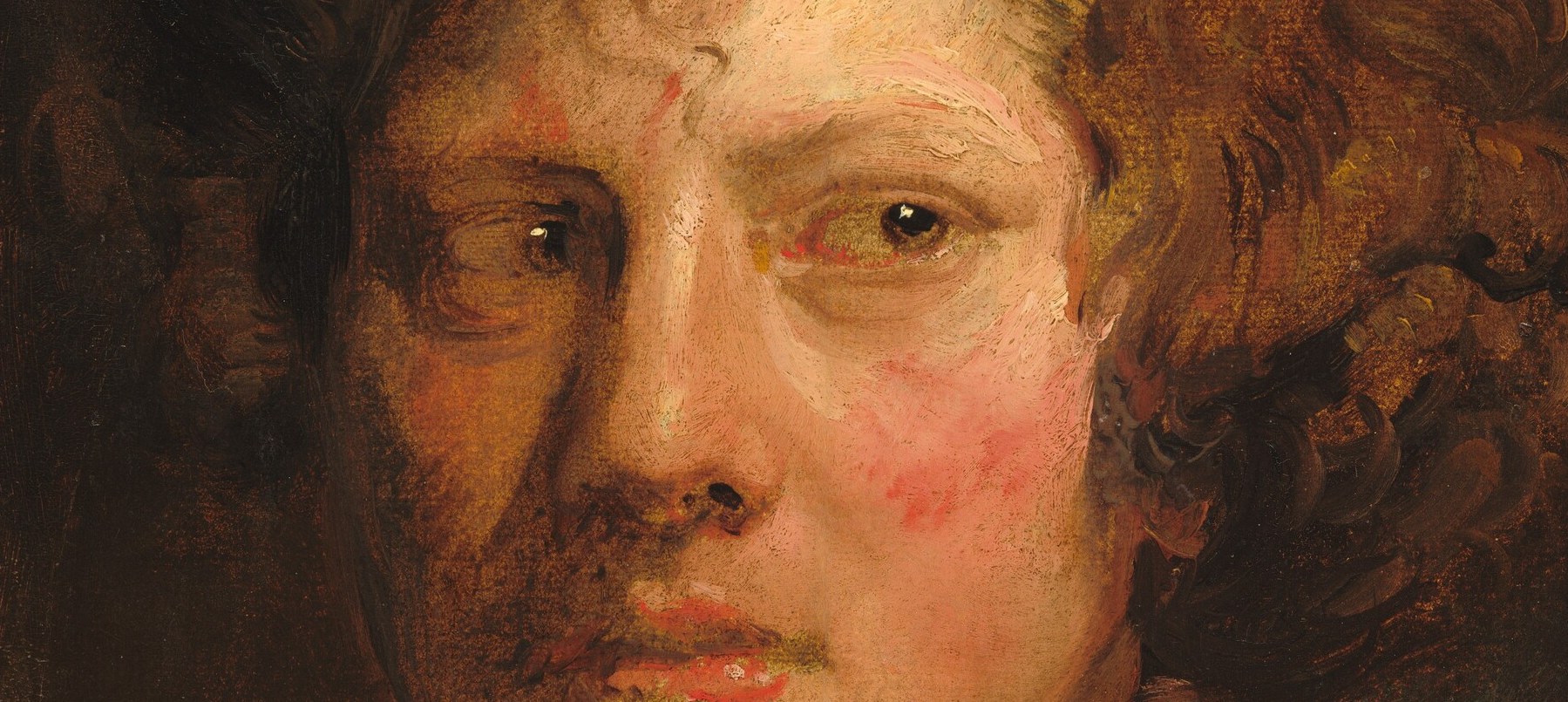
Observe the confident brushwork in the subject's auburn hair and the unusually vivid flush on his cheeks, a hallmark of van Dyck's early technique. The crisp white collar draws the eye to his composed expression, demonstrating how the artist mastered focus and elegance.
Van Dyck became a master by nineteen, having trained with Peter Paul Rubens. Yet, he swiftly developed his own refined approach, blending dynamism with an aristocratic grace. After formative years in Italy, he became the Principal Painter to King Charles I, revolutionizing British portraiture.
This painting captures that moment before his ultimate fame, a subtle masterpiece that reveals the promise of a legendary career. What details catch your eye?
Details

Transcript
This young painter became a master at just nineteen. He trained with Rubens, but developed his own elegant style. Notice how the hair is suggested, not labored. A crisp white collar focuses all attention on the face. This ruddy blush is a signature of his early work. His eyes, so vivid, create an alert, self-possessed impression. Van Dyck later became the court painter to King Charles I.