Judith with the Head of Holofernes by Mantegna, Andrea
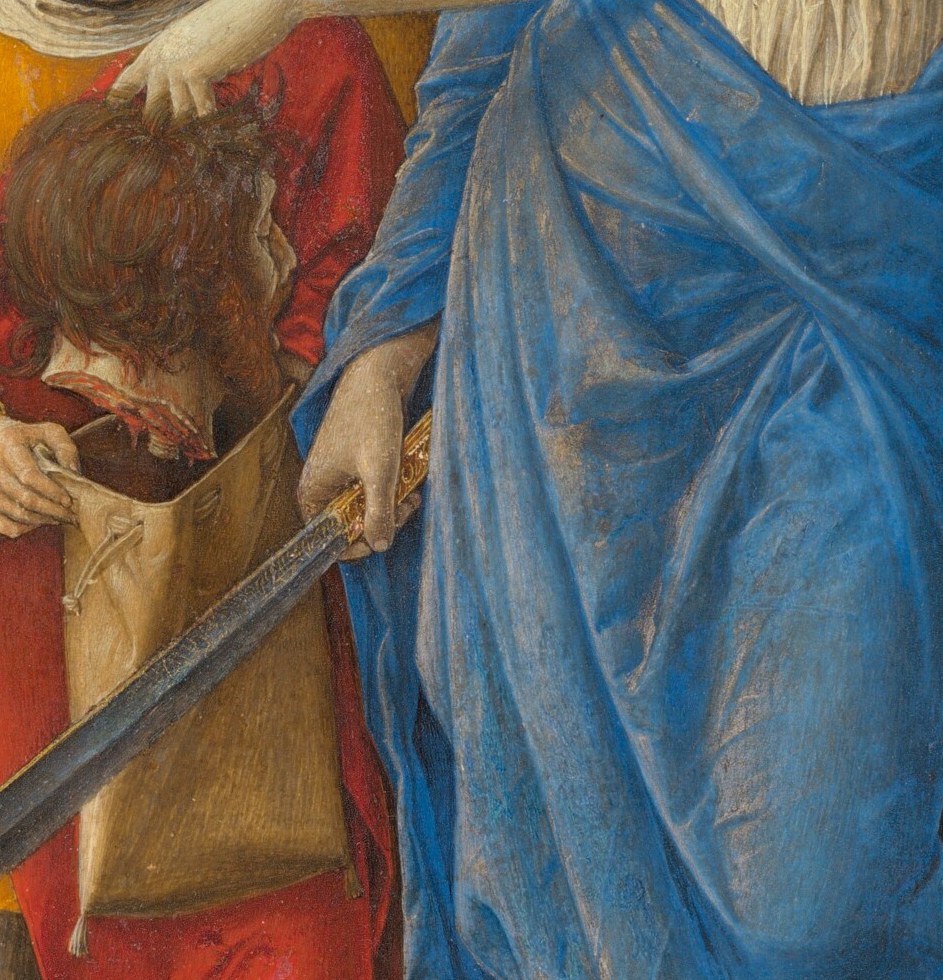
Andrea Mantegna's "Judith with the Head of Holofernes," painted around 1495, hangs on a quiet wall in the National Gallery of Ireland. The surface is tempera on poplar, a meticulous, dry medium that leaves no room for error. What arrests you first is the gap between Judith's face and her hands. Her expression is not triumphant or horrified. It is composed, almost gentle. Her hands, meanwhile, are lowering a severed head into a laundry sack. The painting refuses to resolve that dissonance for you.
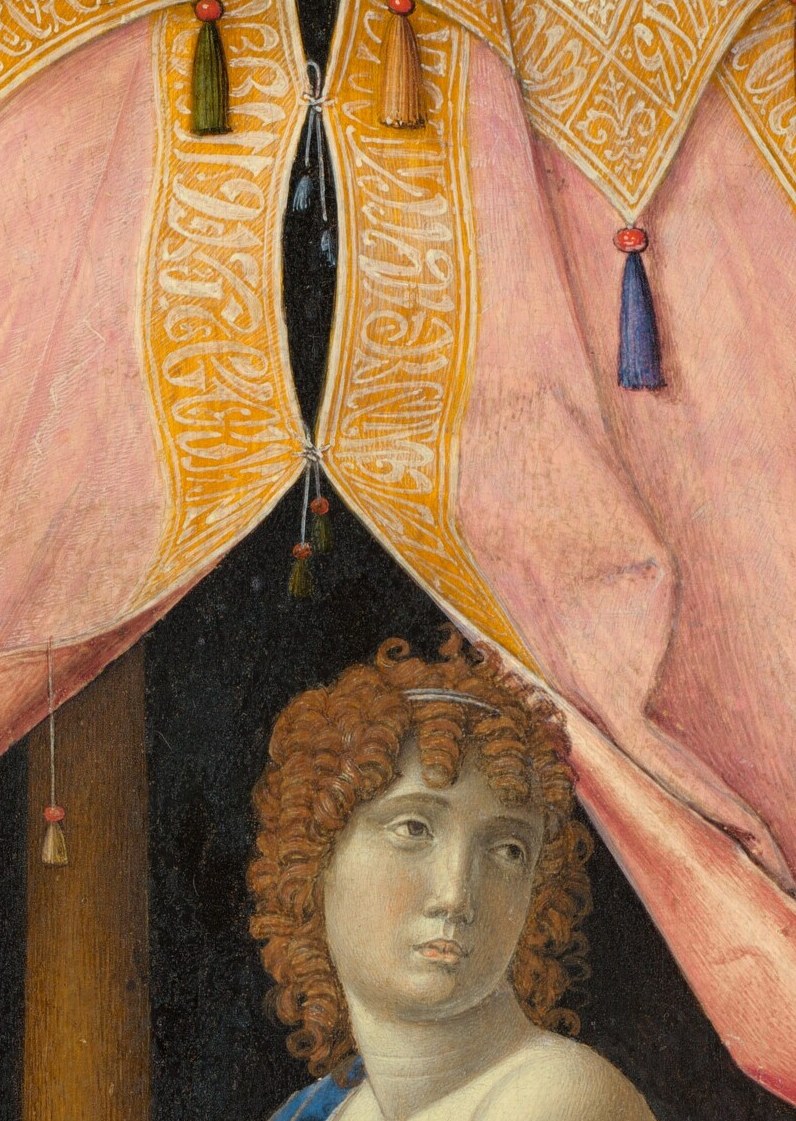
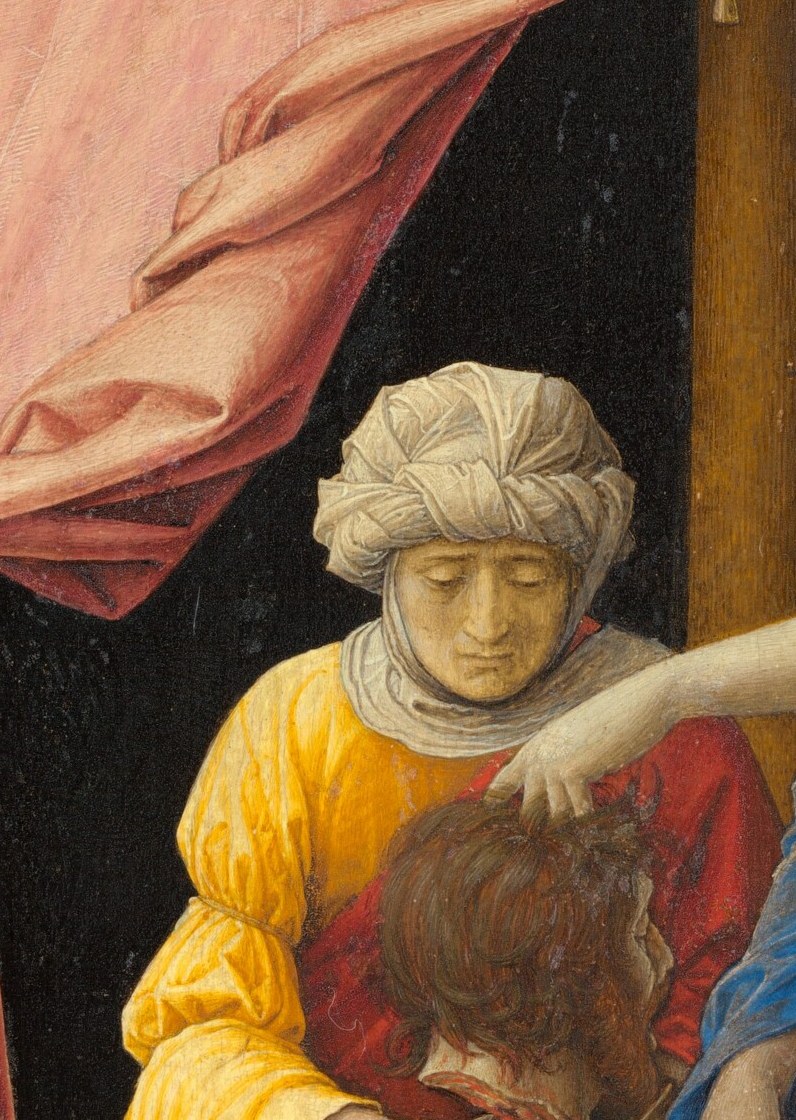
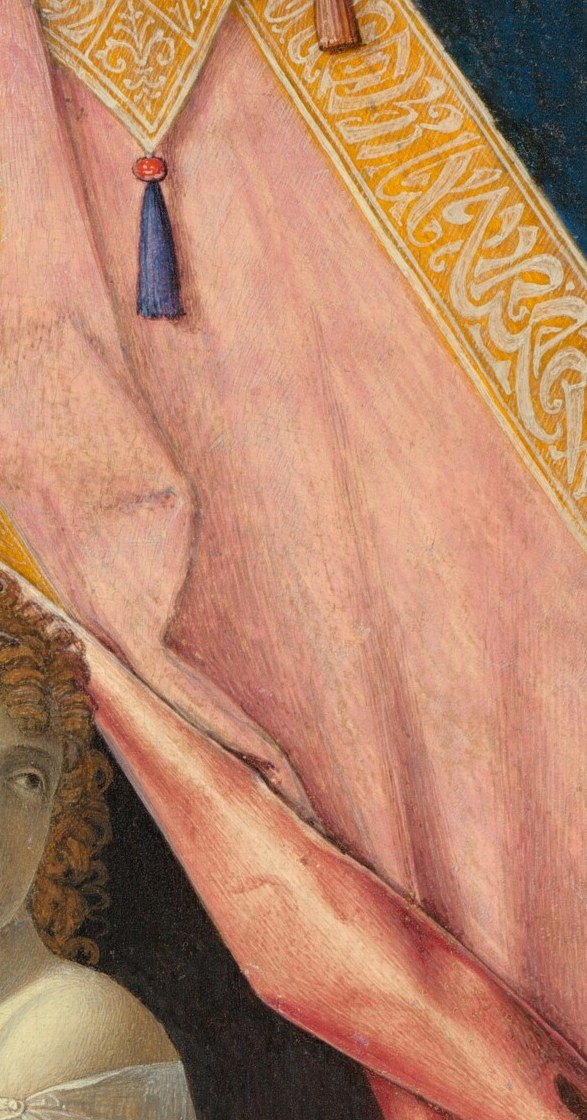
Look at the two women's faces. Judith's youth and calm are set against Abra's older, darker features and pragmatic stare. Mantegna pairs them like a sculptor placing two contrasting busts. Then look at the rose-pink tent curtains on either side, they frame the whole scene like a theater proscenium, lifting an intimate murder into something ceremonial. And deep in the shadowed canopy behind them, a faint pale figure is barely visible. A sleeping guard, perhaps. The act is happening under mortal risk, and the painting makes you feel the enclosure of that tent.
The Book of Judith tells the story: a Jewish widow enters the camp of the Assyrian general besieging her city, gains his trust, and beheads him in his sleep. She carries the head home in a sack, and her city is saved. Mantegna was in his sixties when he painted this version, near the end of a career defined by a hard, sculptural style and a deep study of Roman antiquity. Judith's hairband and classical coiffure reframe her not as a biblical exotic but as a Roman heroine, a humanist ideal of virtue. The attribution has been debated; some scholars believe it may be the work of a close follower like Giulio Campagnola, working precisely in the master's orbit. The uncertainty only adds to the painting's quiet hold: a powerful, strange image that asks whether heroism can wear a face this calm.
Details
Transcript
She looks almost tender. The Book of Judith says she saved an entire city. Her hands guide the head into an ordinary cloth sack. The sack belonged to her maidservant. She carried it from home. Abra watches. Older, harder. She knows what this cost. A pale figure in the dark behind them. The general's camp is still asleep. Mantegna was in his sixties, near the end, when he painted this.