The Virgin and Child with St Anne, donors and Sts Francis and Lidwina by Master of the St. John's Altarpiece
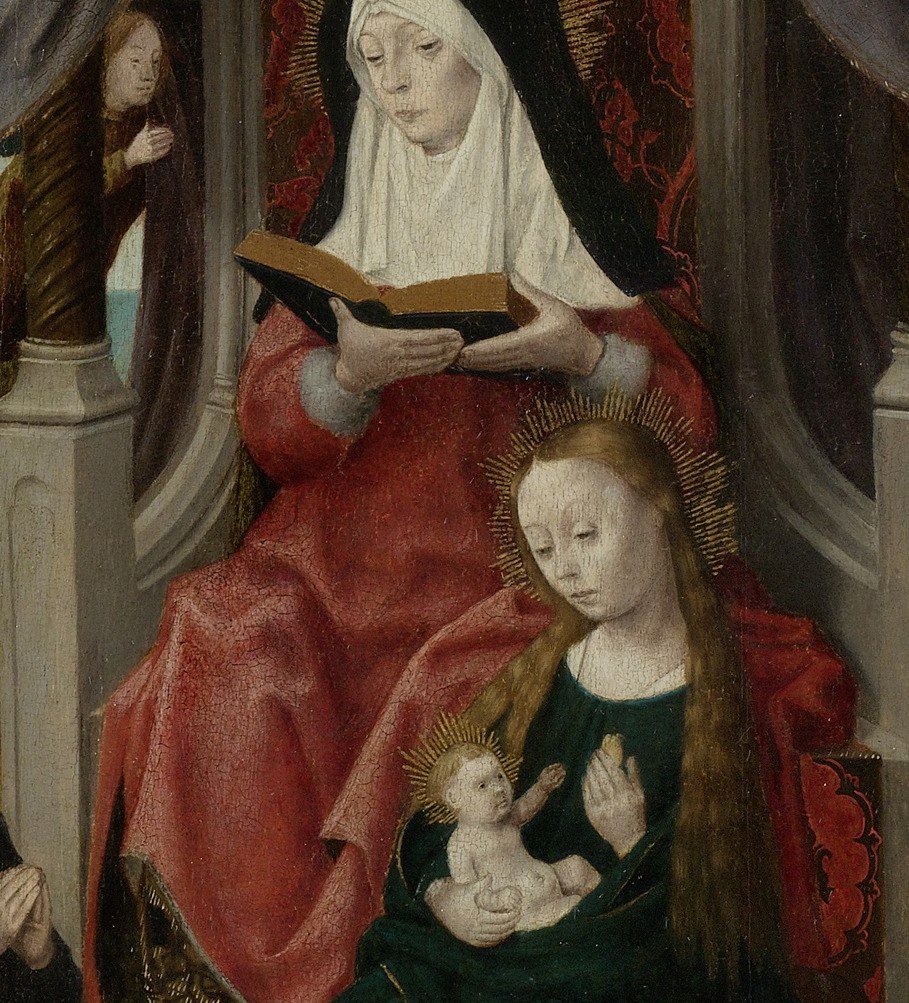
The Virgin and Child with St Anne by the Master of the St. John's Altarpiece (c. 1500) hides a detail most viewers scroll past. This Northern Renaissance altarpiece hangs at the Rijksmuseum in Amsterdam.
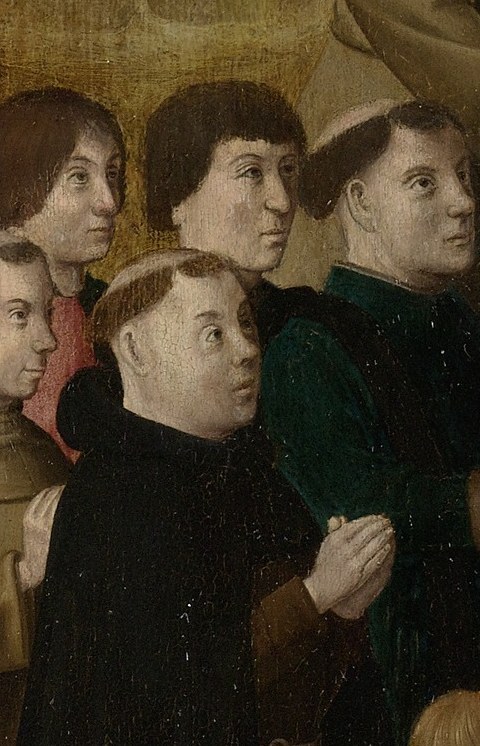
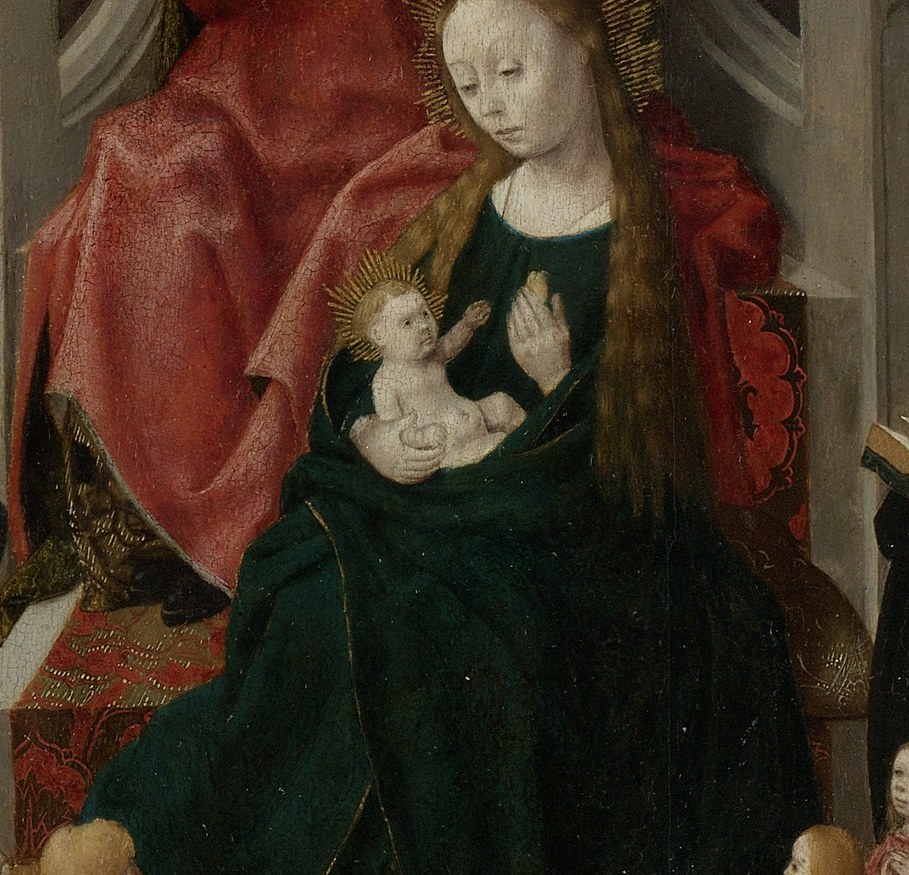
Look past the donors kneeling in the foreground, past Mary and the Christ child at center, past the saints flanking the throne. Follow the architecture into the farthest background. In a dark niche stands a tiny figure, barely visible. The inventory describes it as monastic, a hint of the larger institution that housed this altar.
Around 1500, wealthy patrons commissioned altarpieces for private or monastery chapels, paying to be included in the sacred company. The painter, named after his best-known work the St. John's Altarpiece, was active in the Northern Renaissance. This panel entered the Rijksmuseum in the twentieth century.
The smallest figures often carry the whole context. Next time you see an old altarpiece, look into the shadows.
Details
Transcript
Around 1500, this was painted for a chapel altar. The donors who paid for it kneel at the edges. At the center, Mary cradles the infant Christ. And in the far niche: the monastery that housed this altar.