Untitled by First generation after Manaku and Nainsukh

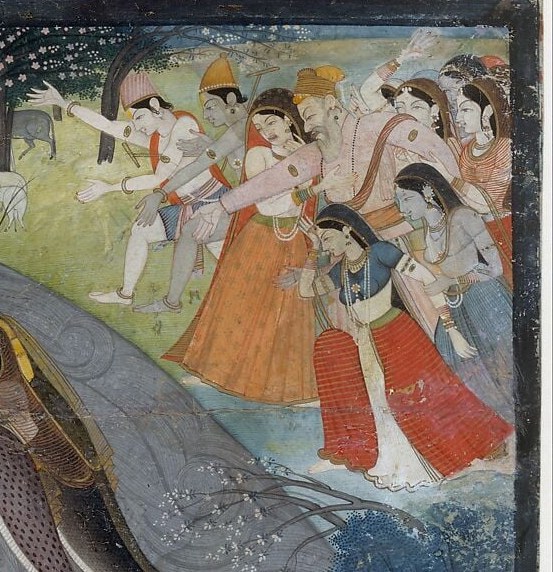
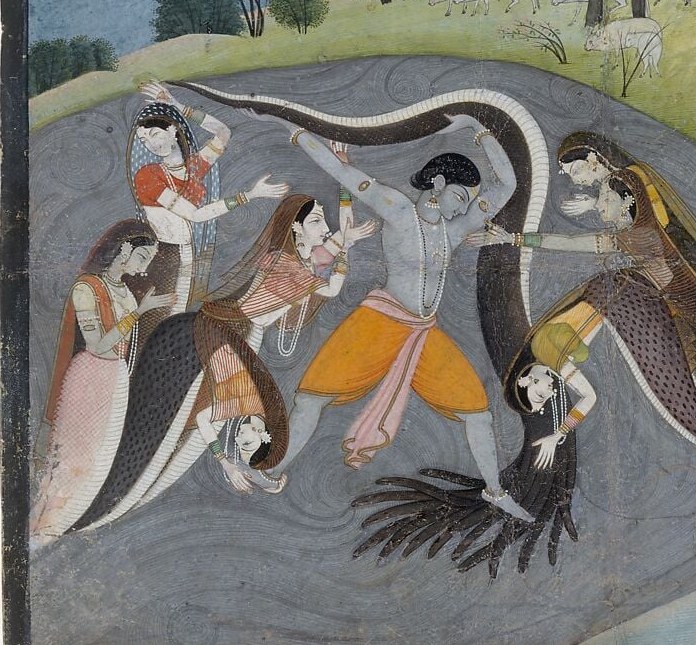
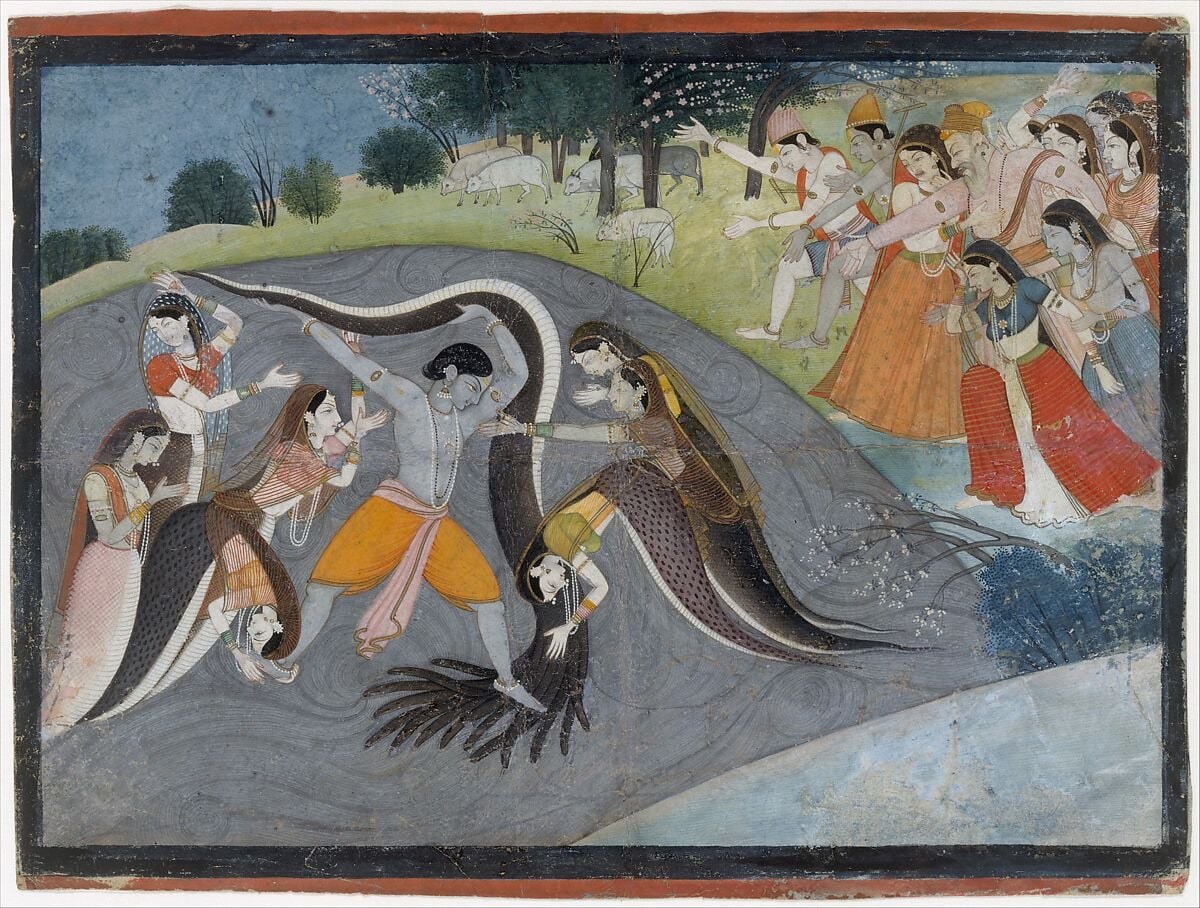
Krishna Lifting Mount Govardhan, painted around 1785 by an unknown artist in the Punjab Hills. Nobody recorded the painter's name. The work is barely the size of a postcard.

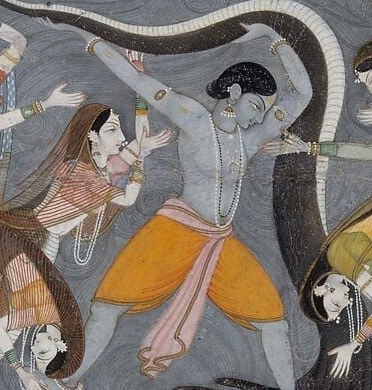
Start with the mountain itself. That dark, fluid mass on the left is about to crush every living thing beneath it. Then find the blue figure. Krishna's arm is raised without strain, his body calm. The contrast between the enormous weight and his casual posture is the whole miracle in one gesture.

Look at the cattle. They do not run. They do not panic. In the story, Krishna was a cowherd before he was a god, and the legend says he held this mountain aloft for seven days while the village and its animals sheltered underneath. The painter understood the tenderness in that detail.

The woman in red at the front of the gopi cluster carries the emotional weight of the right side of the picture. Her face is small and stylized, but her position, her dress, her stillness read as trust. A few inches of paint and paper, and a forgotten artist made devotion visible. It outlasted him.

#arthistory #paharipainting #indianminiature

Details
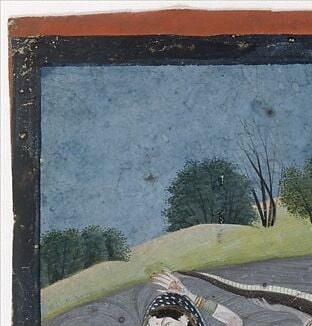
The warm orange line-border is a Punjab Hills workshop convention; it signals manuscript culture where painting and text shared a page, and it anchors the agitated interior scene in a calm frame.
Six to eight women in vivid red, orange, blue, and yellow garments stacked vertically; their gesturing hands and compressed arrangement convey communal awe under threat.
The storm-dark grove frames the scene and establishes the Vrindavan forest world; its deep tone against the lighter hillside heightens the sense of meteorological menace.
The blue-skinned deity is the narrative pivot , his raised-arm posture conveys effortless divine strength against the enormous dark mass above, making godhood visible at a glance.
The mountain dominates the left half; its dark, fluid silhouette presses downward toward the sheltering crowd below, making the miracle physically palpable.
Transcript

A storm. A mountain about to crush them all. But look above the crowd. Krishna lifts it with one hand. Like it weighs nothing. The story says he held it for seven days. These cattle don't even look up. He is cowherd first, god second. And among the women, one figure in red. A painter no one remembers painted her trust. That stays.