明 佚名(舊傳宋徽宗) 荔枝圖 冊頁|Bird on a Lychee Branch by Emperor Huizong
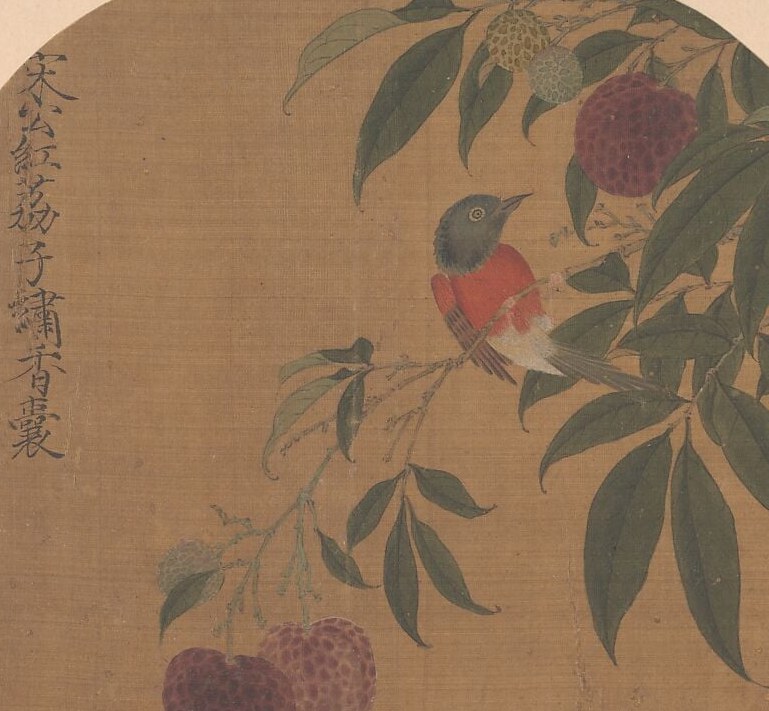
This is "Bird on a Lychee Branch," a Ming dynasty album leaf painted in ink and color on silk around 1506. For most of its life it carried the name of Emperor Huizong (1082-1135), the Northern Song ruler revered as the greatest artist-emperor in Chinese history. Modern scholars have undone that claim. What you are looking at is an anonymous work from the 16th century, and unraveling how the misattribution worked is half the pleasure of reading the painting.
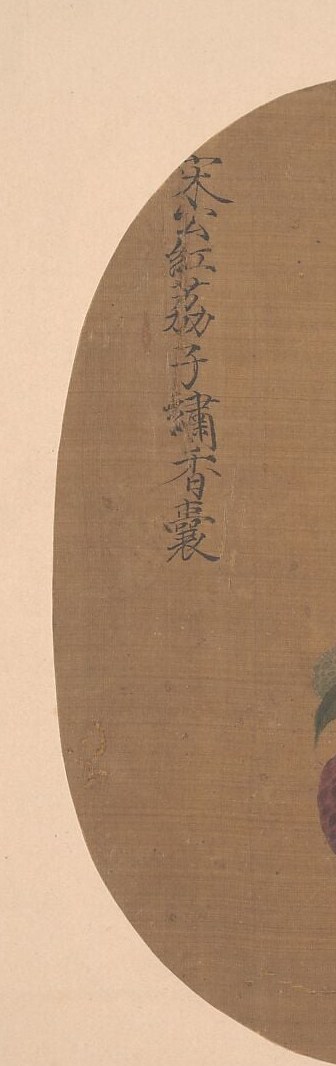
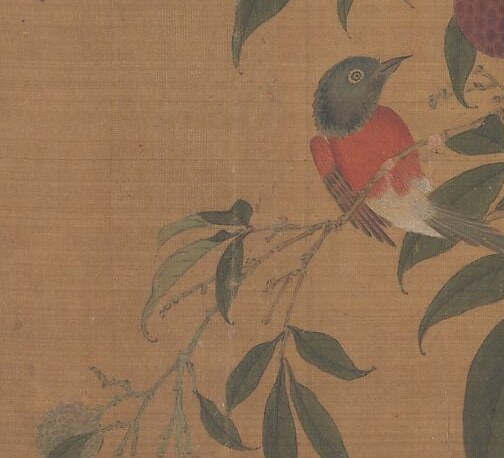
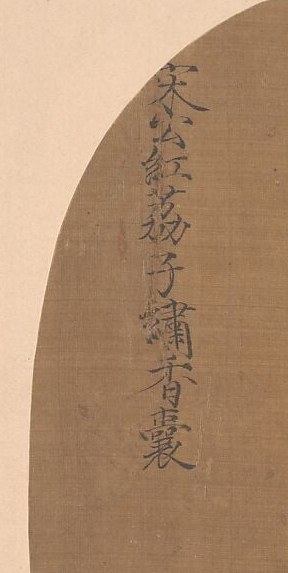
The clues are physical. Look at the surface of the silk, it is warm and ambered with age, but smooth and free of the fractures that nearly always mark genuine Song dynasty silks exposed to centuries of mounting and unmounting. This fan never lived on a wall. It was stored flat inside an album, a Ming connoisseur's habit that preserved its surface almost perfectly. Then look at the pale veins drawn over the lychee leaves. The technique descends from Song-academy gongbi realism, but the speed and confidence of the brush belong to a later age, a painter fluent in the bird-and-flower tradition Huizong himself had codified, working for a market that still prized the authority of the imperial name.
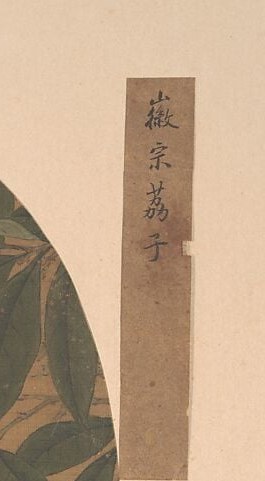
The cartouche mounted beside the fan leaf is the smoking gun. It records the old attribution to Huizong, a claim that raised the album's prestige, and its value, inside the late Ming or early Qing collecting world. The identity of the actual painter sank into anonymity while the emperor's name traveled forward. That was the point.
Every element on this fan, the alert little bird, the lychees shifting from red to deep purple, the branch cropped abruptly by the fan's edge, is beautifully observed. None of it needs an emperor's signature. Someone saw the fruit ripen and remembered it exactly.
Details
Transcript
For centuries this painting was thought to come from the hand of an emperor. A label mounted beside it still carries that old claim. It names him: Huizong, the Song dynasty ruler who reigned 800 years before this was painted. Look at the silk, it is warm with age, but remarkably intact. That preservation is the giveaway. Song silks crack; this one lived inside an album its whole life. The brushwork tells the same story. A confident, quick hand, 16th century, Ming dynasty. Someone signed the emperor's name, hoping to borrow his prestige. The real painter remains unknown.