Equestrian Portrait of Charles V by Titian
Titian's "Equestrian Portrait of Charles V," painted in 1548, is more than just a depiction of imperial power; it's a profound artistic statement created for the Holy Roman Emperor after his victory at the Battle of Mühlberg.
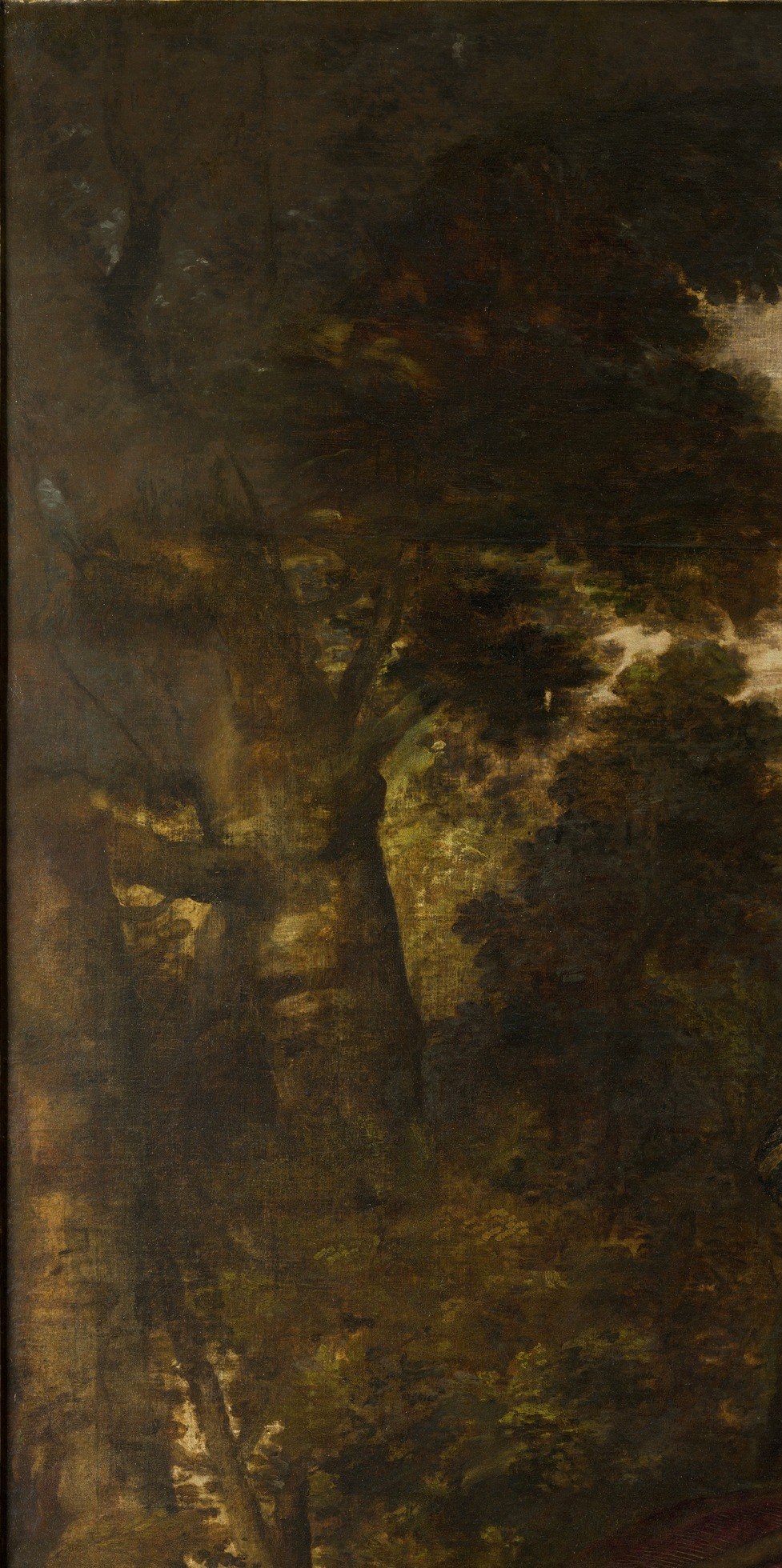
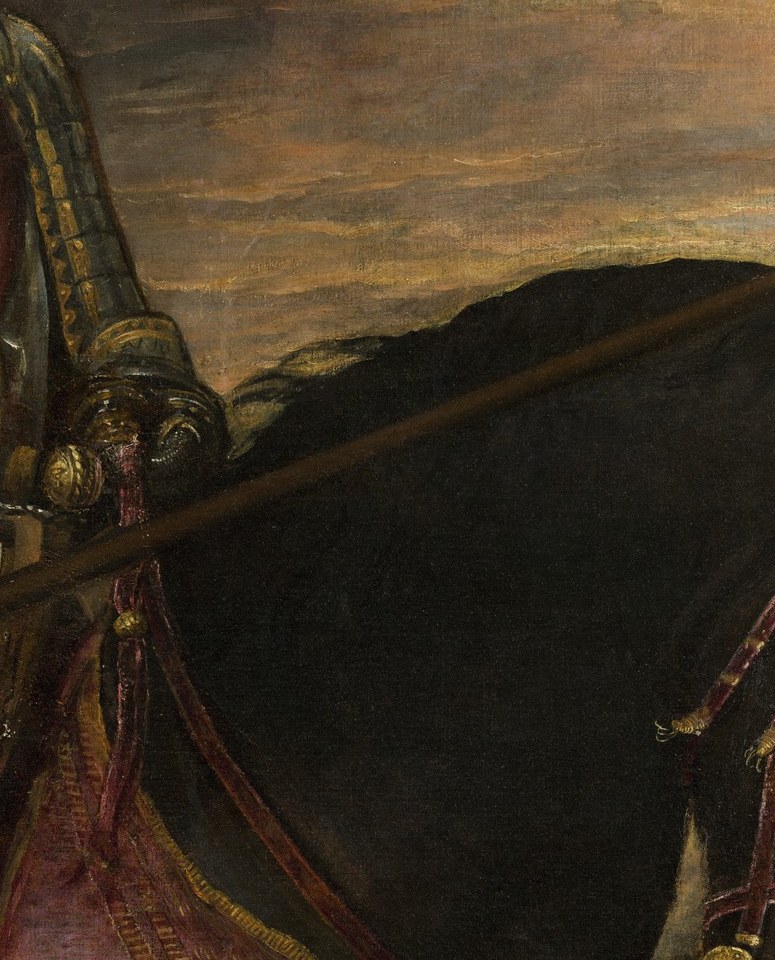
While the eye is drawn to Charles V's shining armor and the powerful horse, take a moment to observe the dramatic, stormy sky and the textured tree trunks on the left. These subtle background elements add significant depth and gravitas, hinting at the turbulent political climate of the era and the contained power within the emperor's gaze.
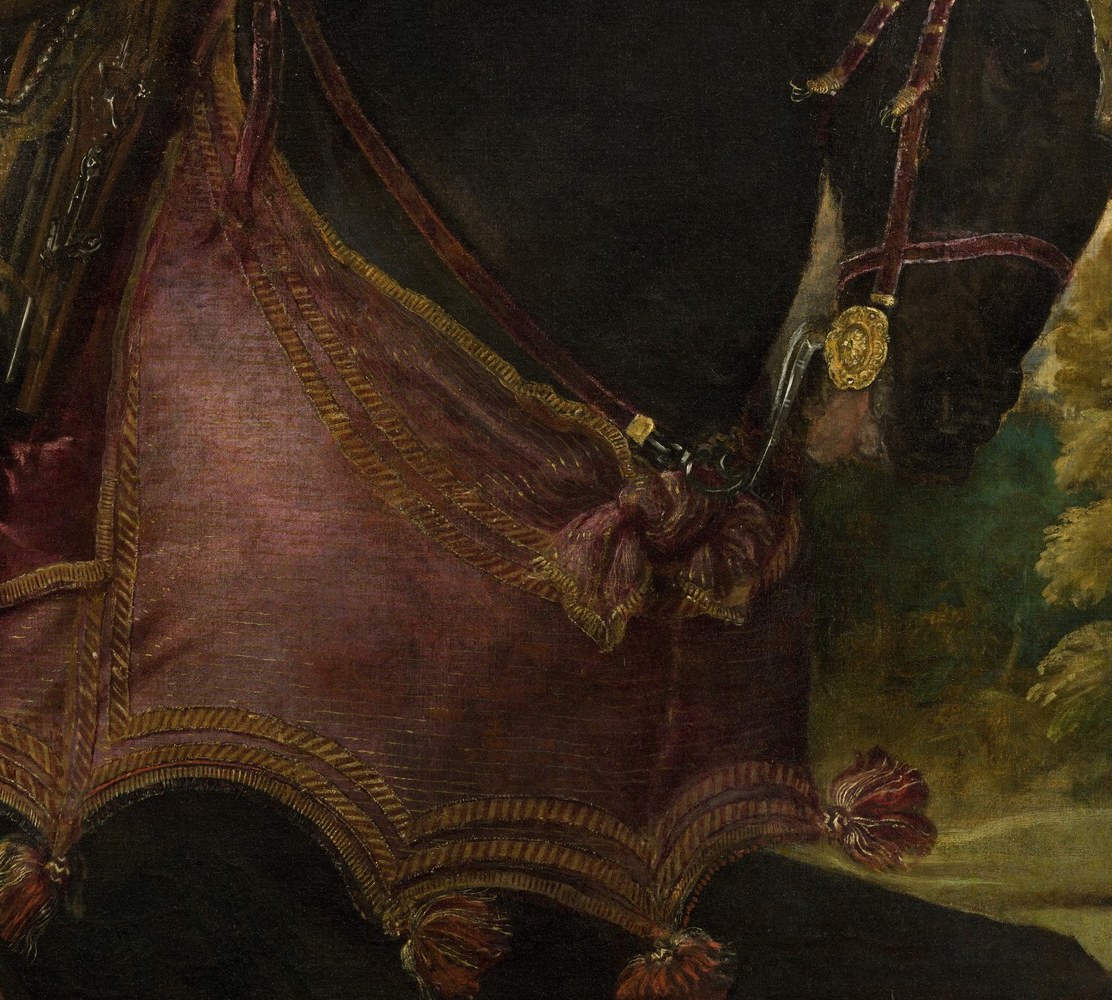
Titian meticulously rendered the armor and horse's caparison from the actual items used in battle, which are still preserved today in Madrid. This attention to detail, combined with the atmospheric background, creates a masterpiece that is both historically accurate and emotionally resonant.
What details in the background do you find most compelling?
Details
Transcript
This isn't just a portrait of power and glory. It's a tribute to Emperor Charles V after a major victory. The painter recorded every detail, even the horse's harness. But look at the background: the dark, stormy sky. The subtle textures add to the drama of the time. It hints at the turbulence behind the emperor's serene face.