The Annunciation by Luca Giordano
Luca Giordano painted The Annunciation in 1672, and at first it reads exactly as you would expect: the Archangel Gabriel announces to the Virgin Mary that she will bear the Son of God. But Giordano, one of the most sought-after painters of the Italian Baroque, hid a theological riddle in plain sight.
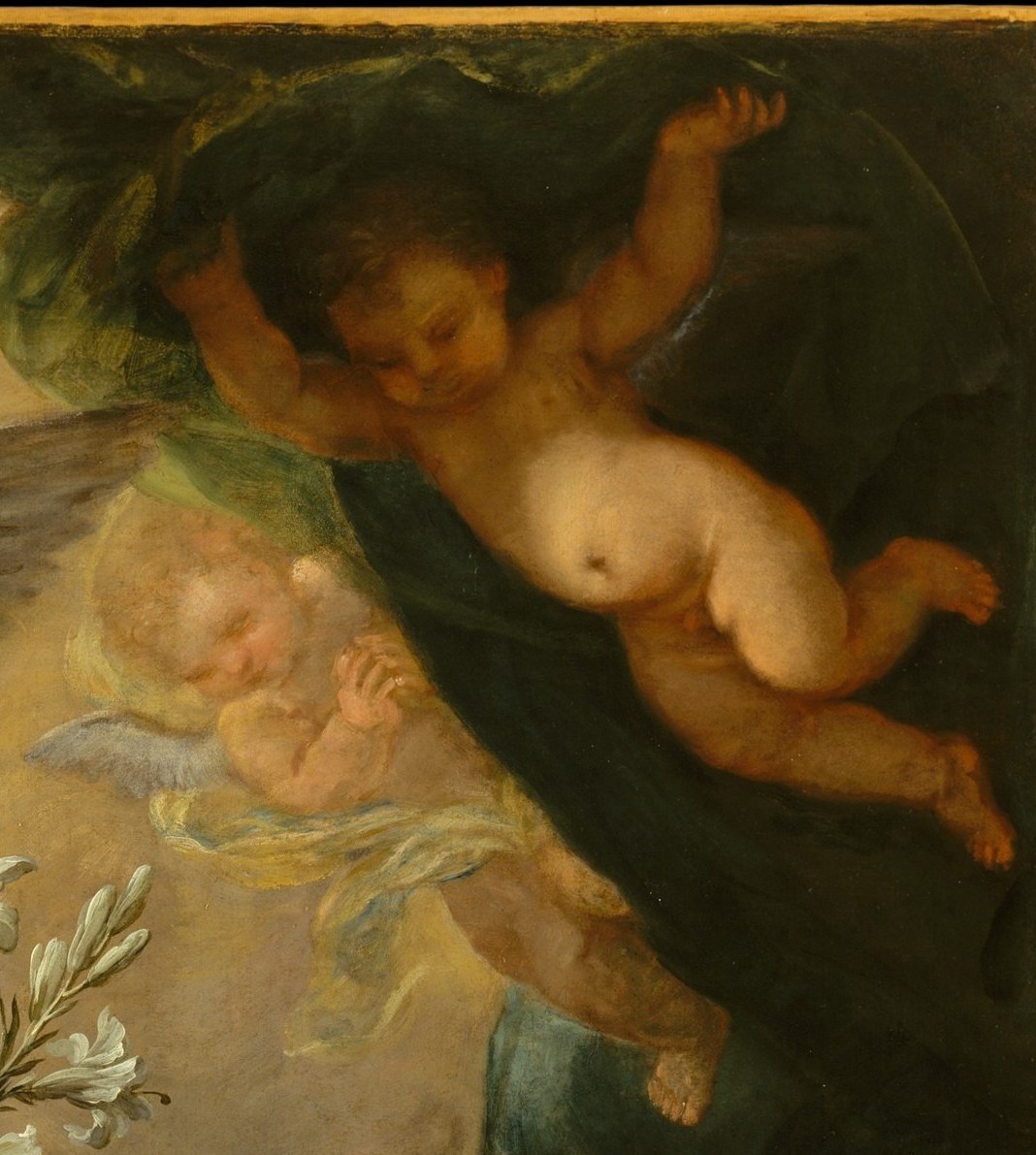
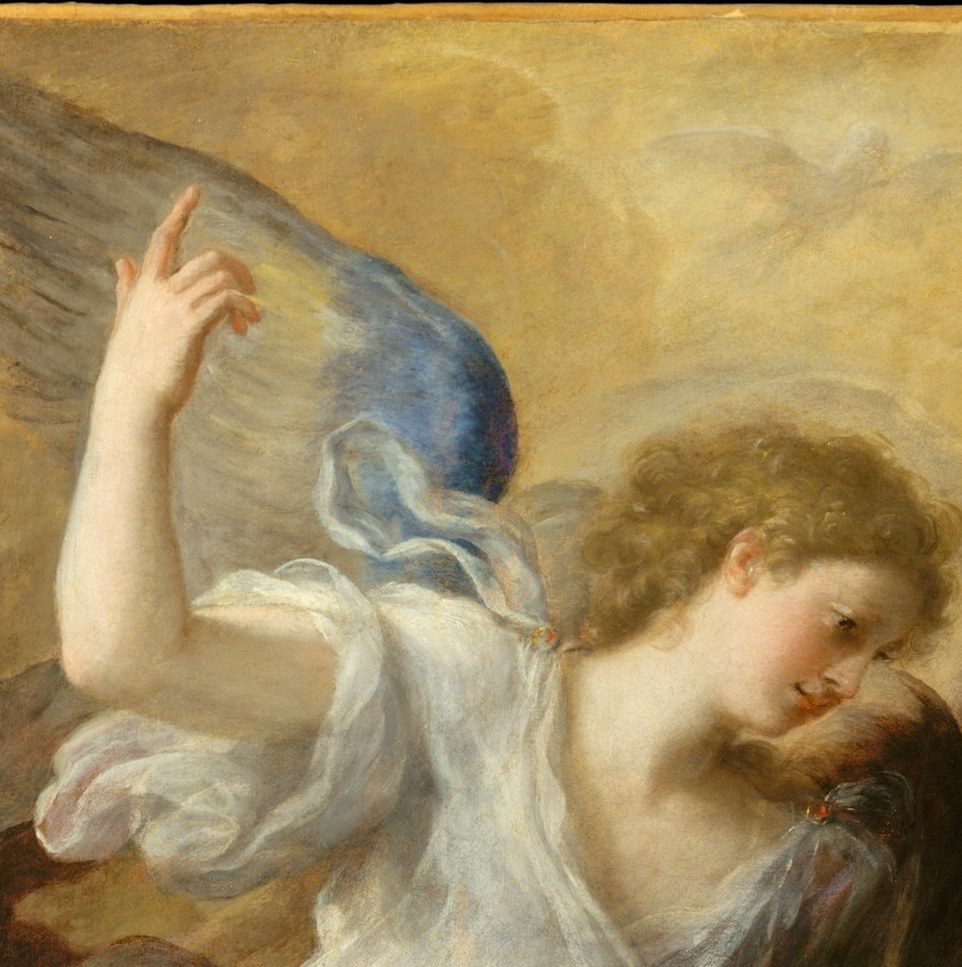
Let your eye travel to the upper right corner, just above Mary. A small cherub hovers there, and in its arms it cradles an infant. That infant is the Christ child. Giordano has collapsed time entirely: the Annunciation and the Nativity occupy the same canvas, past and future held in a single golden moment. The device was a Baroque favorite, but Giordano painted it so quietly that most viewers miss it on first pass.
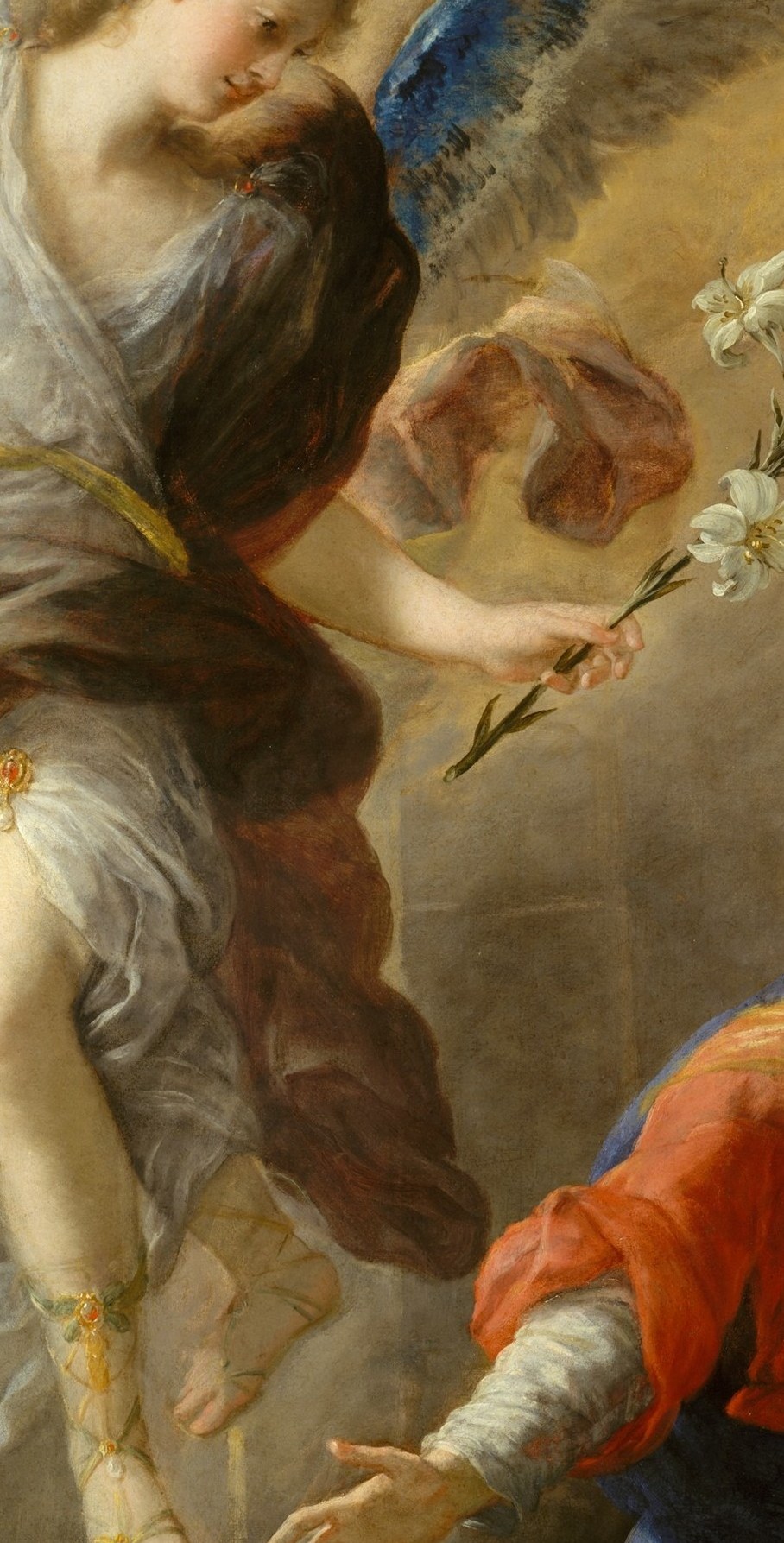
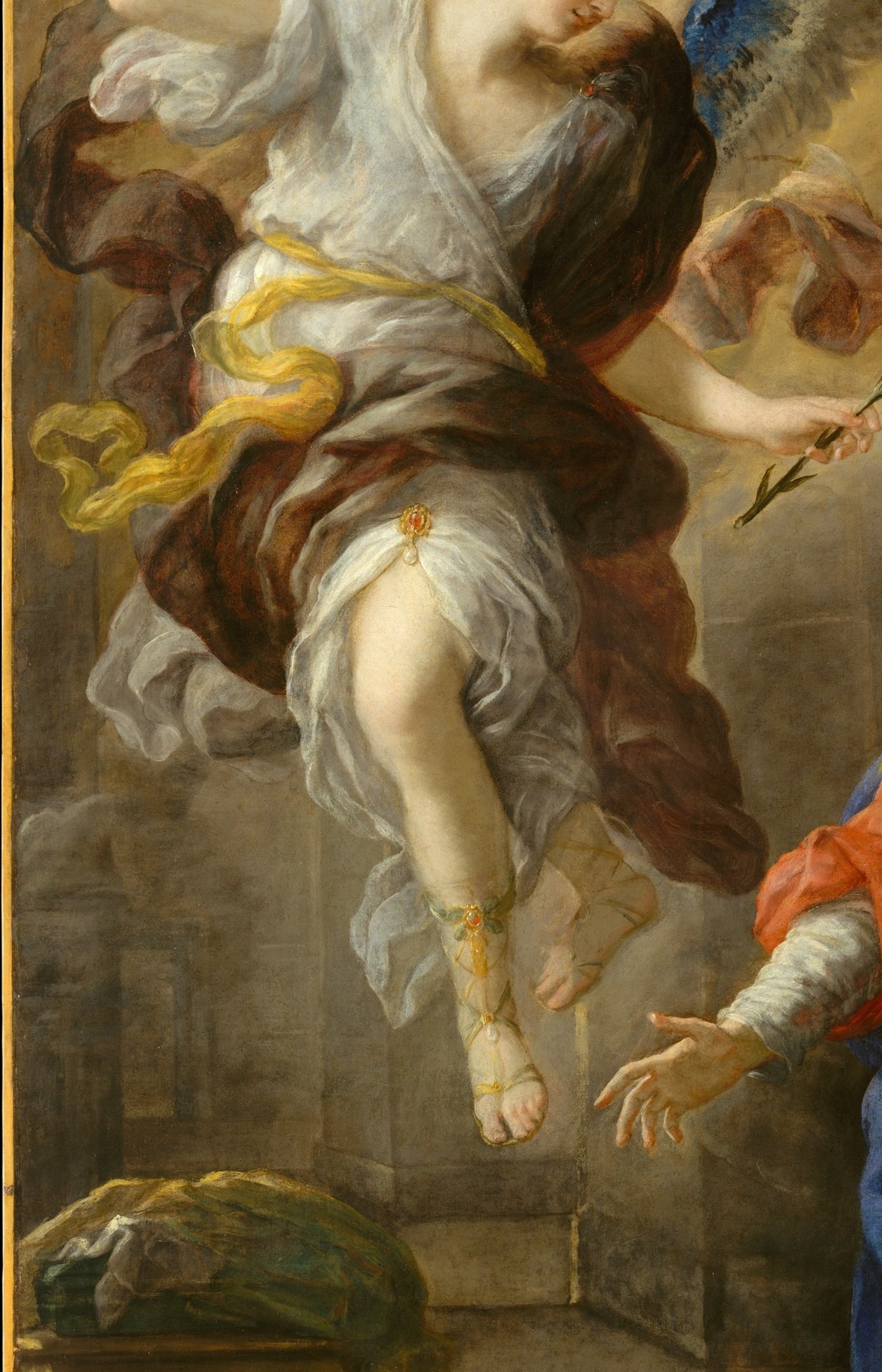
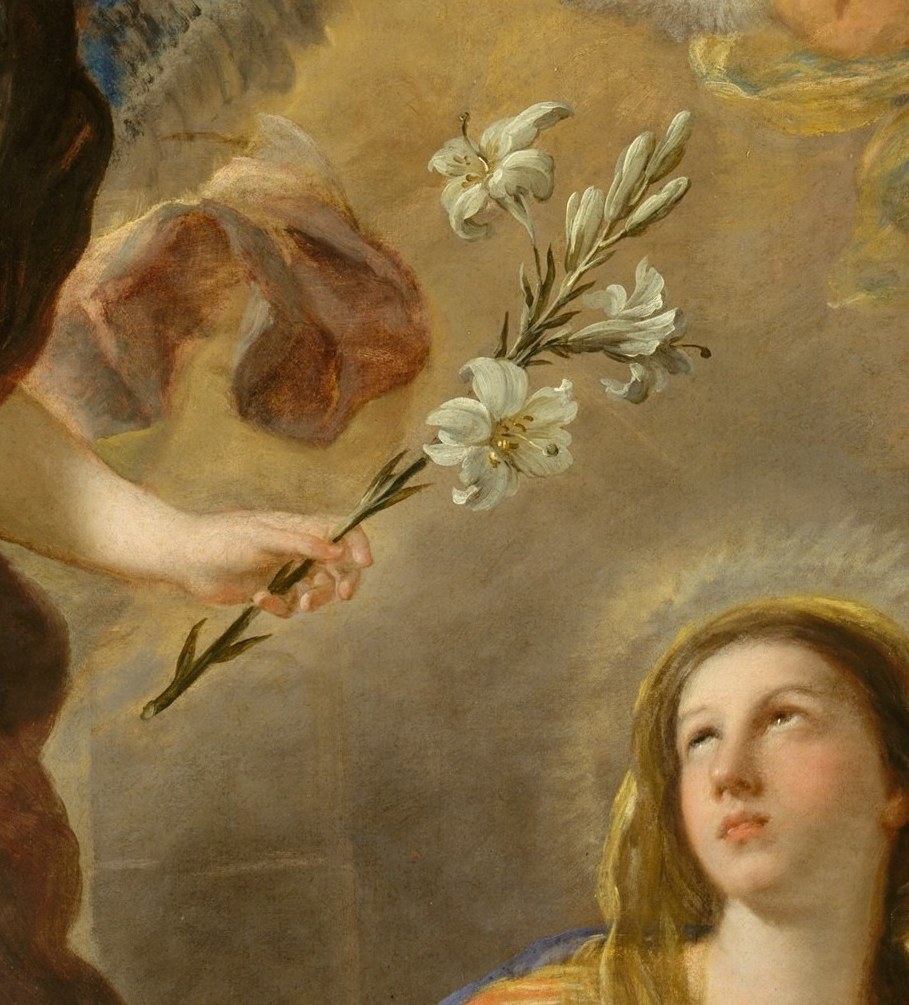
The painting is otherwise a masterclass in the Venetian color Giordano admired. Mary's crimson bodice anchors her humanity; the ultramarine mantle sweeping across her lap anchors the composition. Gabriel's white-and-gold robe still billows with the motion of arrival. The lily scepter sits at the compositional center, the era's unmissable signal of Mary's perpetual virginity.
Giordano worked across Naples, Rome, Florence, Venice, and eventually spent a decade in Spain. His speed earned him the nickname Luca fa presto (Luca works quickly), but the concealed infant here is the opposite of rushed. It is a small, deliberate gift for the patient eye.
Details
Transcript
At first glance, the story is clear: Gabriel comes to Mary. The lily he carries is the signal: her perpetual virginity. Gabriel's robes billow; he has just landed in this room. Now look at Mary's face. The painter captured awe without fear. Just above her, hidden in the upper right corner. A cherub cradles an infant. The Christ child, already present. Luca Giordano collapsed past and future into a single frame.