The Coronation of the Virgin by Peter Paul Rubens
Peter Paul Rubens's "The Coronation of the Virgin," painted in 1632, depicts a pivotal moment in Christian iconography, now housed at The Metropolitan Museum of Art. This oil painting showcases the Virgin Mary being crowned as the Queen of Heaven, a scene rich with divine symbolism.
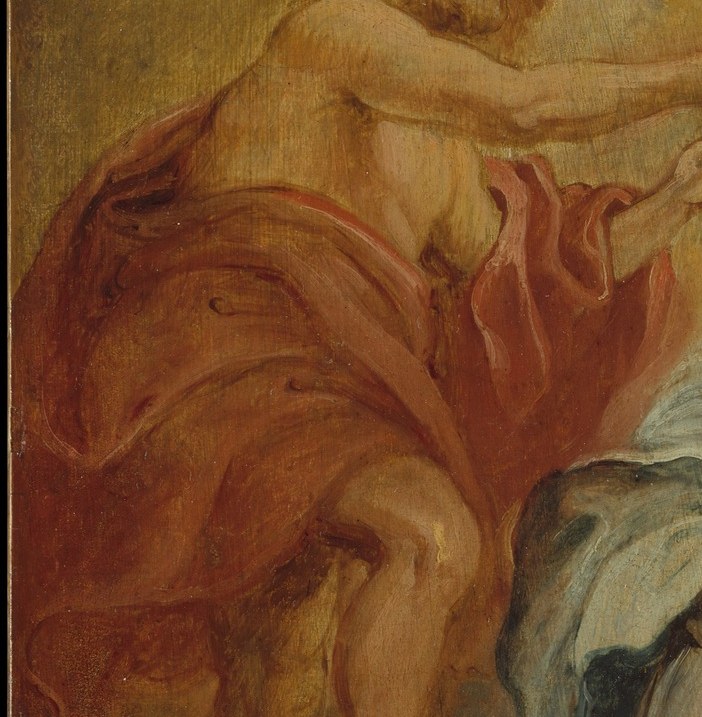
Observe God the Father, identifiable by his majestic beard and rich red robe, as he gently places the crown upon Mary's head. Her clasped hands convey profound humility and devotion, central to her role in the narrative. Above them, the subtle presence of the Holy Spirit, in the form of a dove, completes the Holy Trinity, emphasizing the sacredness of the event.
Rubens, a leading artist of the Flemish Baroque tradition, masterfully uses dynamic movement and vibrant colors to create this celestial scene. His unique style, which often highlighted sensuality and dramatic compositions, brought this religious narrative to life. The golden light illuminating the figures further enhances the divine splendor.
This painting not only showcases Rubens's artistic brilliance but also underscores Mary's revered status within Christian belief. What detail in Rubens's work most captures your eye?
Details
Transcript
This painting depicts a heavenly coronation. God the Father, with a flowing beard, places the crown. This crowns the Virgin Mary as Queen of Heaven. Above them, the Holy Spirit appears as a dove. Rubens completed this oil painting in 1632. His Baroque style emphasized movement and color. This scene celebrates Mary's elevated divine status.