Untitled by Nagano Yasunosuke
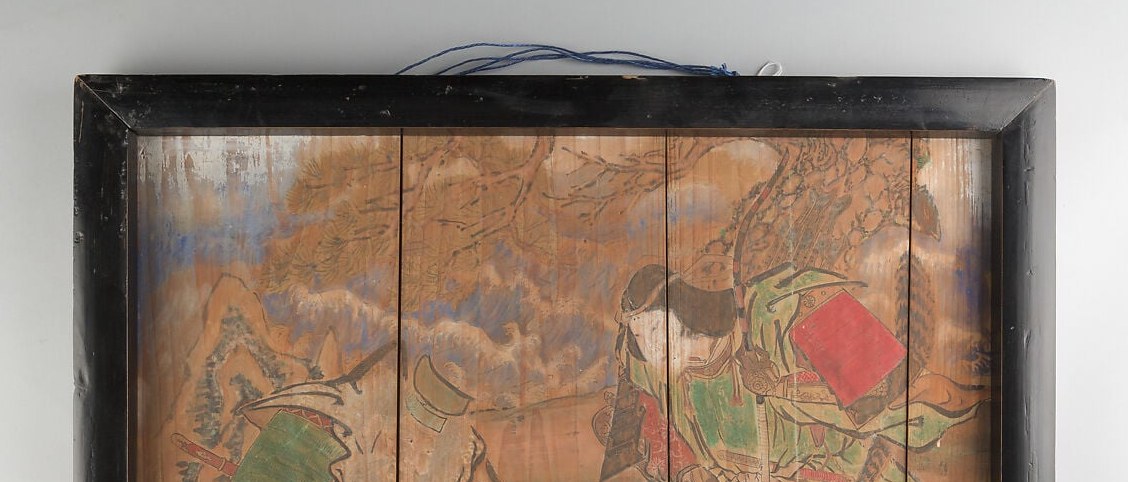
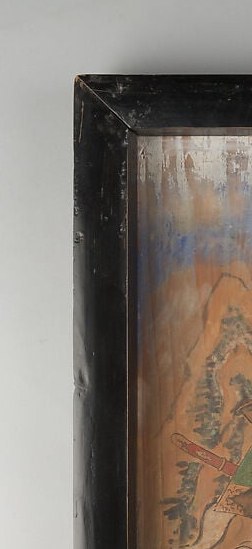
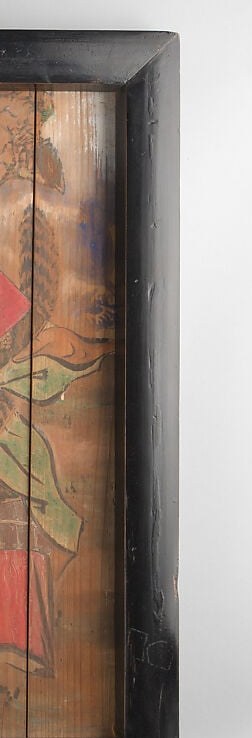
This untitled family portrait, carved and painted by Nagano Yasunosuke in 1898, lives on a single plank of cryptomeria wood. The warm amber glow behind the figures is not pigment at all, the artist deliberately left the sugi grain exposed, using the wood's own color as the sky. It's a fusion of medium and image that most people scroll straight past.
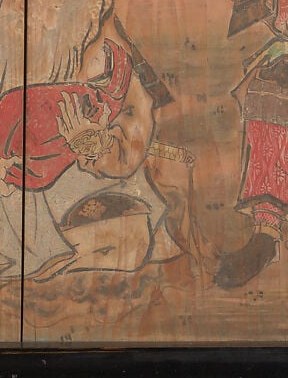
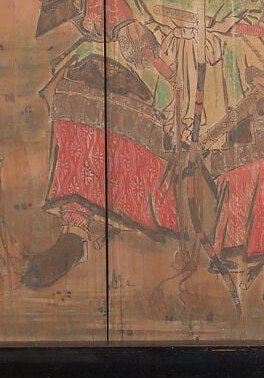
Look at the two infants in the lower center. Both wear tiny warrior helmets, miniature armor that turns a family grouping into something more, a wish for strength and resilience in a child too small to stand. The red robes of the central adult carry both martial and ceremonial weight, and the vertical bow on the left anchors the family as protectors.
Nagano worked in the Meiji era, a period of intense modernization in Japan. Images like this one served a talismanic purpose: parents dressed infants in symbolic armor to express hope for a strong, protected future. The visual language is direct but tender, the baby's face remains soft beneath the helmet.
Next time you see a family portrait, check the margins. Small attendant figures and overlooked details often wait at the edges, where the grain runs bare.
Details
Transcript
You might think this is just a family portrait. But the warm gold background isn't paint at all. This is a single plank of Japanese sugi wood. The artist carved the figures, then let the grain become the sky. Now look closely at the two infants. Both wear miniature warrior helmets. In 1898, this was a parent's wish: grow strong, be protected. And tucked in the far right margin: a tiny attendant figure.