Magdalena penitente en la gruta de Sainte-Baume by Juan Bautista Maíno
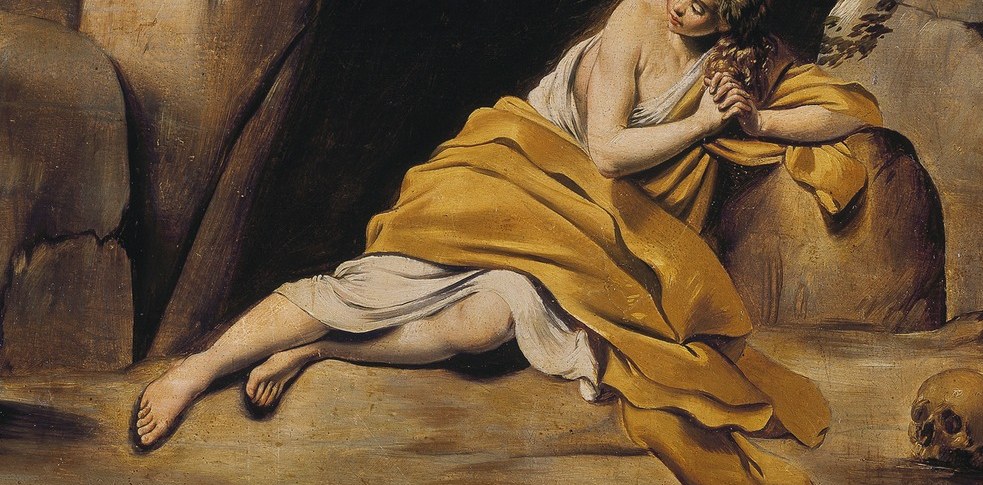
Juan Bautista Maíno's "Magdalena penitente en la gruta de Sainte-Baume" (1612), housed at the Museo del Prado, is a profound exploration of penitence. The painting acts as a coded message, revealing spiritual truths through its symbolic elements.
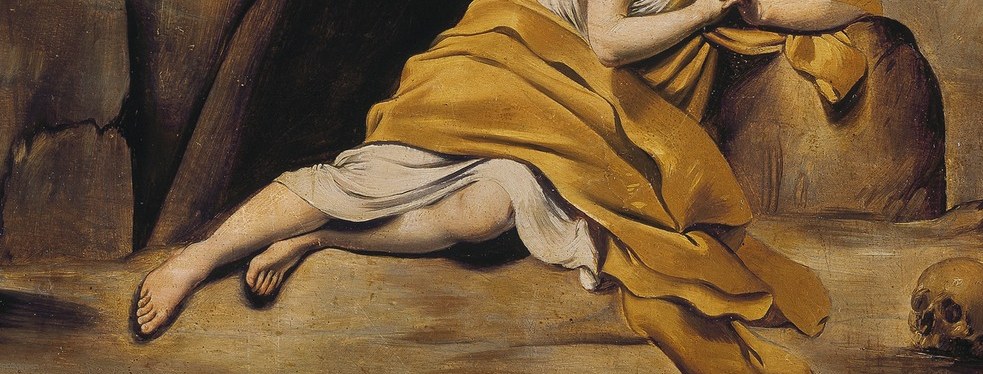
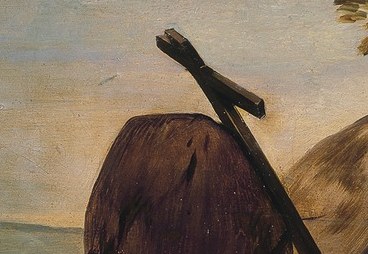
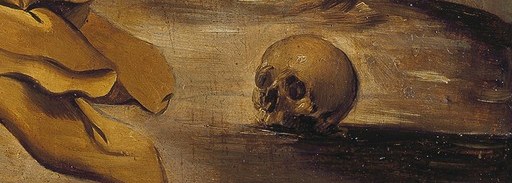
Observe Mary Magdalene's vibrant yellow robe, a visual cue for divine presence. She clutches the wooden cross, the ultimate symbol of Christian sacrifice. Beneath her gaze rests a human skull, a classic memento mori reminding us of mortality's inevitability.
Maíno, a Spanish Baroque painter, uses these symbols to convey Magdalene's deep spiritual introspection. Her bare feet on the rough terrain further emphasize her renunciation of earthly pleasures and her commitment to a life of penance in the Sainte-Baume grotto.
This painting invites us to decode its visual language, understanding the layers of meaning behind each carefully rendered object.
Details
Transcript
This painting is a coded message. Look at her yellow robe. It signals divine presence. She holds the cross. A symbol of Christian sacrifice. And here is a human skull. It is a memento mori. She renounced worldly comforts.