The Annunciation by Lippi, Filippo, Fra
Fra Filippo Lippi's "The Annunciation," painted around 1438, offers a fascinating glimpse into early Renaissance Florentine art. This tempera on panel, housed in a prominent collection, showcases the era's evolving artistic techniques.
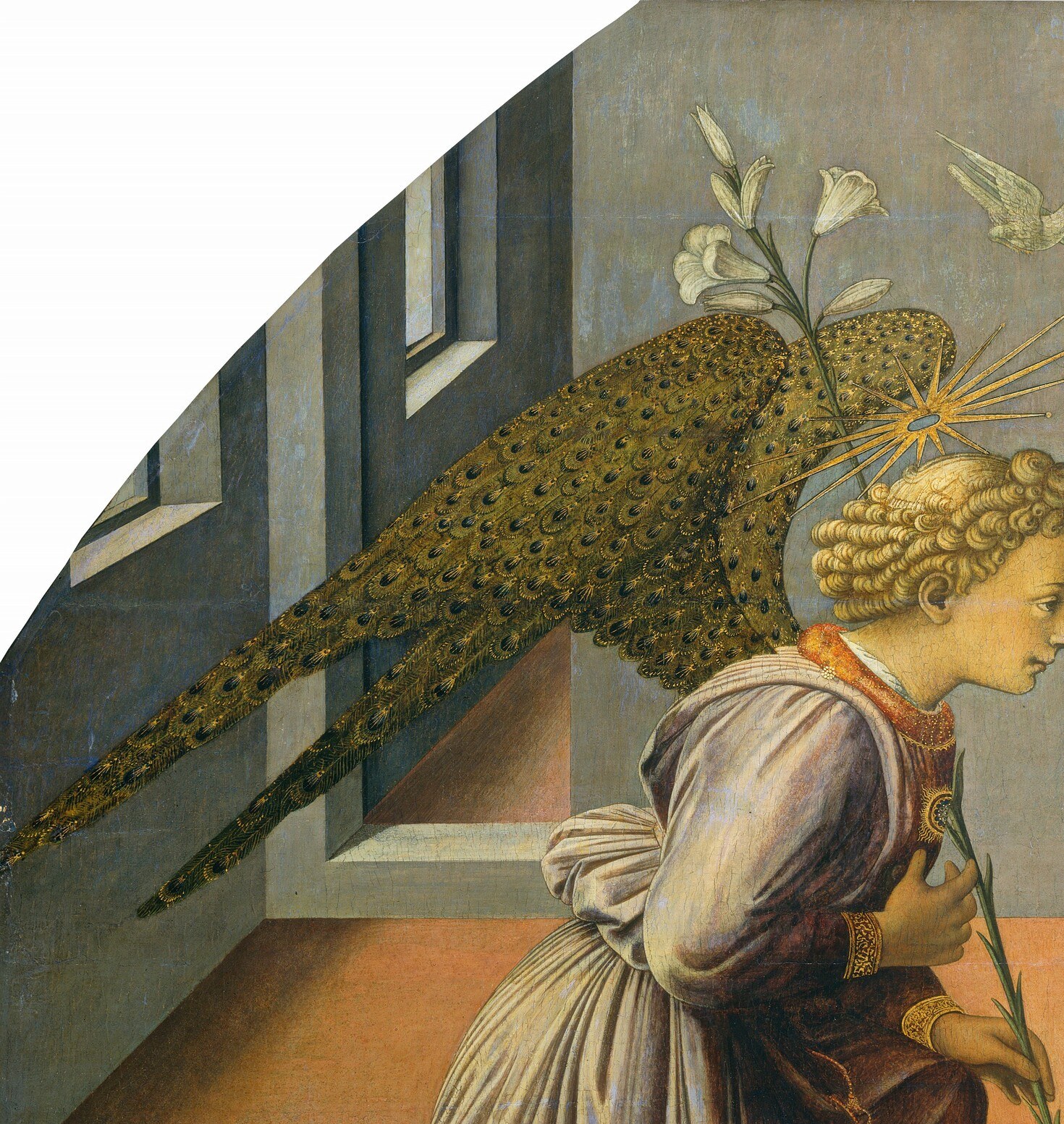
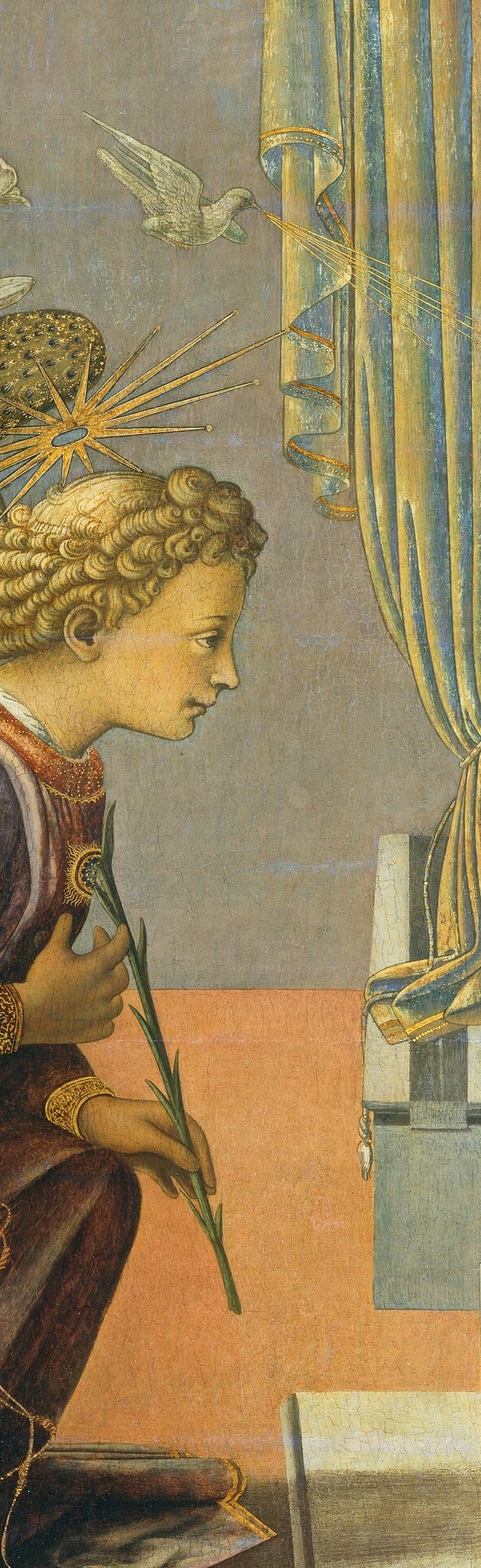
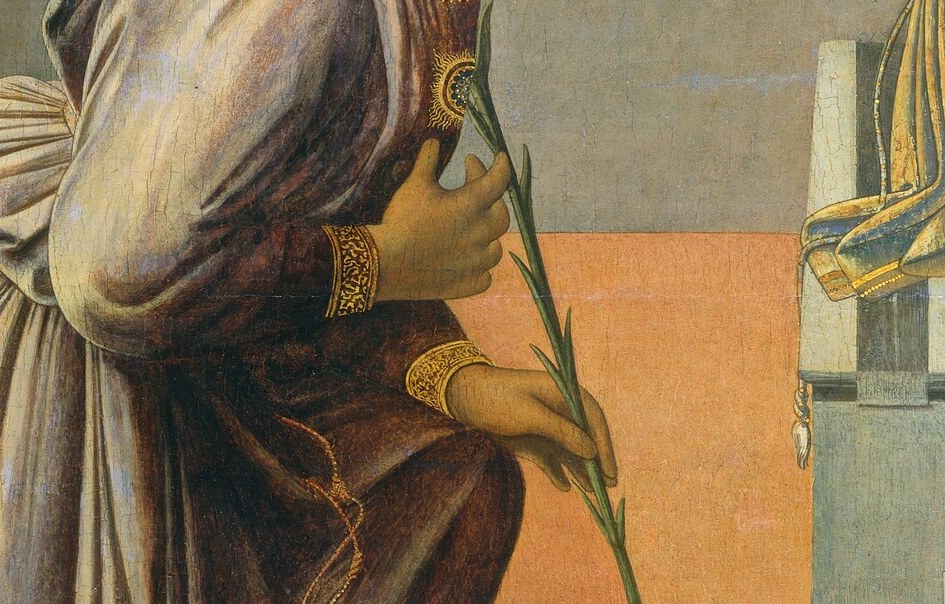
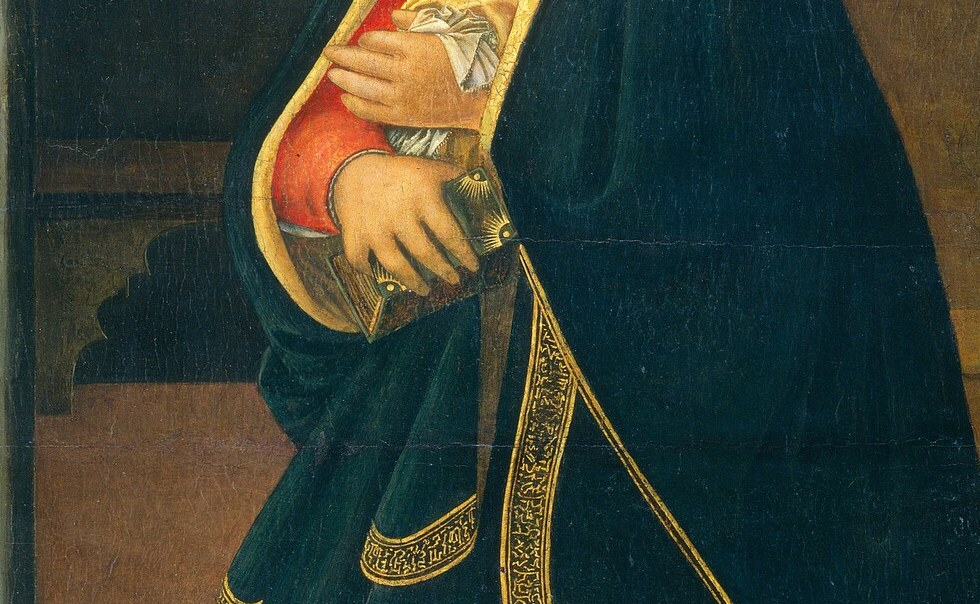
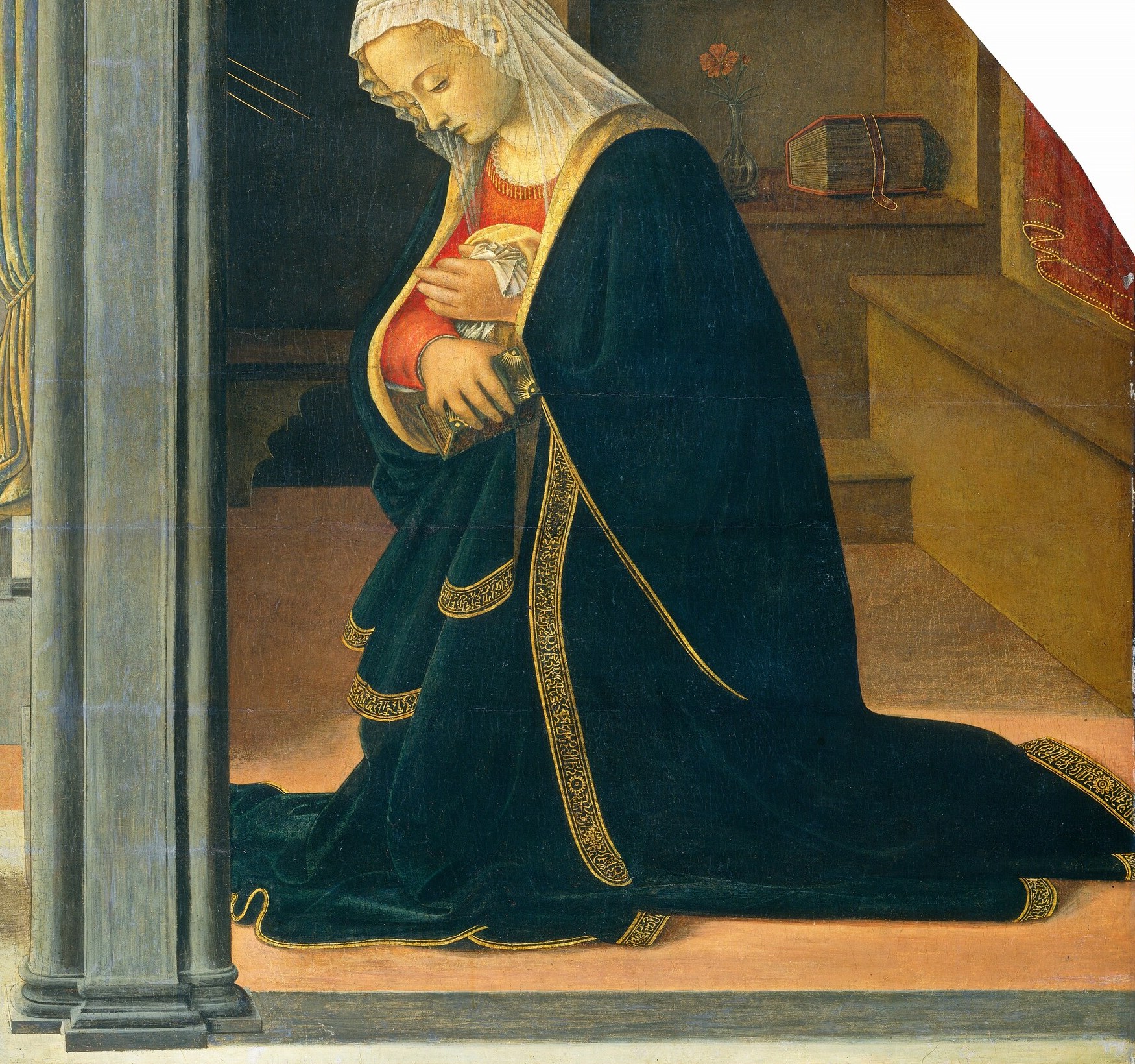
Observe the vibrant details: the Archangel Gabriel's golden wings, the symbolic lily, and Mary's gesture of submission. The costly ultramarine blue of Mary's mantle highlights her importance, a detail that would have resonated deeply with contemporary viewers.
Lippi, a Carmelite friar, was a key figure in the transition from medieval Byzantine styles to the naturalism of the Renaissance. This painting demonstrates his engagement with new ideas in perspective and spatial representation, making it a pivotal work in art history.
What details do you find most striking in this depiction of a sacred moment?
Details
Transcript
Around 1438, this painter staged the Annunciation. The Angel Gabriel's luminous wings announce his divine arrival. He holds a lily, a symbol of Mary's purity. And his hands deliver the divine message. Mary's crossed hands signify humble acceptance. Her costly blue mantle reveals her holy status. The architecture shows an early interest in perspective and depth. All framed as a window into the divine.