After the Ball by Alfred Stevens
Alfred Stevens's "After the Ball," painted in 1874, is a masterful depiction of a private, emotional moment in 19th-century Parisian life. Part of The Metropolitan Museum of Art's collection, it reflects the artist's focus on elegant modern women.
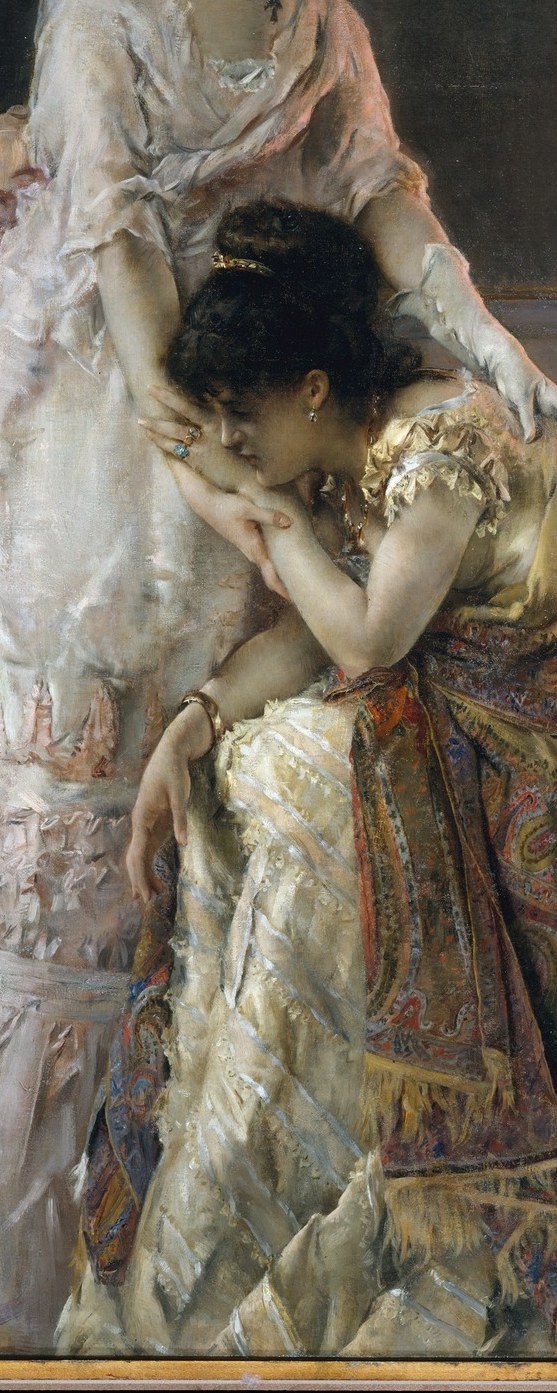
Observe the luxurious detail of the standing woman's dress, a testament to her social standing. Her hand on the kneeling woman's shoulder offers a complex gesture, while the kneeling woman's hidden face powerfully conveys a deep emotional state, be it sorrow or shame. The soft glow of the table lamp casts an intimate, realistic light on this unfolding drama.
Stevens, a Belgian painter, was renowned for his polished realism, drawing inspiration from 17th-century Dutch genre scenes. This work is a prime example of his ability to capture the nuances of upper-middle-class life, blending meticulous detail with profound human feeling.
"After the Ball" invites us to ponder the unspoken stories and hidden emotions that often lie beneath the surface of social elegance. What do you imagine has just transpired?
Details

Transcript
After the ball, a private moment unfolds. This painter was known for scenes of elegant Parisian women. Her elaborate dress hints at the opulence of their world. A gentle hand offers comfort or perhaps constraint. Her hidden face conveys overwhelming sorrow or shame. The lamp illuminates this intimate drama with stark realism. This work is a quiet exploration of emotion and status.