Midsummer Twilight by Metcalf, Willard Leroy
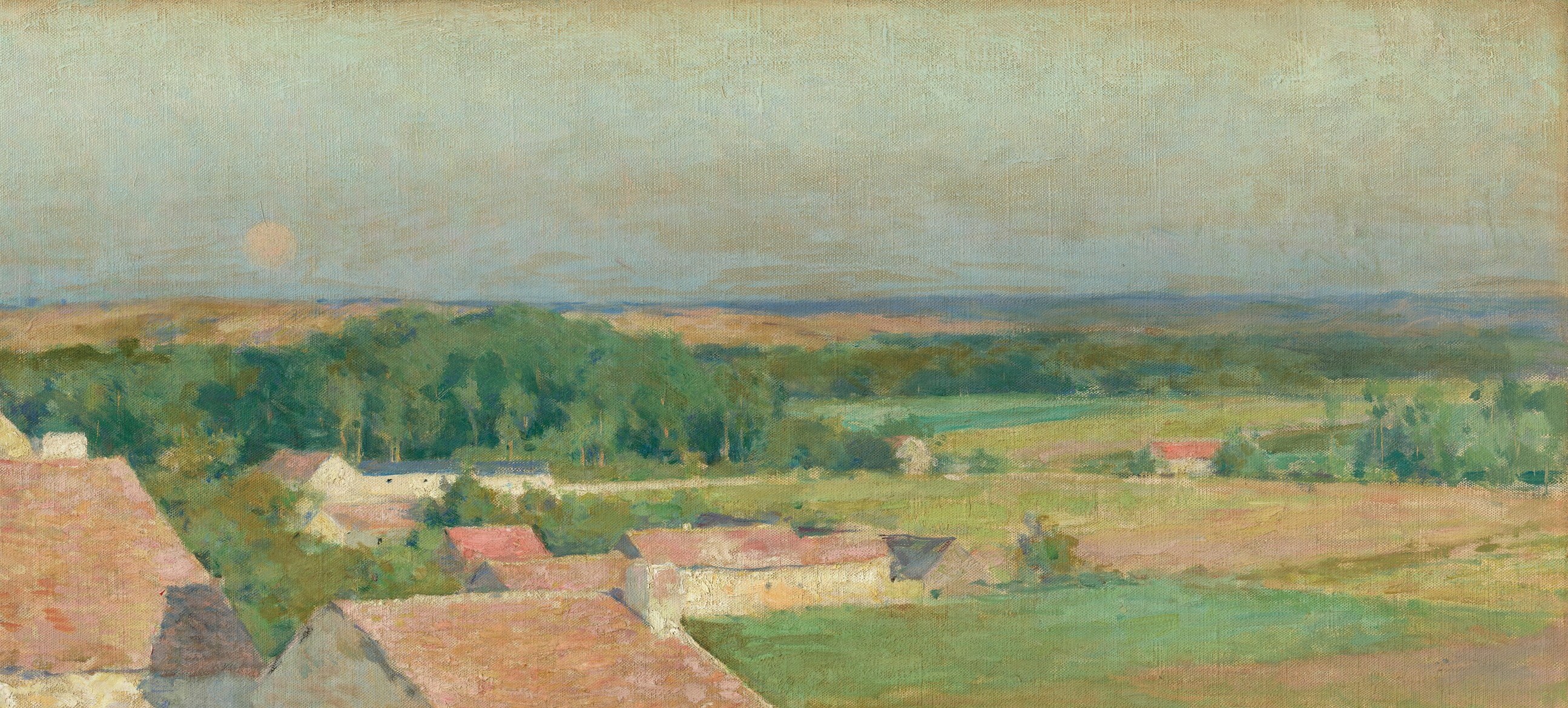
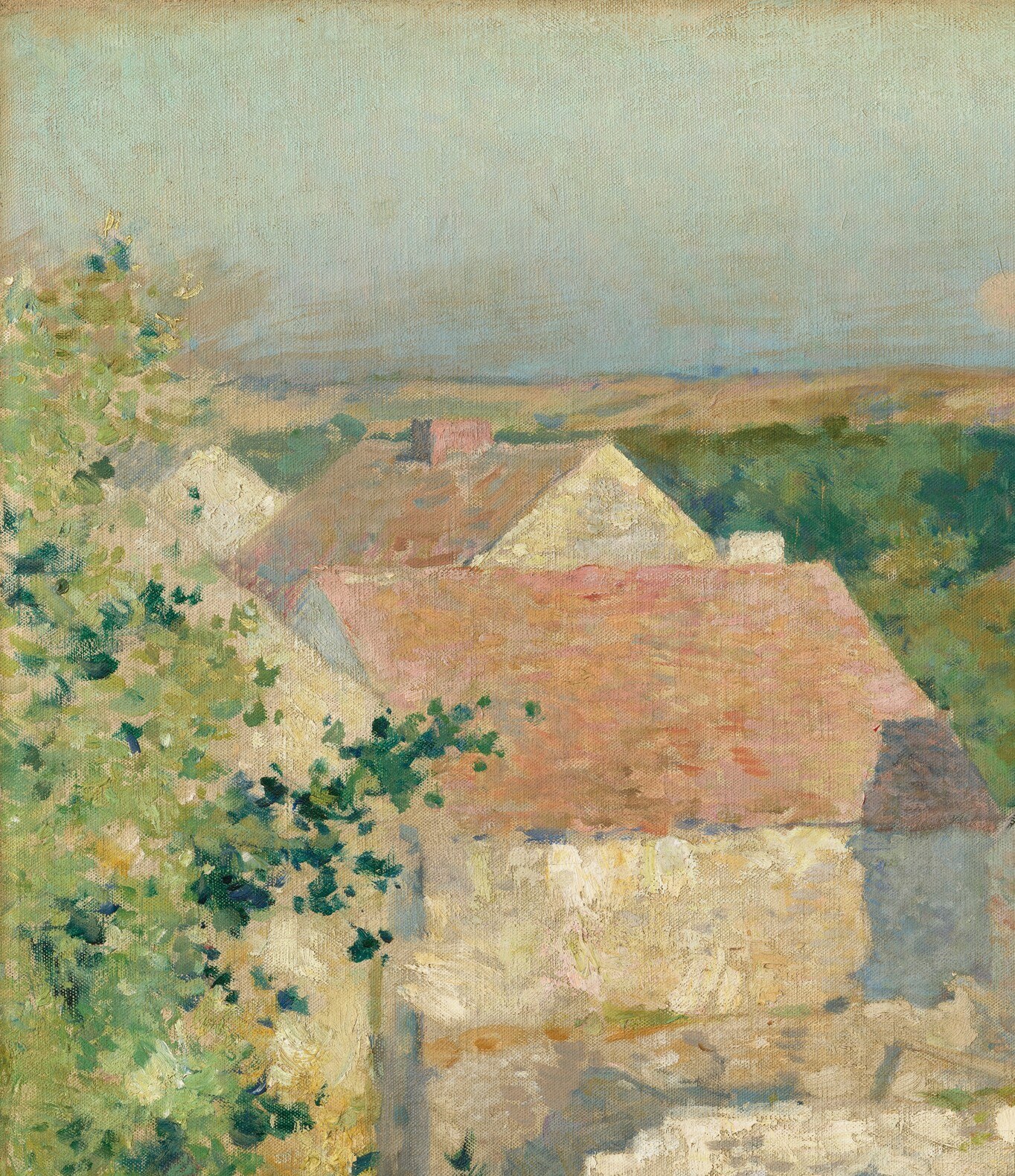
Willard Leroy Metcalf's "Midsummer Twilight," painted around 1890, defies conventional landscape painting by placing its brightest light in the distant horizon, rather than the foreground. This oil on canvas work, now in a private collection, creates a captivating sense of depth and atmospheric effect.
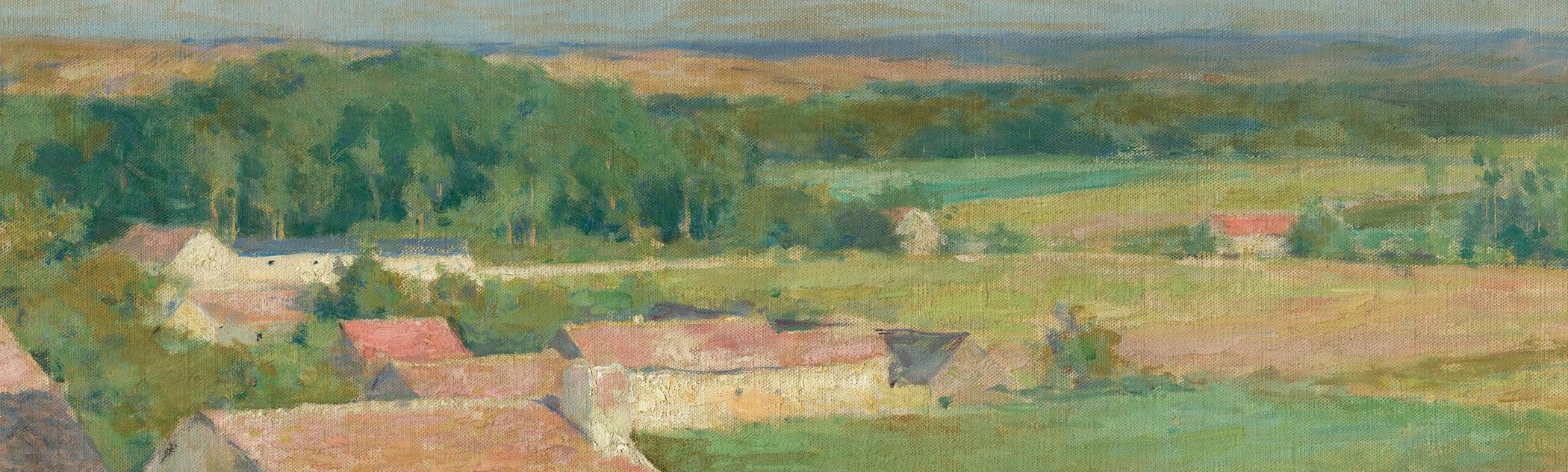
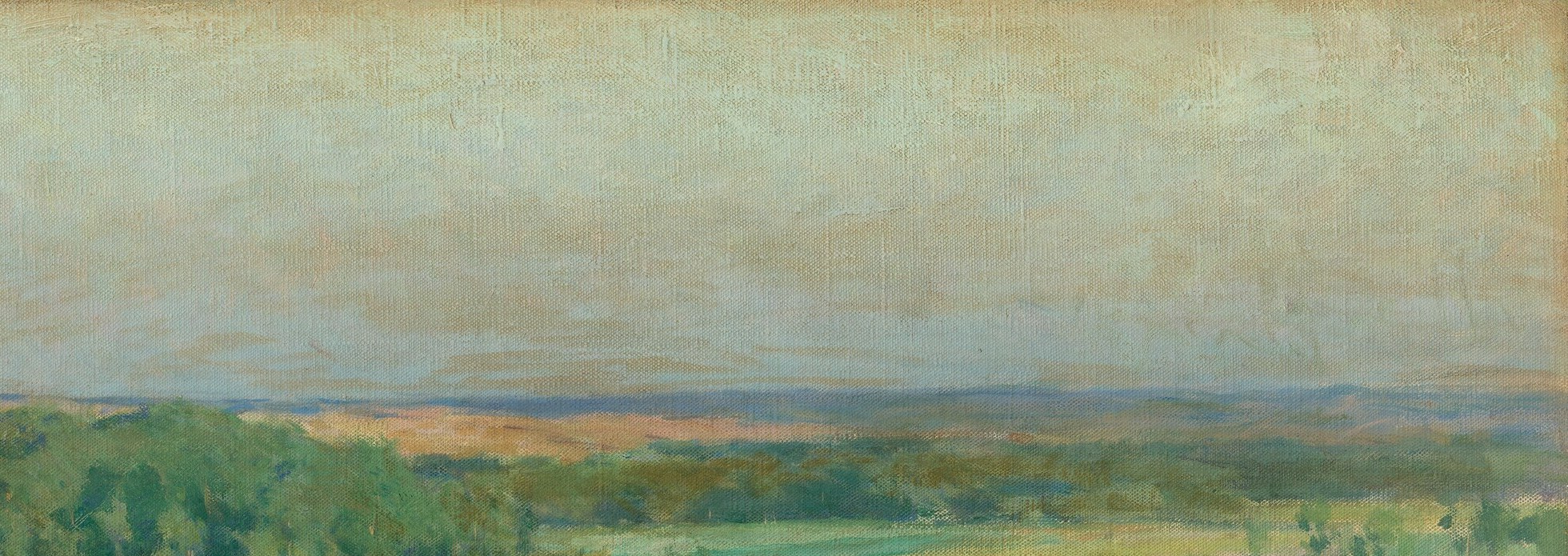
Look closely at the luminous band of golden light stretching across the distant plain. Metcalf masterfully uses thin, translucent layers of oil paint, known as glazes, to build this ethereal glow. This technique allows for subtle transitions of color and light, making the distant landscape appear to recede and beckon the viewer's eye.
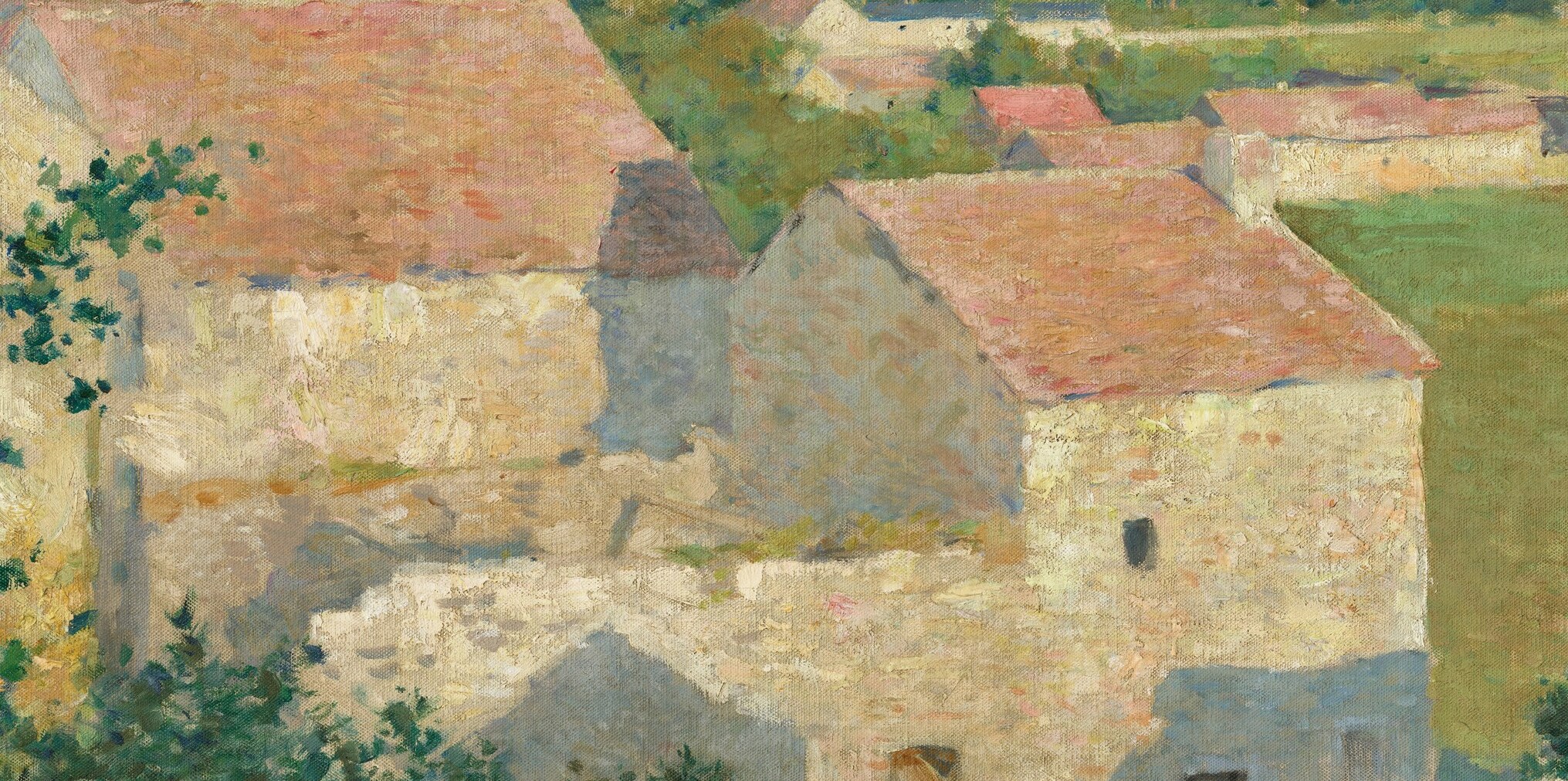
During this period, Metcalf and other artists were moving away from grand historical scenes to focus on everyday life and familiar landscapes. Metcalf's skill in capturing the fleeting qualities of light, especially at dusk, elevates this tranquil rural scene into a profound meditation on the passage of time and the beauty of the ordinary.
How does this inversion of light draw you into the painting?
Details
Transcript
This painting is called Midsummer Twilight. The painter wants your eye to travel deep into the distance. He put the brightest light, not in the foreground, but far away. Most painters place the lightest values up front. Metcalf used thin, layered glazes of oil to achieve this glow. It pulls your eye across the plain, into the fading light.